The Role of Libraries in Finnish Society: More Than Just Books


When people think of libraries, they often imagine shelves filled with books and quiet reading spaces. In Finland, however, libraries play a much larger role in society. They are community centers, learning hubs, cultural spaces, and symbols of equal access to knowledge.
Finland is internationally recognized for its high literacy rates, strong education system, and commitment to lifelong learning. Libraries have played a significant role in achieving these outcomes. From major cities to small rural communities, libraries are considered essential public services that support education, inclusion, creativity, and civic participation.
Today, Finnish libraries continue to evolve, offering far more than traditional book lending while remaining deeply connected to their original mission of providing free access to information for everyone.
A Strong Library Tradition
Finland has a long history of promoting literacy and education. Public libraries became increasingly important during the twentieth century as the country expanded educational opportunities and encouraged reading among citizens.
The Finnish library system is built on the principle that access to knowledge should not depend on income, social background, or location. As a result, library services are available throughout the country and are funded primarily through public resources.
This commitment reflects a broader Finnish belief that education and information are fundamental to a healthy and democratic society.

Libraries as Community Spaces
Modern Finnish libraries serve as gathering places where people of all ages can learn, interact, and participate in community life.
Students use libraries for studying and research. Parents bring children to reading programs and educational activities. Elderly residents visit for social interaction, newspapers, and lifelong learning opportunities.
Many libraries host workshops, exhibitions, lectures, cultural events, and community discussions. These activities help strengthen local communities while creating opportunities for people to connect with one another.
Rather than being silent buildings reserved for reading, many Finnish libraries function as active public spaces that encourage participation and engagement.
Supporting Education and Lifelong Learning
One of the most important contributions of Finnish libraries is their support for education.
Libraries provide access to books, academic resources, digital materials, and research databases that help students succeed at every level of learning. Schoolchildren are often introduced to libraries at an early age, helping develop reading habits that can last a lifetime.
Libraries also support adults seeking new skills or knowledge. Whether someone wants to learn a language, improve digital literacy, explore a new hobby, or pursue professional development, libraries offer resources that make lifelong learning accessible to everyone.
This emphasis on continuous learning aligns closely with Finland's educational philosophy.

Digital Services and Innovation
Finnish libraries have successfully adapted to the digital age.
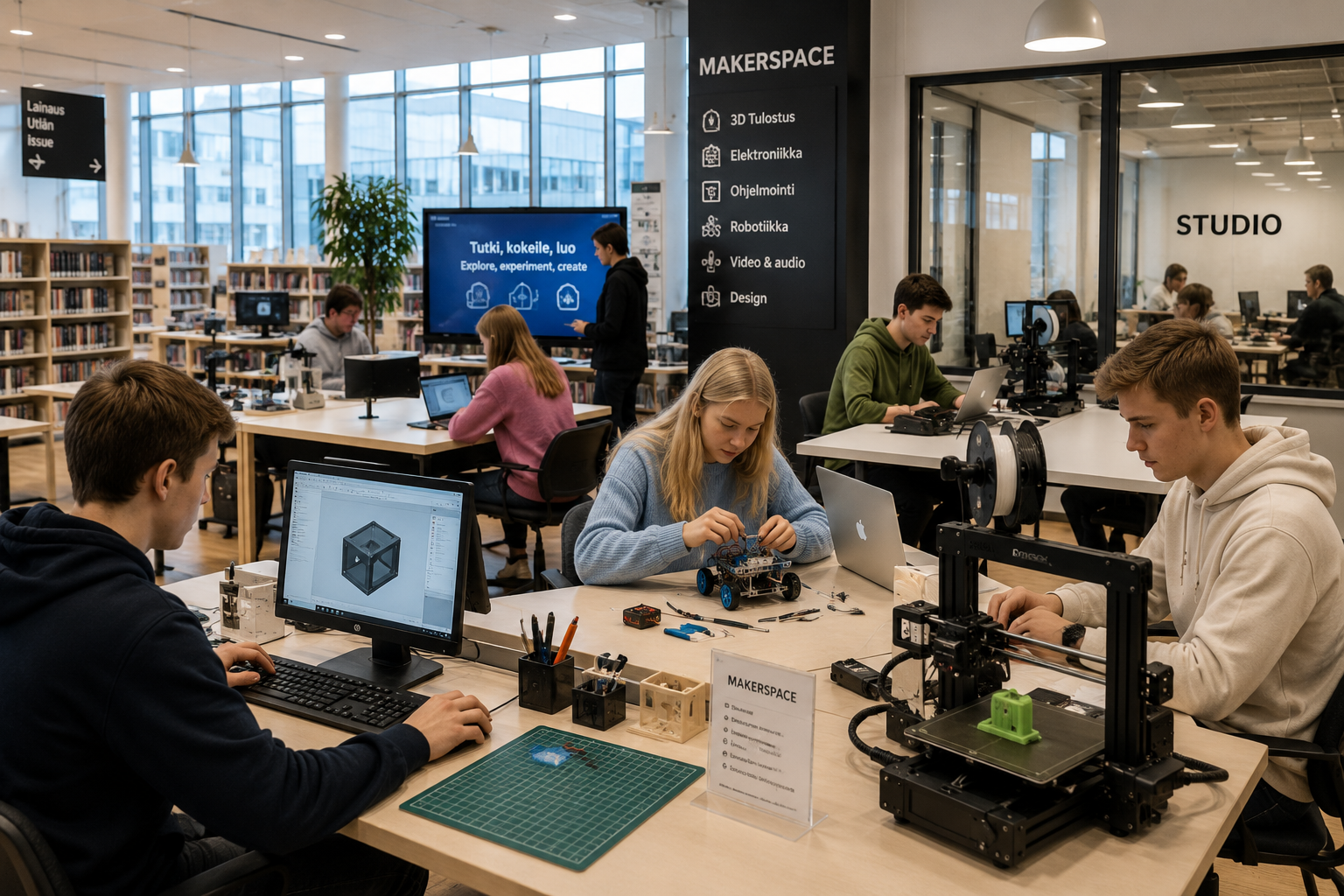
In addition to physical collections, many libraries provide access to e-books, audiobooks, online newspapers, research databases, and digital learning platforms. Visitors can use computers, printers, internet services, and multimedia equipment free of charge.
Some libraries even offer innovative services such as:
- Recording studios
- 3D printers
- Sewing machines
- Musical instruments
- Video production equipment
- Gaming spaces
These services help ensure that all citizens can access modern technologies regardless of their personal financial circumstances.
Oodi: A Modern Symbol of Finnish Libraries
One of Finland's most famous libraries is the Helsinki Central Library Oodi, which opened in 2018.
Located in the heart of Helsinki, Oodi represents a modern vision of what a public library can be. Beyond books, it offers meeting rooms, creative workspaces, multimedia studios, event spaces, and areas for community activities.
The library quickly became one of Finland's most visited public buildings and has received international recognition for its innovative design and services.
Oodi demonstrates how libraries can remain relevant by responding to changing social and technological needs while preserving their commitment to knowledge and accessibility.
Promoting Equality and Inclusion
A key strength of the Finnish library system is its commitment to equality.
Libraries are open to everyone regardless of age, income, education, language, or background. This accessibility helps reduce barriers to information and learning.
For immigrants and international residents, libraries often provide language-learning resources, integration programs, and multicultural services that support participation in Finnish society.
By ensuring equal access to knowledge and opportunities, libraries contribute to social inclusion and community well-being.

Libraries and Democracy
Access to reliable information is essential for democratic societies.
Finnish libraries support democracy by providing free access to information from diverse sources and encouraging critical thinking. Citizens can access news, educational resources, government information, and public discussions without financial barriers.
Libraries also provide safe spaces for dialogue and civic engagement, helping strengthen trust and informed participation within society.
In an era of misinformation and digital challenges, this role has become increasingly important.
Why Libraries Remain Important Today
Despite the growth of digital technology and online information, libraries continue to thrive in Finland.
People still value trusted sources of information, welcoming community spaces, and opportunities for learning that are freely available to all. Libraries offer something that many online platforms cannot: a shared public space dedicated to education, culture, and community.
Their ability to combine traditional services with modern innovation has helped ensure their continued relevance.
Conclusion
Libraries occupy a special place in Finnish society. They are far more than buildings filled with books; they are centers of learning, innovation, inclusion, and community engagement.
By providing free access to knowledge, supporting education, promoting equality, and embracing technological change, Finnish libraries continue to strengthen both individuals and society as a whole.
As the world becomes increasingly digital and fast-paced, Finland's libraries demonstrate how public institutions can adapt while remaining true to their core mission. Their success serves as a reminder that access to knowledge remains one of the most valuable investments any society can make.