Dangerous Goods in Aviation: Why Some Everyday Items Cannot Simply Fly
Although the word "radioactive" often causes concern, these materials are transported safely using specially certified packaging and carefully controlled procedures.

Introduction
Every day, millions of passengers board commercial flights carrying luggage filled with personal belongings. Most travelers pack clothes, electronic devices, toiletries, and souvenirs without giving much thought to aviation safety regulations.
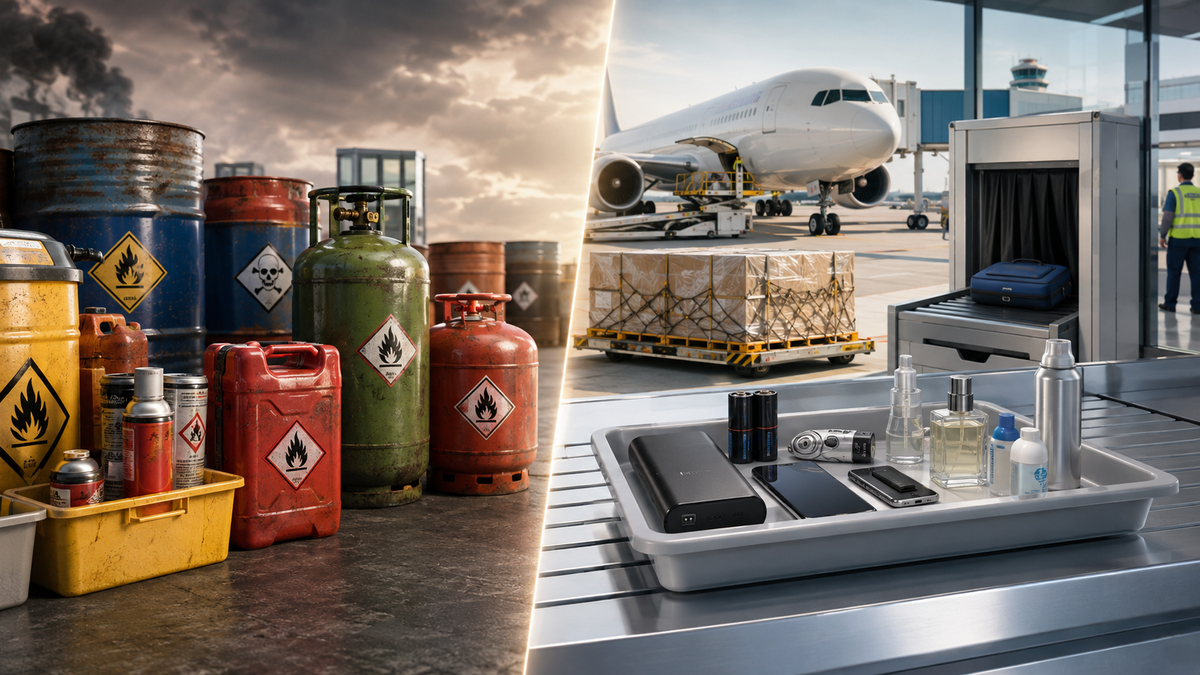
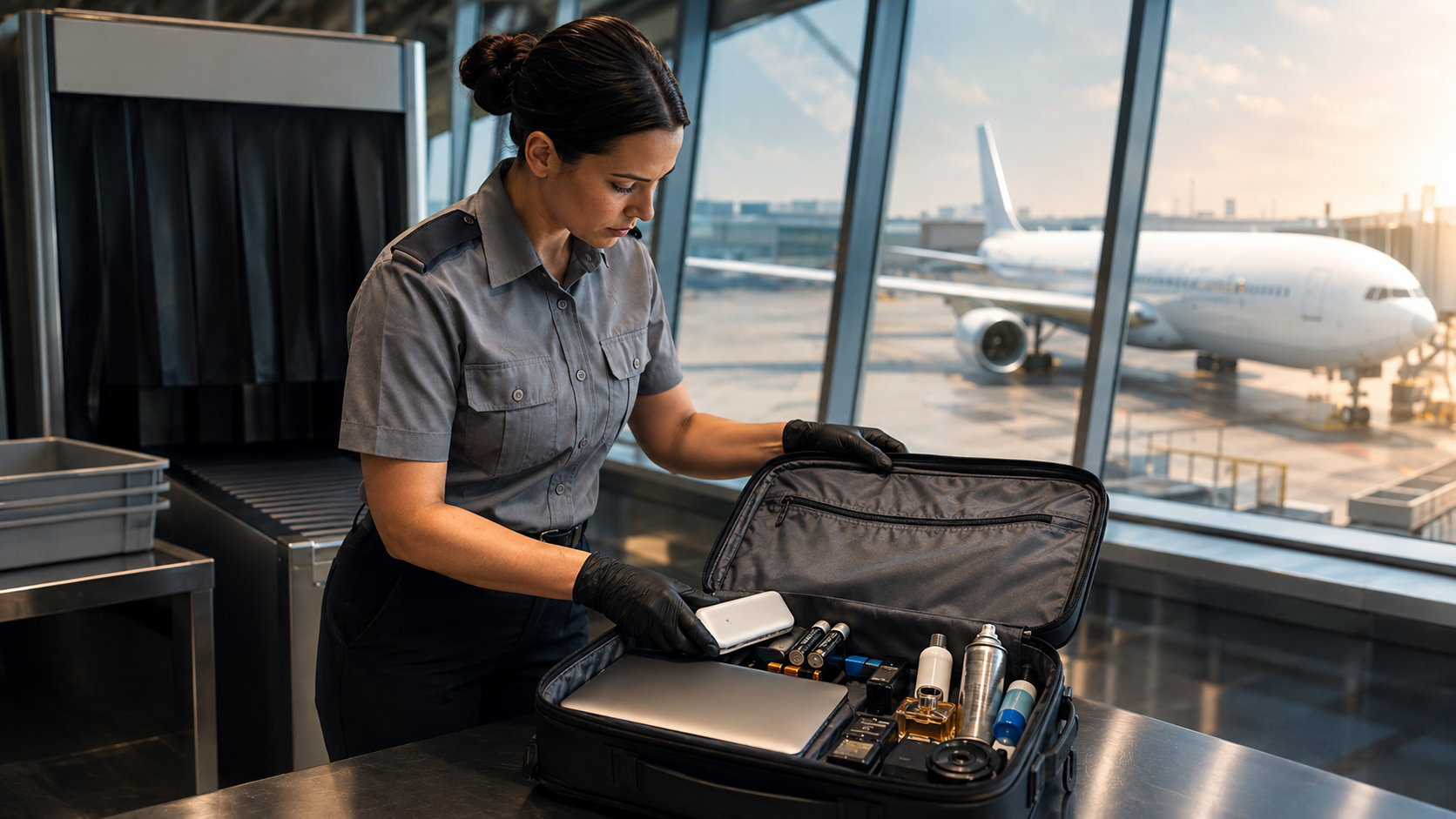
However, some seemingly harmless everyday items can pose significant risks when transported by air. A power bank, a bottle of camping fuel, fireworks, certain chemicals, or even some medical oxygen cylinders may become hazardous under the unique conditions experienced during flight.
To protect passengers, crew members, aircraft, and cargo, the global aviation industry follows strict international rules governing the transport of Dangerous Goods.
These regulations are not designed to inconvenience travelers. Instead, they exist because aircraft operate in an environment where fire, toxic gases, chemical reactions, or pressure changes can quickly become serious emergencies.
Fortunately, commercial aviation has developed one of the world's most comprehensive safety systems. Through international cooperation, standardized procedures, and rigorous training, dangerous goods are safely managed every day.
What Are Dangerous Goods?
The International Civil Aviation Organization (ICAO) defines dangerous goods as articles or substances capable of posing a risk to health, safety, property, or the environment when transported by air.
Some dangerous goods are transported safely every day because hospitals, industries, research laboratories, and businesses depend on them. However, they must meet strict requirements for packaging, labeling, documentation, and handling.
Others are completely prohibited on passenger aircraft because the risks outweigh any operational benefit.
Many people are surprised to learn that dangerous goods are not limited to industrial chemicals or explosives. Numerous ordinary household products also fall within this category because they may ignite, leak, react, or release hazardous substances under certain conditions.
Why Dangerous Goods Are Regulated
Unlike cars, trains, or ships, aircraft operate in a highly controlled environment thousands of meters above the Earth's surface.
During flight:
- Cabin pressure differs from ground conditions.
- Cargo compartments experience changes in pressure and temperature.
- Emergency response options are limited while airborne.
- Fires can spread rapidly in enclosed spaces.
- Smoke or toxic gases can quickly affect passengers and crew.
Because of these factors, items that appear harmless on the ground may become dangerous if transported improperly.
A small lithium battery damaged inside checked baggage, for example, may overheat and create a fire. A leaking chemical container could release toxic fumes into a confined area. Pressurized containers exposed to heat may rupture.
International regulations are designed to prevent such situations before they occur.
Who Creates the Rules?
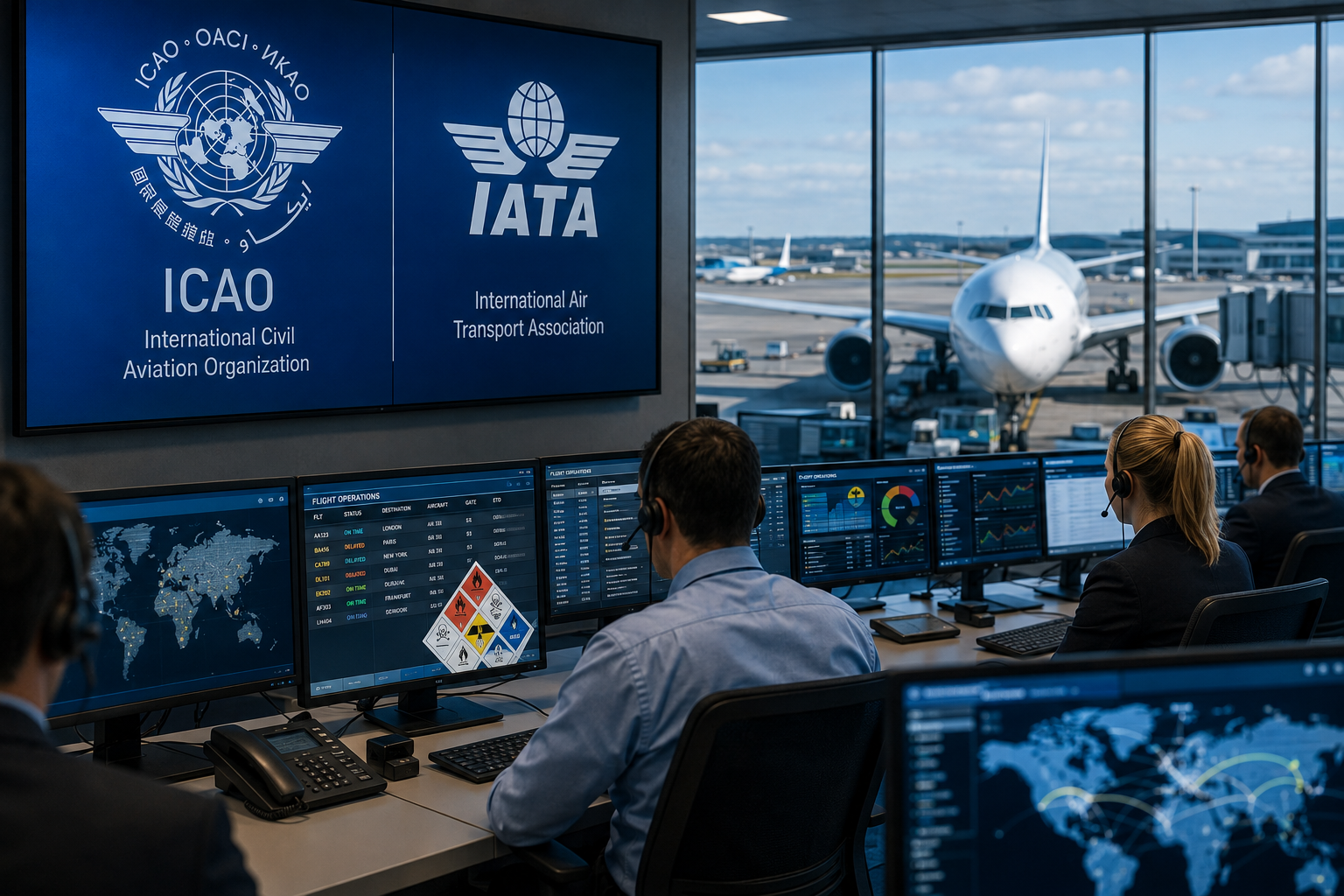
Several international organizations work together to ensure the safe transport of dangerous goods.
International Civil Aviation Organization (ICAO)
ICAO, a specialized agency of the United Nations, develops global aviation safety standards followed by its member states.
Its Technical Instructions for the Safe Transport of Dangerous Goods by Air form the foundation of international dangerous goods regulations.
International Air Transport Association (IATA)
IATA publishes the Dangerous Goods Regulations (DGR), widely used by airlines, freight companies, cargo handlers, and aviation professionals.
The IATA DGR incorporates ICAO's requirements while providing additional operational guidance for the aviation industry.
Together, ICAO and IATA help create a consistent global system that allows dangerous goods to be transported safely when permitted.
Understanding the Nine Hazard Classes
To make dangerous goods easier to identify and manage, international regulations group them into nine hazard classes based on the type of risk they present.
This classification system enables airlines, airports, emergency responders, and cargo operators to quickly recognize hazards and apply appropriate safety measures.
The classes are standardized worldwide, ensuring consistency regardless of where an aircraft operates.
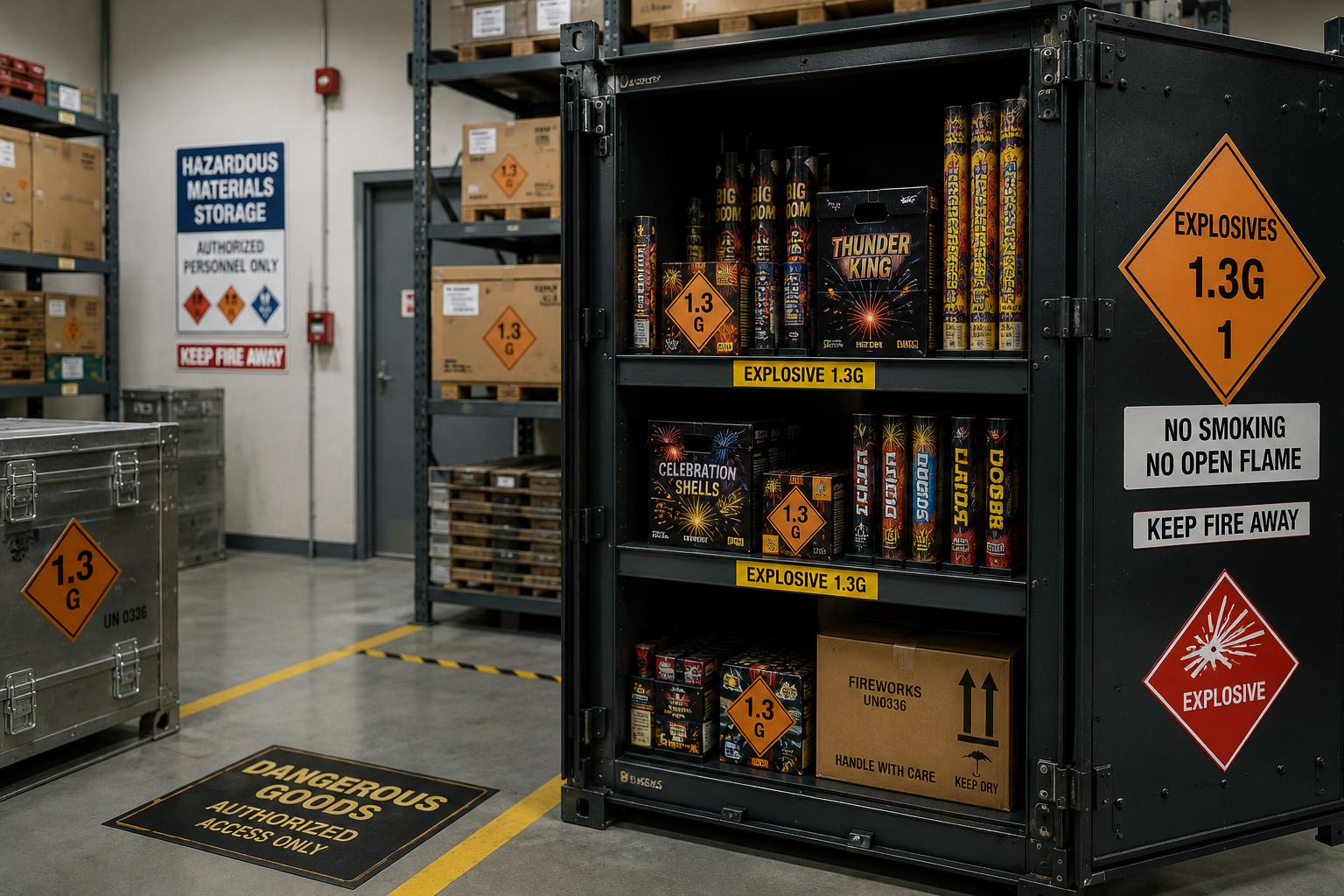
Class 1 – Explosives
This class includes materials capable of producing explosions or powerful pyrotechnic effects.
Examples include:
- Fireworks
- Ammunition
- Signal flares
- Explosive industrial materials
Because of the significant risks they present, these materials are subject to strict controls and many are prohibited from passenger aircraft.
Class 2 – Gases
Some gases are compressed, liquefied, or dissolved under pressure.
Examples include:
- Propane cylinders
- Butane canisters
- Aerosol products
- Medical oxygen
- Carbon dioxide cylinders
Although many gases are used safely every day, they can become hazardous if damaged, heated, or improperly handled.
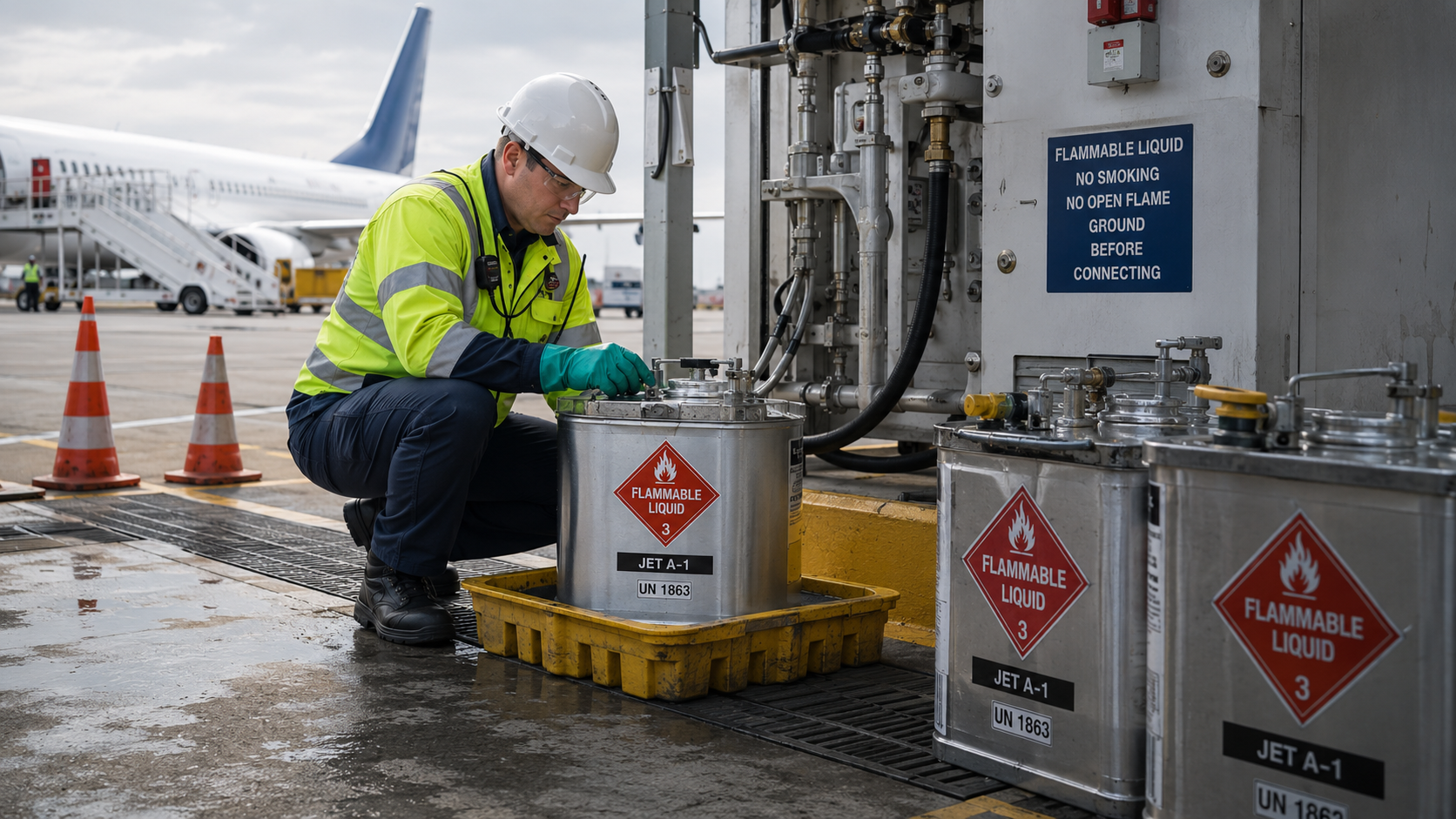
Class 3 – Flammable Liquids
Flammable liquids ignite relatively easily and therefore require careful handling.
Examples include:
- Petrol (gasoline)
- Paint thinners
- Certain solvents
- Some industrial chemicals
These substances present obvious fire hazards and are therefore tightly regulated.
Class 4 – Flammable Solids
Some solid materials can ignite through friction, heat, or contact with moisture.
Examples include:
- Matches
- Certain metal powders
- Some chemical compounds
Although less familiar to the general public, these materials require careful storage and transportation.
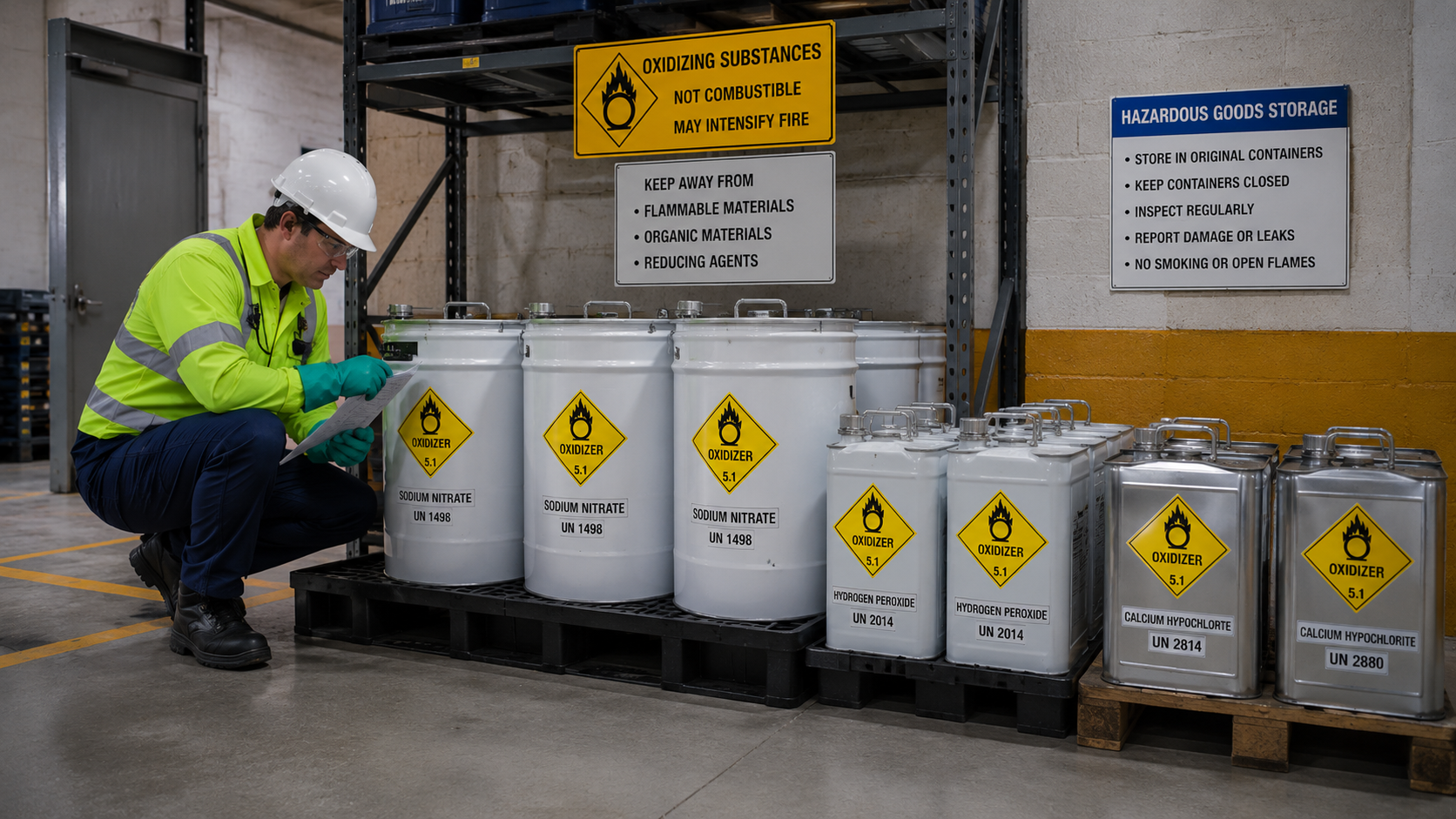
Class 5 – Oxidizing Substances and Organic Peroxides
Some substances do not burn themselves but can intensify fires by releasing oxygen. These are known as oxidizing substances.
Organic peroxides are chemically unstable compounds that may react violently when exposed to heat, shock, or contamination.
Examples include:
- Industrial bleaching agents
- Certain laboratory chemicals
- Some pool treatment chemicals
Because these materials can accelerate combustion, they require specialized handling and packaging during air transport.
Class 6 – Toxic and Infectious Substances
This class includes materials capable of causing illness or death if inhaled, swallowed, or absorbed through the skin.
It also includes infectious substances transported for medical diagnosis, scientific research, or public health purposes.
Examples include:
- Certain pesticides
- Laboratory samples
- Medical diagnostic specimens
- Clinical waste
These materials are transported only under strict international regulations using specially designed packaging that minimizes the risk of exposure.
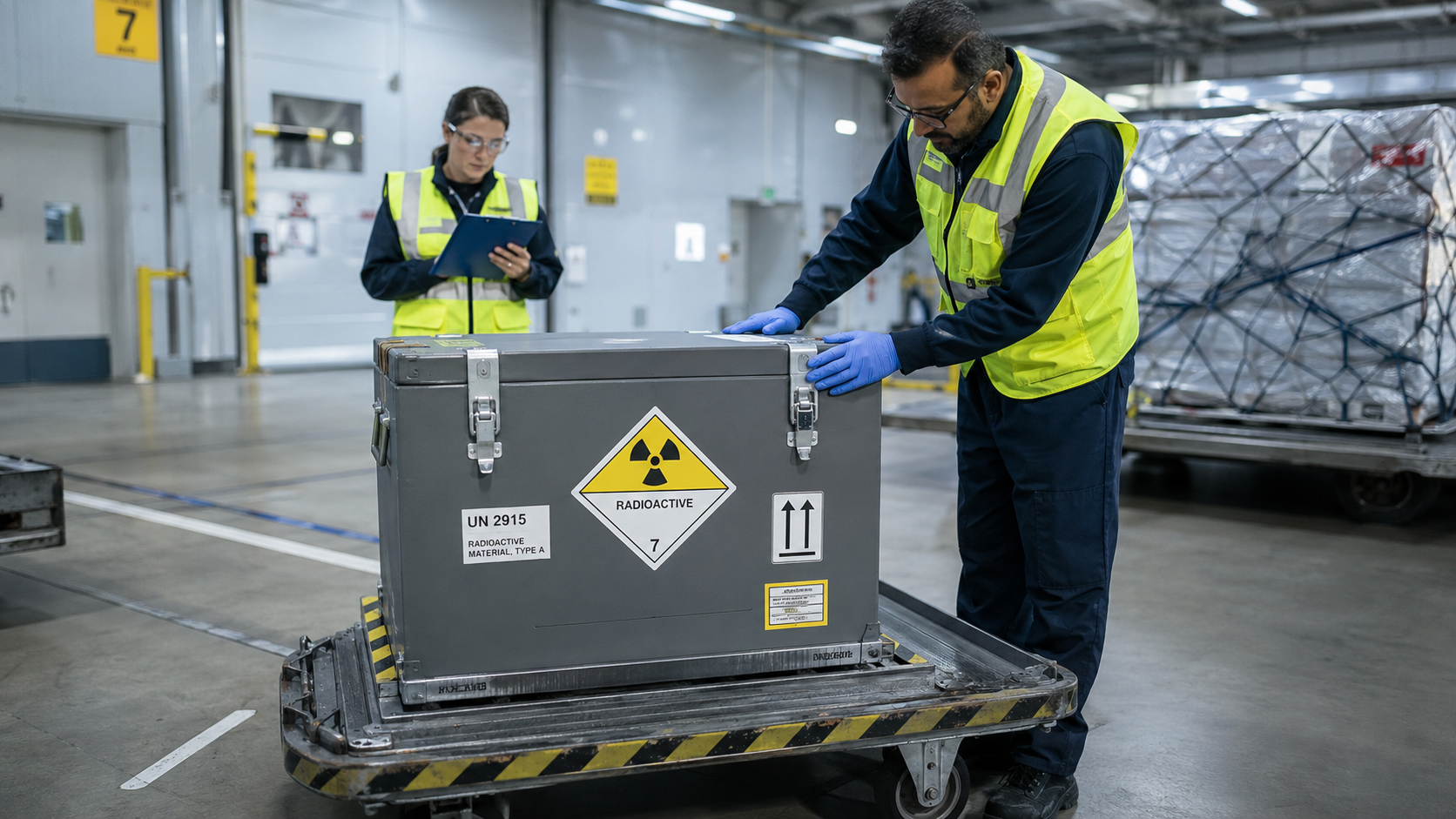
Class 7 – Radioactive Material
Radioactive materials are safely transported by air every day for important purposes, particularly in healthcare and scientific research.
Examples include:
- Medical isotopes used in cancer diagnosis and treatment
- Industrial measuring equipment
- Scientific research materials
These shipments must comply with rigorous international standards established by the International Atomic Energy Agency (IAEA) and incorporated into ICAO regulations.
Although the word "radioactive" often causes concern, these materials are transported safely using specially certified packaging and carefully controlled procedures.
Class 8 – Corrosive Substances
Corrosive substances can damage living tissue and corrode metals.
Examples include:
- Battery acid
- Strong cleaning chemicals
- Industrial acids
- Alkalis
If these substances leak during transport, they may damage aircraft structures, cargo, or other shipments. For this reason, they require leak-resistant packaging and careful handling.
Class 9 – Miscellaneous Dangerous Goods
Class 9 includes hazardous materials that do not fit into the previous categories but still present risks during air transport.
Examples include:
- Lithium batteries
- Dry ice
- Magnetized materials
- Environmentally hazardous substances
Among these, lithium batteries have become one of the most significant safety concerns in modern aviation.
Because they power smartphones, laptops, tablets, cameras, drones, power banks, and many other electronic devices, millions of lithium batteries travel by air every day.
When damaged, improperly manufactured, or exposed to excessive heat, lithium batteries may experience thermal runaway a chain reaction that can generate intense heat and, in some cases, fire.
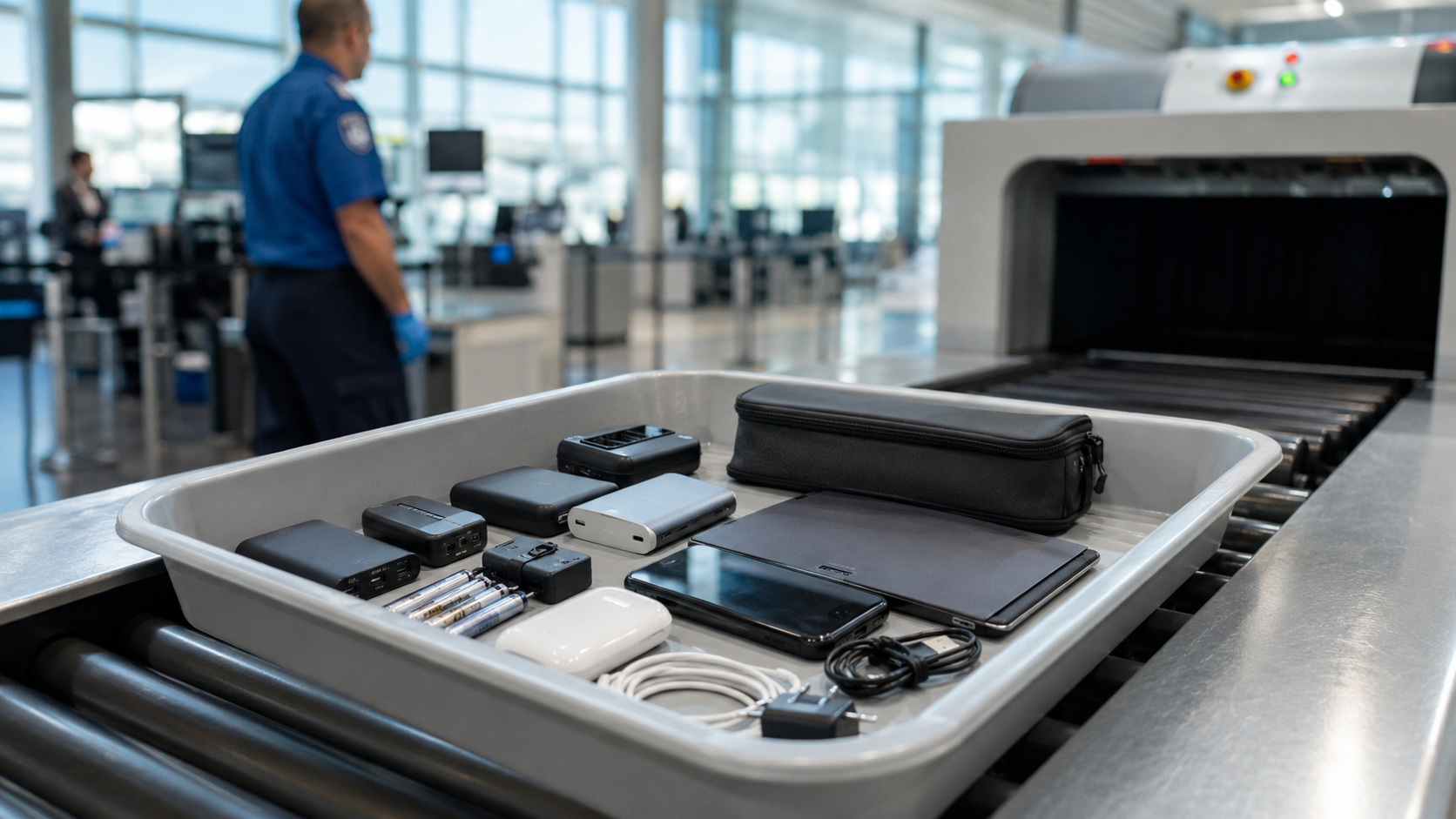
This is why airlines and aviation authorities have specific rules regarding the carriage of spare lithium batteries and power banks.
Common Everyday Items That May Be Restricted
Many passengers are surprised to discover that ordinary travel items may be subject to aviation safety regulations.
Examples include:
- Power banks
- Spare lithium batteries
- Aerosol sprays
- Camping fuel
- Fireworks
- Paints and solvents
- Certain chemicals
- Some self-defense sprays
The rules governing these items vary depending on the product and whether it is carried in cabin baggage or checked baggage.
Passengers should always consult their airline's guidance before travelling if they are unsure about an item.
Why Honest Declaration Matters
When dangerous goods are transported for legitimate purposes, they must be properly identified, packaged, documented, and handled by trained personnel.
For passengers, honesty is equally important.
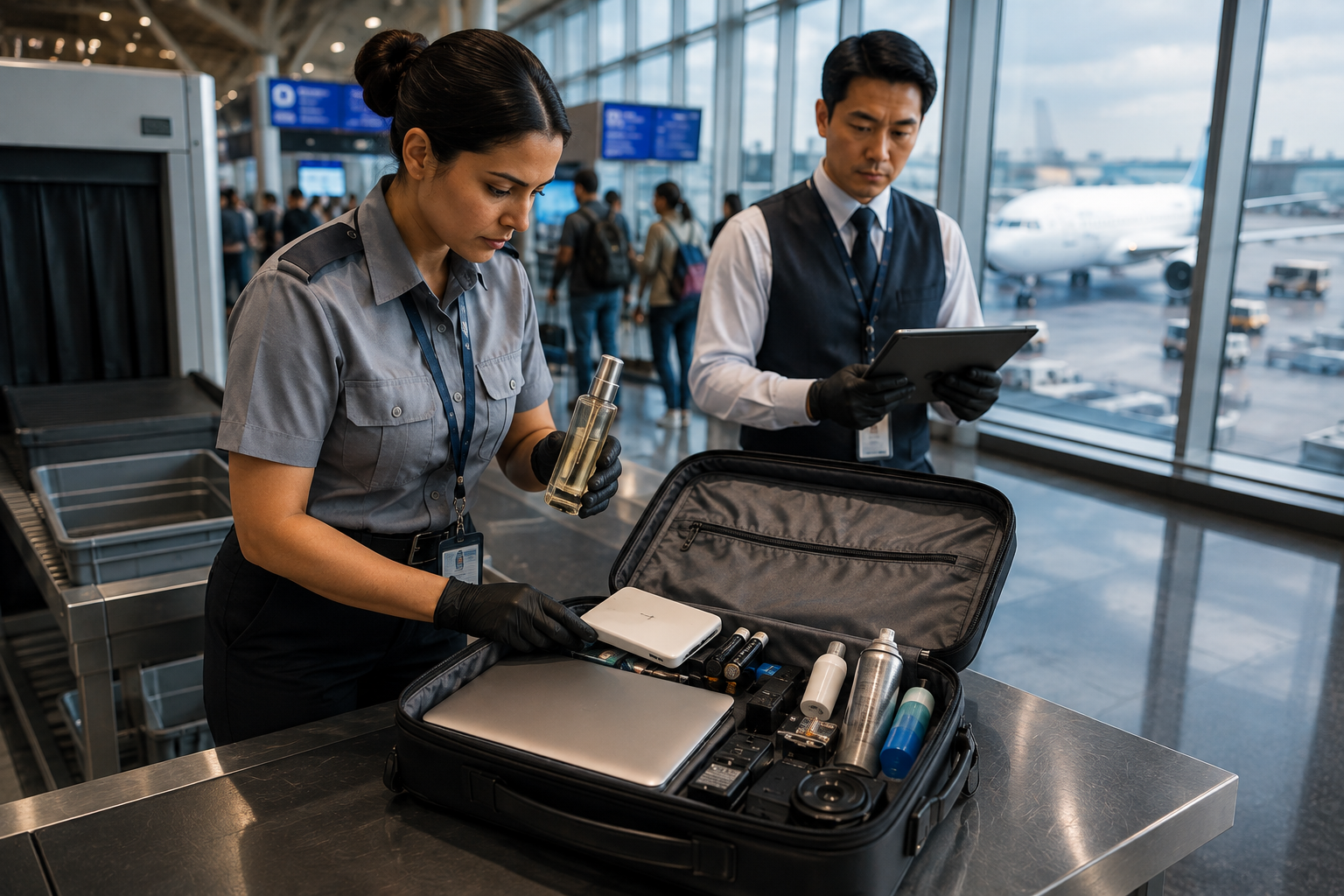
If airline staff ask whether baggage contains restricted or hazardous items, accurate answers help maintain the safety of everyone on board.
Failure to declare prohibited dangerous goods can increase safety risks and may result in penalties under national aviation regulations.
How Aviation Keeps Dangerous Goods Safe
Commercial aviation uses multiple layers of protection to reduce risk.
These include:
- International regulations
- Certified packaging
- Security screening
- Trained airline personnel
- Cargo acceptance procedures
- Aircraft fire detection and suppression systems
- Continuous staff training
Every shipment accepted for air transport must comply with internationally recognized safety requirements.
This systematic approach allows many essential dangerous goods such as medical supplies and scientific materials to be transported safely around the world.
What Passengers Can Do
Every traveler plays a role in aviation safety.
Before packing:
- Check your airline's baggage guidance.
- Carry electronic devices responsibly.
- Avoid packing prohibited items.
- Ask airline staff if you are uncertain about a particular item.
- Follow security instructions at the airport.
These simple precautions help ensure a safe journey for everyone.
Dangerous Goods Myths vs Facts
Myth: Dangerous goods are only industrial chemicals.
Fact: Many everyday products, including power banks, aerosols, perfumes, and some batteries, are regulated because they may present risks during air transport.
Myth: Dangerous goods are always prohibited on aircraft.
Fact: Many dangerous goods are transported safely every day under strict international regulations and approved packaging requirements.
Myth: Aviation regulations are unnecessarily strict.
Fact: These regulations are based on decades of scientific research, operational experience, and international cooperation to protect passengers, crew, and aircraft.
Myth: Airport security creates these rules.
Fact: The global framework is developed through international standards established by ICAO, with operational guidance widely implemented by airlines through IATA and national aviation authorities.
Conclusion
Every day, commercial aviation safely transports millions of passengers and countless tonnes of cargo across the world. Behind every successful flight is a carefully designed safety system that extends far beyond the cockpit.
Dangerous goods regulations are an essential part of that system. By identifying potential hazards, applying internationally recognized standards, and ensuring proper handling, the aviation industry minimizes risks while enabling the safe movement of essential materials that support healthcare, research, industry, and global commerce.
Many items we use every day, including power banks, aerosols, batteries, and certain chemicals, may require special consideration when travelling by air. Understanding why these regulations exist helps passengers make informed decisions before packing and contributes to a safer travel experience for everyone.
Ultimately, dangerous goods regulations are not about restricting travel; they are about protecting lives. Through international cooperation led by organizations such as ICAO and IATA, commercial aviation continues to maintain one of the highest safety standards of any mode of transportation.