What Happens When an Aircraft Loses an Engine? Why a Twin-Engine Airliner Can Keep Flying


Introduction
Imagine sitting beside the window of a commercial aircraft when something unusual happens. The sound from one side of the aircraft changes, the flight crew makes an announcement, and you learn that one of the engines is no longer operating normally.
For many passengers, the immediate thought would be frightening:
Can an airplane really fly with only one engine?
For a modern twin-engine commercial aircraft, the answer is yes.
An engine failure is a serious event that pilots are trained to handle, and the flight would normally be diverted rather than simply continuing as though nothing had happened. But losing one engine does not mean that a twin-engine aircraft suddenly loses its ability to fly.
Modern airliners are designed, certified and operated with the possibility of an engine becoming inoperative taken into account.
Understanding what actually happens during such an event provides a fascinating look at one of aviation's most important principles: redundancy.
First, Why Does an Aircraft Need Engines?
A common misconception is that engines somehow "hold" an airplane in the sky.
They do not.
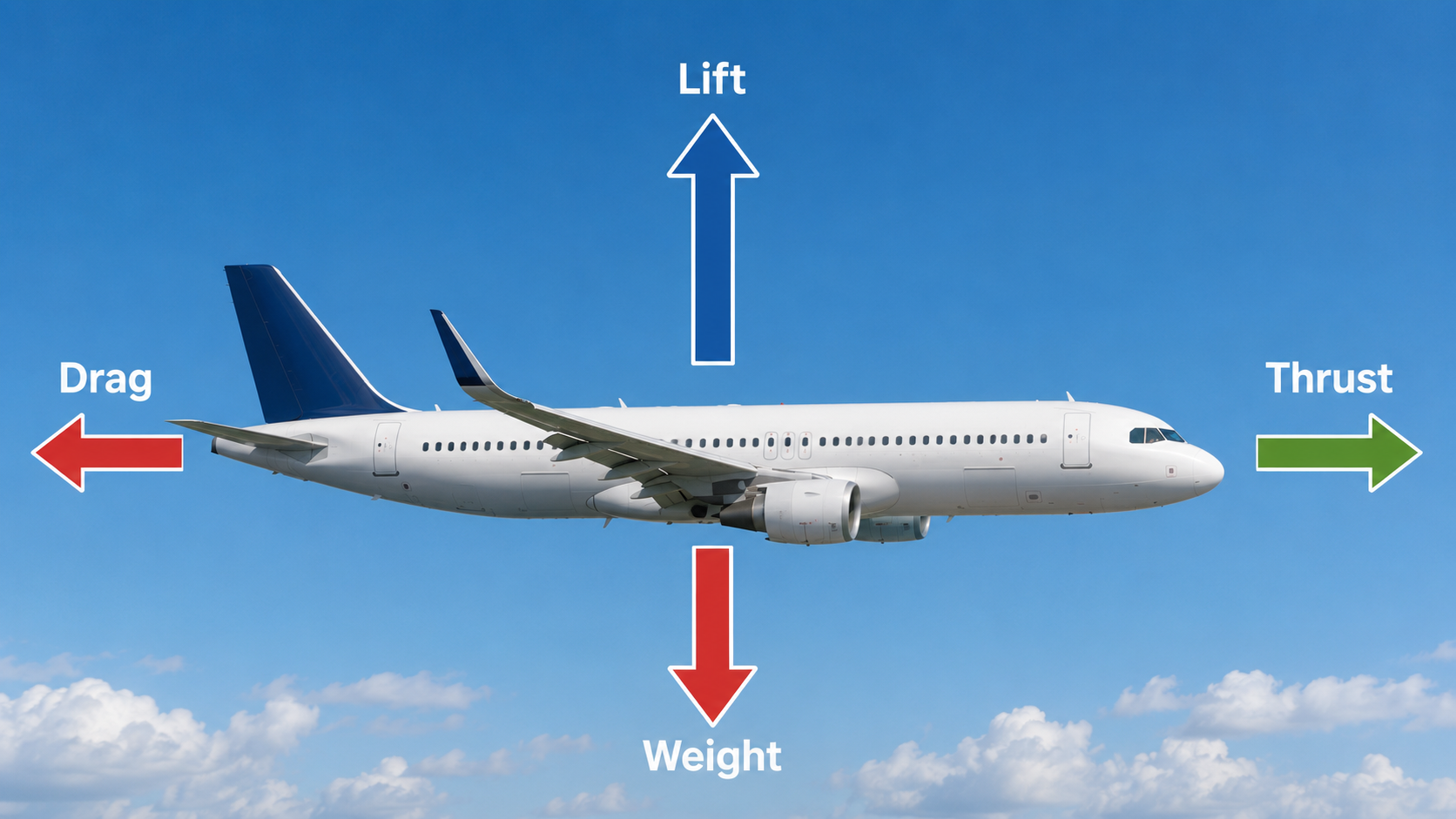
An aircraft's engines primarily provide thrust, pushing the aircraft forward through the air. As air flows around the wings, the wings generate lift.
If an engine stops producing thrust, the wings do not suddenly stop functioning.
Even an aircraft with no operating engines can glide for a considerable distance while descending. Pilots can control its direction, airspeed and descent while searching for an appropriate landing location.
With one engine still operating on a twin-engine aircraft, the situation is significantly different: the aircraft still has a source of thrust.
What Actually Happens When One Engine Fails?
Suppose a twin-engine airliner experiences an engine failure during flight.
One engine continues producing thrust while the other does not.
This creates asymmetric thrust.
Instead of having approximately balanced thrust on both sides of the aircraft, thrust is now being produced primarily on one side. This creates a tendency for the aircraft to yaw toward the side of the failed engine.
Pilots counteract this using the aircraft's flight controls, particularly the rudder, while following procedures specifically developed for engine-out operation.
The aircraft may also need to descend to a lower altitude because its maximum sustainable altitude with one engine is generally lower than when both engines are operating.
The important point is that the aircraft remains controllable.
Engine Failure During Takeoff
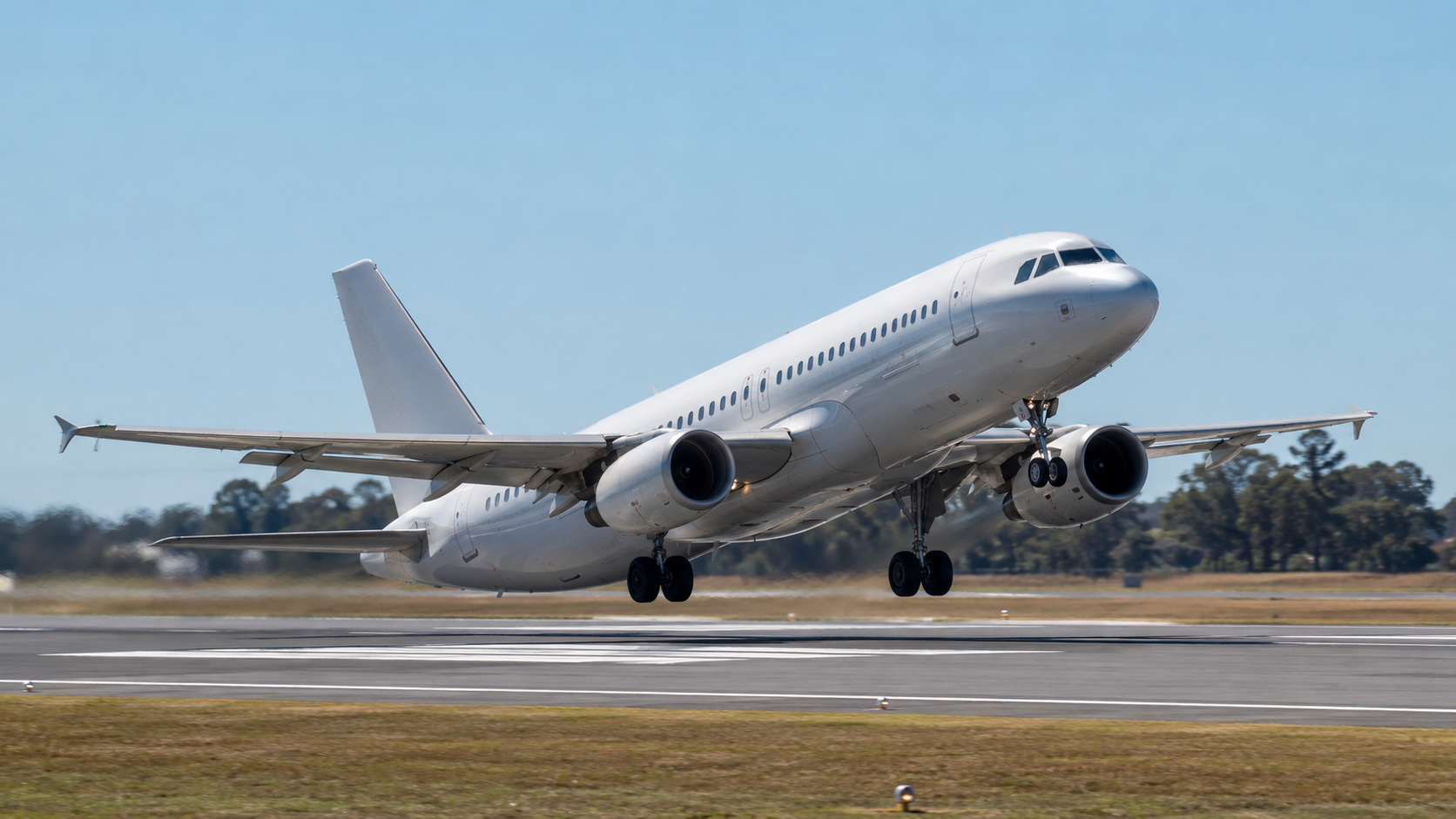
Takeoff is one of the most demanding phases in which an engine failure can occur because the aircraft is close to the ground and decisions must be made quickly.
Commercial aviation addresses this possibility during aircraft certification, pilot training and takeoff performance calculations.
Before departure, crews calculate whether the aircraft can safely perform the takeoff based on factors including:
- Aircraft weight
- Runway length
- Weather conditions
- Temperature
- Wind
- Runway condition
- Airport elevation
- Aircraft performance
One important concept is V1, commonly described as the takeoff decision speed.
Before reaching the appropriate decision point, certain serious failures may result in a rejected takeoff.
Once the aircraft has passed that point during the takeoff roll, the safer course for many failures may be to continue the takeoff, become airborne and deal with the problem in flight.
This may sound counterintuitive to passengers, but aircraft takeoff performance is calculated with engine failure scenarios in mind.
Can the Aircraft Climb With Only One Engine?
A properly operated and certified transport-category twin-engine aircraft must demonstrate specific performance capabilities with one engine inoperative.
That is particularly important during takeoff.
The aircraft will not normally climb as efficiently as it would with both engines operating. Nevertheless, under the conditions for which the takeoff has been planned, it has the performance necessary to safely continue following an engine failure at a critical stage.
This is one reason airline dispatch and flight operations involve so many calculations before departure.
The aircraft's weight cannot simply be considered in isolation. Runway length, obstacles, temperature, wind and other factors affect the performance available.
What passengers see as an ordinary departure is therefore supported by extensive planning behind the scenes.
What Will the Pilots Do?
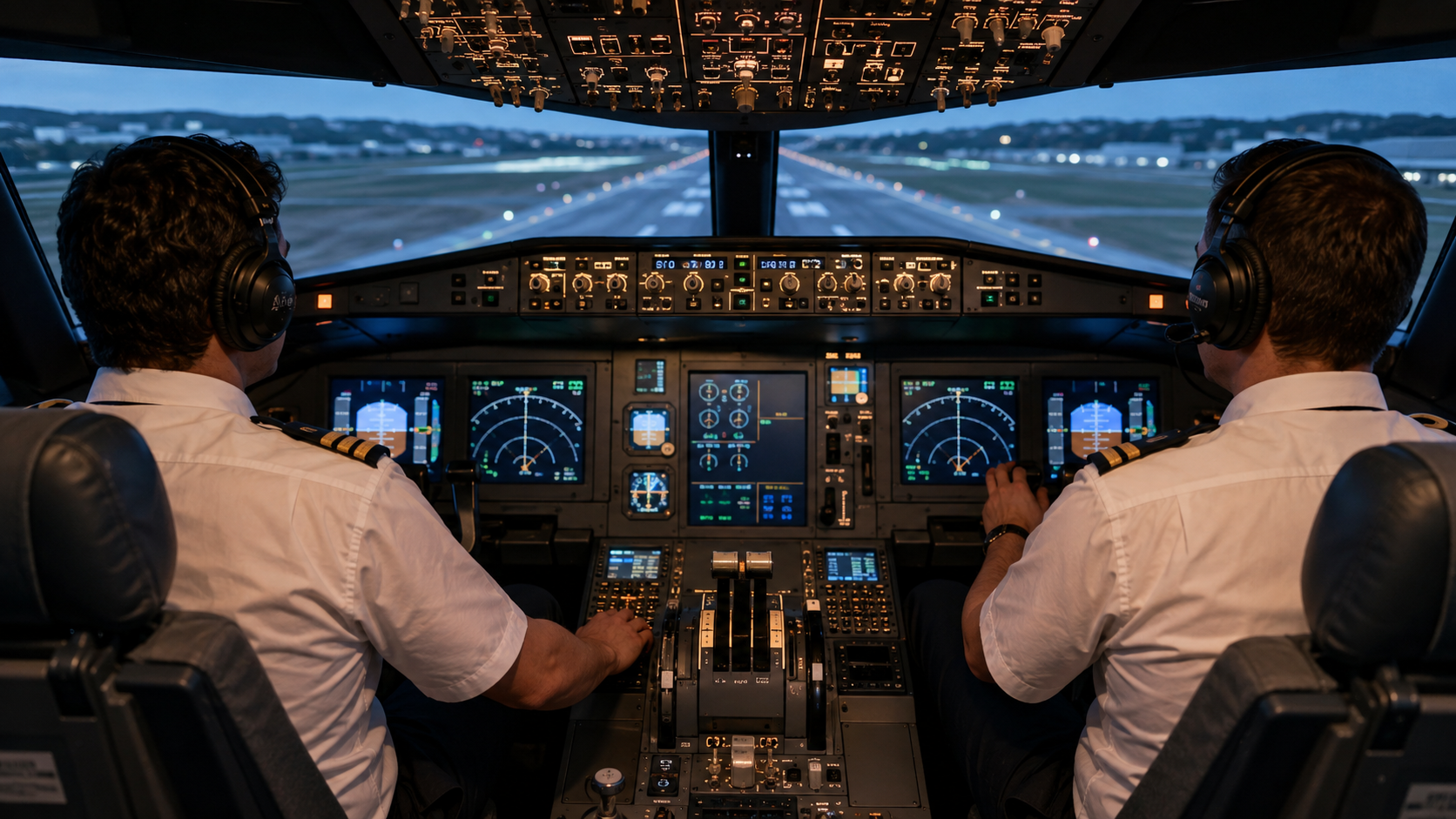
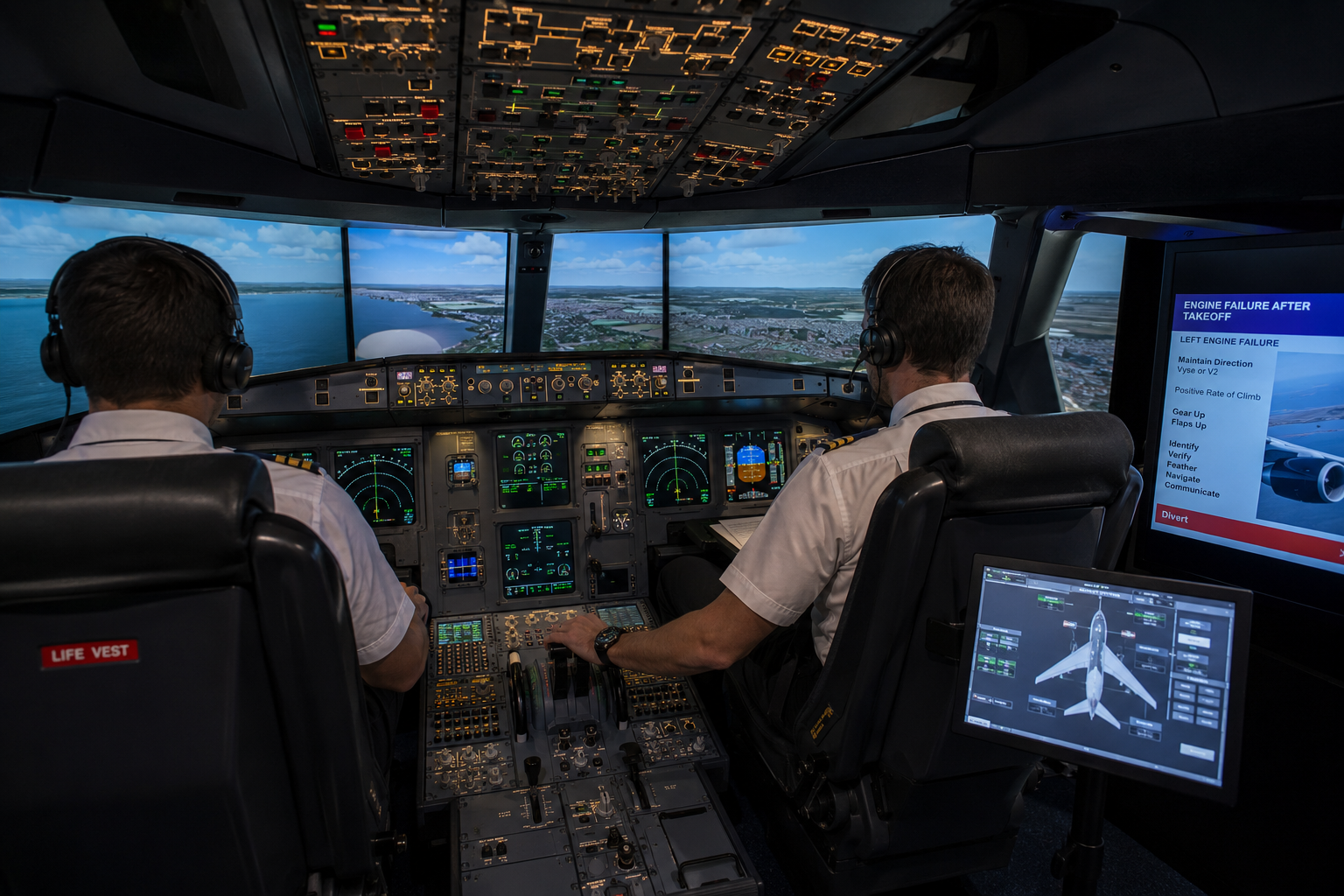
Airline pilots repeatedly practise engine failures in full-flight simulators.
Training can include engine failures during takeoff, climb, cruise and approach.
If an engine problem occurs, the immediate priority is not necessarily to determine every technical detail instantly.
The crew's first responsibility remains:
Aviate, navigate and communicate.
They maintain control of the aircraft, establish an appropriate flight path, identify and manage the problem using approved procedures, communicate with air traffic control and determine the safest course of action.
Depending on the circumstances, that usually involves diverting to a suitable airport.
Pilots also work through established checklists rather than improvising solutions.
Why Not Continue to the Original Destination?
If an aircraft can fly on one engine, passengers might reasonably ask:
Why does it need to divert?
Because the purpose of redundancy is to provide a safe margin when something fails not to make the failed component irrelevant.
Once an engine has been lost, one important layer of redundancy is no longer available.
Pilots therefore assess factors such as:
- Distance to suitable airports
- Weather
- Runway availability
- Remaining fuel
- Terrain
- Aircraft condition
- Nature of the engine problem
The safest airport is not necessarily the geographically closest one. The crew and airline operational teams consider which airport is suitable for the circumstances.
Landing allows engineers to inspect the aircraft and determine exactly what caused the problem.
What Is ETOPS?
This brings us to one of the most interesting concepts in long-distance aviation: ETOPS.
Modern twin-engine aircraft routinely operate routes that take them long distances from suitable diversion airports, including flights across oceans and remote regions.
Such operations are subject to specific regulatory requirements.
ETOPS originally developed around extended operations for twin-engine aircraft, although modern regulatory terminology can encompass broader extended operations depending on the authority and aircraft.
The basic safety principle is straightforward:
An airline must demonstrate that its aircraft, maintenance programme, flight planning, crew procedures and supporting systems satisfy stringent requirements for operations where a suitable diversion airport may be a significant distance away.
ETOPS does not mean that pilots expect an engine to fail.
It means the operation has been planned so that rare failures can be safely managed.

Aircraft Systems Are Designed Around Redundancy
Engine redundancy is only one part of a much larger philosophy.
Commercial aircraft contain multiple systems designed so that the failure of a single component does not automatically result in loss of the aircraft.
Depending on aircraft design, redundancy may exist across:
- Electrical generation
- Hydraulic systems
- Flight-control systems
- Navigation equipment
- Communication systems
- Flight computers
Aircraft engines can also supply electrical power, hydraulic pressure and compressed air for various systems. When one engine becomes unavailable, aircraft systems are designed with alternative sources and procedures to maintain essential functions.
Some aircraft also have an Auxiliary Power Unit (APU) that can provide additional electrical power and, depending on aircraft type and circumstances, pneumatic capability.
The exact architecture differs between aircraft types, but the philosophy is consistent:
Critical functions should not depend unnecessarily on a single point of failure.
What If Both Engines Stop?
This situation is far rarer and considerably more serious.
But even then, the aircraft does not simply fall vertically from the sky.
An airliner becomes a glider.
Without engine thrust, the aircraft gradually loses altitude while maintaining forward airspeed. Pilots use the aircraft's aerodynamic performance to maximize the distance available for reaching a suitable landing area.
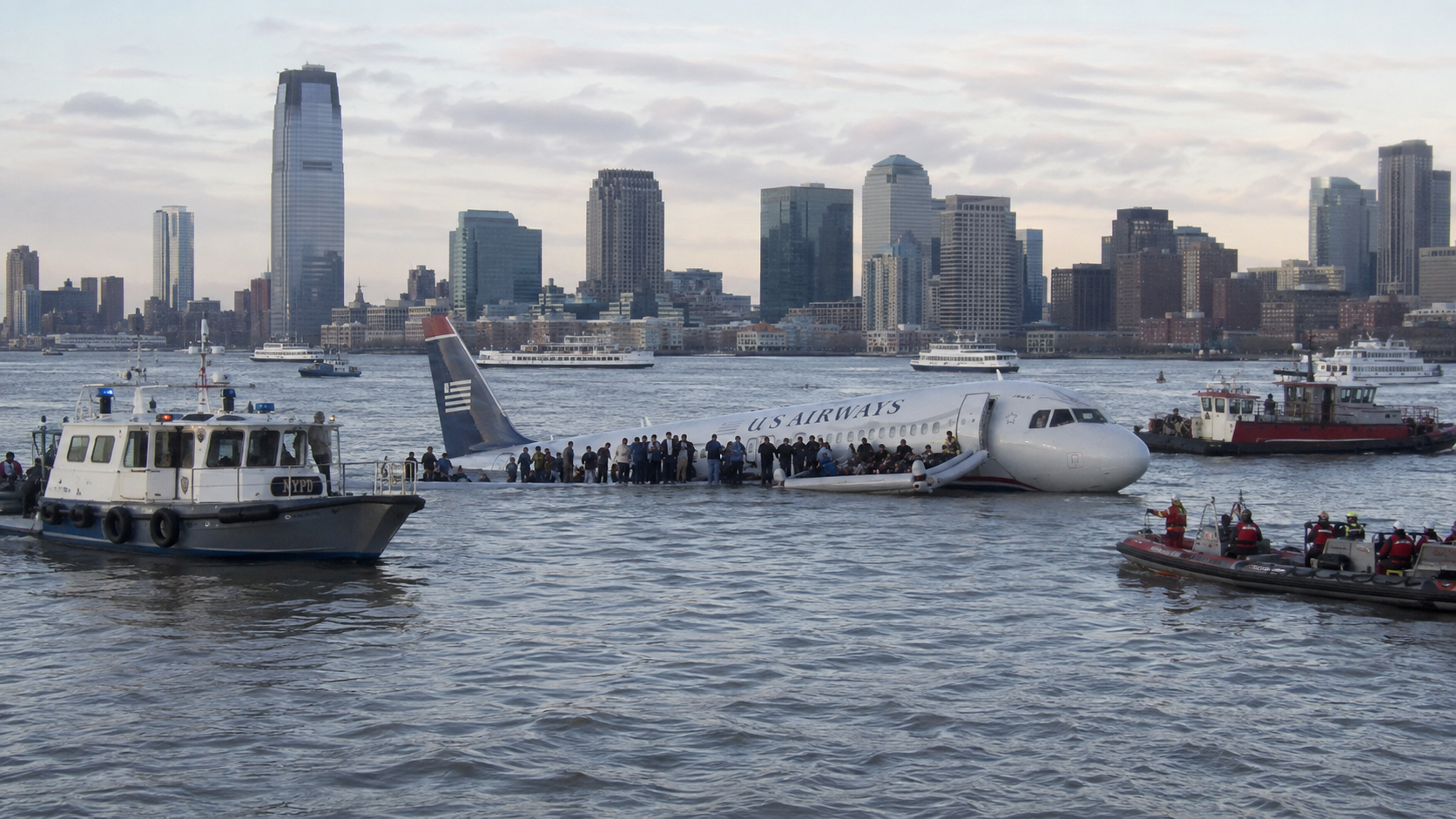
A famous demonstration occurred on US Airways Flight 1549 on 15 January 2009.
The Airbus A320 struck a flock of Canada geese shortly after departing New York's LaGuardia Airport and lost usable thrust in both engines.
Captain Chesley Sullenberger and First Officer Jeffrey Skiles successfully ditched the aircraft in the Hudson River.
All 155 people aboard survived.
The event was extraordinary, but it demonstrated an important aerodynamic fact: losing engine thrust does not mean losing all control of an aircraft.
Can Pilots Restart a Failed Engine?
Sometimes.
An engine may shut down for different reasons, and not every shutdown means that the engine has been physically destroyed.
Depending on the cause and aircraft procedures, pilots may be able to attempt a restart.
In other circumstances, deliberately keeping the affected engine shut down is the safest option.
Flight crews follow aircraft-specific procedures and checklists to determine what actions are appropriate.
They do not repeatedly attempt to restart an engine when doing so would create additional risk.
How Reliable Are Modern Jet Engines?
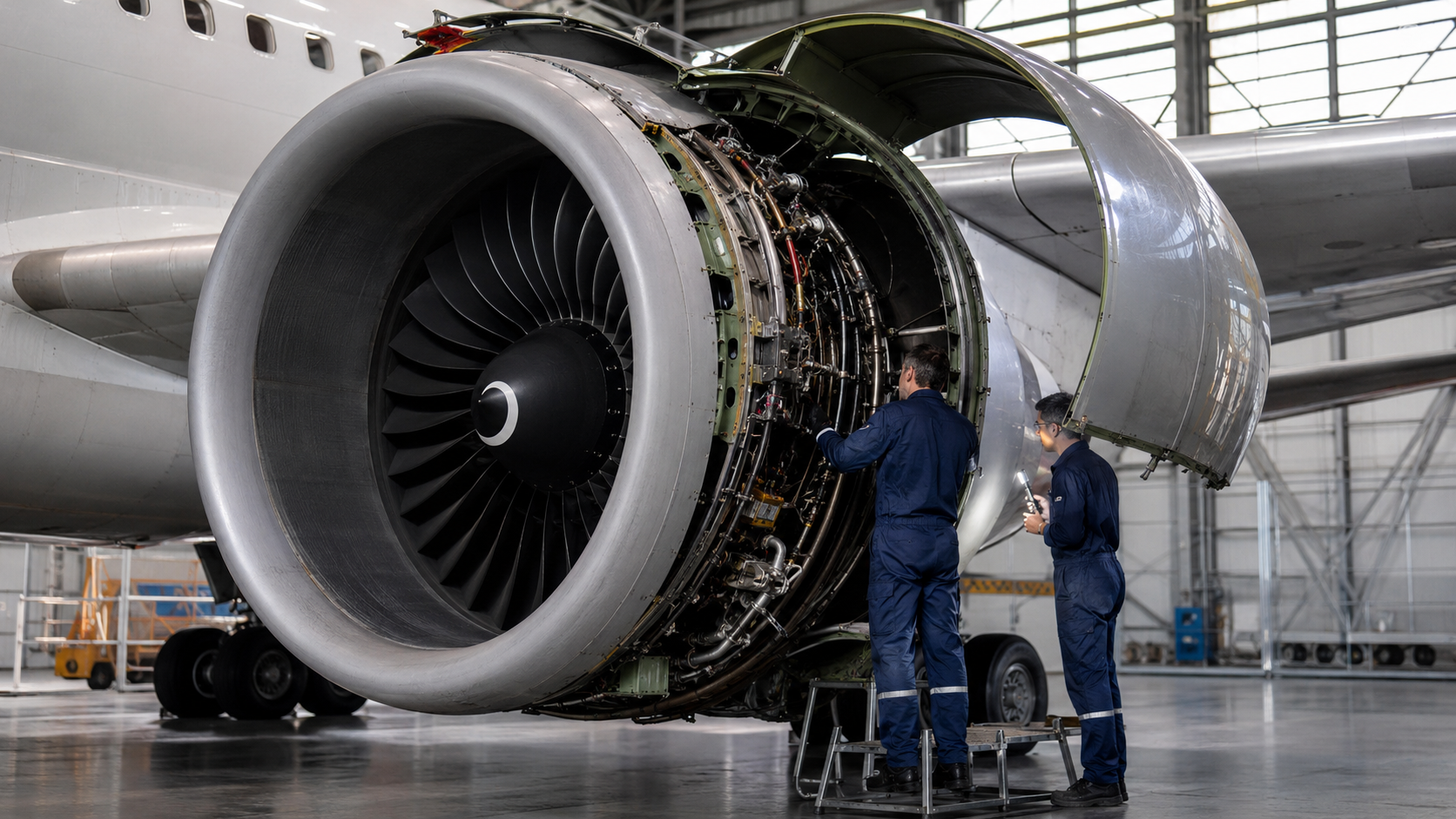
Modern commercial turbofan engines are designed to extremely demanding reliability standards.
Engine manufacturers subject them to extensive testing before certification, while airlines operate strict inspection and maintenance programmes throughout their service lives.
Engines are monitored for parameters including temperature, pressure, vibration and performance.
Modern aircraft can also transmit technical information to airline maintenance teams, allowing developing issues to be identified and investigated.
Despite these safeguards, aviation never assumes that mechanical failure is impossible.
Instead, the industry asks a more important question:
If something does fail, can the aircraft still be operated safely?
That philosophy explains why redundancy is so deeply embedded in aircraft engineering.
What Passengers Might Notice
An engine problem does not always look like the dramatic scenes portrayed in films.
Depending on the failure, passengers might notice:
- A change in engine noise
- Vibration
- A change in aircraft attitude
- A reduction in altitude
- A change of route
- Emergency vehicles waiting after landing
In some failures, passengers seated near an engine may observe something before passengers elsewhere in the cabin do.
The cabin crew will follow established procedures and instructions from the pilots.
If an emergency landing is expected, passengers may receive additional safety instructions.
The most important thing passengers can do is remain seated when instructed, keep their seatbelts fastened and listen carefully to the cabin crew.
Myth: One Engine Stops, So the Aircraft Has Only Half Its Safety
Aircraft safety does not work that simply.
Losing one of two engines obviously reduces available propulsion and removes an important layer of redundancy, which is why the situation is treated seriously.
But the aircraft does not instantly become uncontrollable.
Its certification, operational procedures, pilot training and flight planning all take engine-out performance into consideration.
Myth: An aircraft needs both engines to stay airborne.
Fact: The wings generate lift. A twin-engine aircraft can remain in controlled flight with one engine inoperative.
Myth: An engine failure means an aircraft will crash.
Fact: Engine failures are abnormal events, but pilots train extensively for them and twin-engine commercial aircraft are designed with engine-out operation in mind.
Myth: Pilots have never practised what is happening.
Fact: Engine failures are a standard part of airline simulator training.
Myth: Aircraft crossing oceans are too far from airports if something fails.
Fact: Extended twin-engine operations are planned around suitable diversion airports and are subject to specific regulatory requirements.
Why Understanding This Matters
For passengers, an engine failure understandably sounds terrifying.
But aviation safety is not built around the assumption that machines will never fail.
It is built around anticipating failures before they happen.
Engineers design redundancy.
Manufacturers demonstrate aircraft performance.
Airlines maintain equipment.
Dispatchers plan routes and alternatives.
Pilots train for abnormal situations.
Air traffic controllers provide assistance.
Airport emergency services prepare for aircraft returning with technical problems.
All of these layers exist because aviation safety is based not on a single protection, but on multiple protections working together.
Conclusion
A twin-engine aircraft losing one engine is unquestionably a serious event.
But serious does not mean uncontrollable.
Modern commercial aircraft are designed and certified with engine failures in mind. Pilots practise these scenarios repeatedly, flight planning accounts for engine-out performance, and long-distance operations incorporate carefully selected diversion airports.
Perhaps the most reassuring fact is also the simplest:
An aircraft does not need both engines operating to remain in controlled flight.
The remaining engine provides thrust while the wings continue producing lift, allowing the pilots to stabilize the aircraft and divert to a suitable airport.
Even in the extraordinarily rare event that all engine thrust is lost, an aircraft does not simply fall from the sky. It can glide while pilots work to restore power or identify a landing location.
This is one of the fundamental lessons of modern aviation safety.
The industry does not achieve safety by pretending that failures cannot happen.
It achieves safety by preparing for them.