When Geography Changed Overnight: Finland’s Aviation After Russian Airspace Closure
In 2019, Helsinki Airport recorded 21.9 million passengers, the highest figure in its history. Of these, approximately 3.6 million were transfer passengers, many traveling between Europe and Asia.

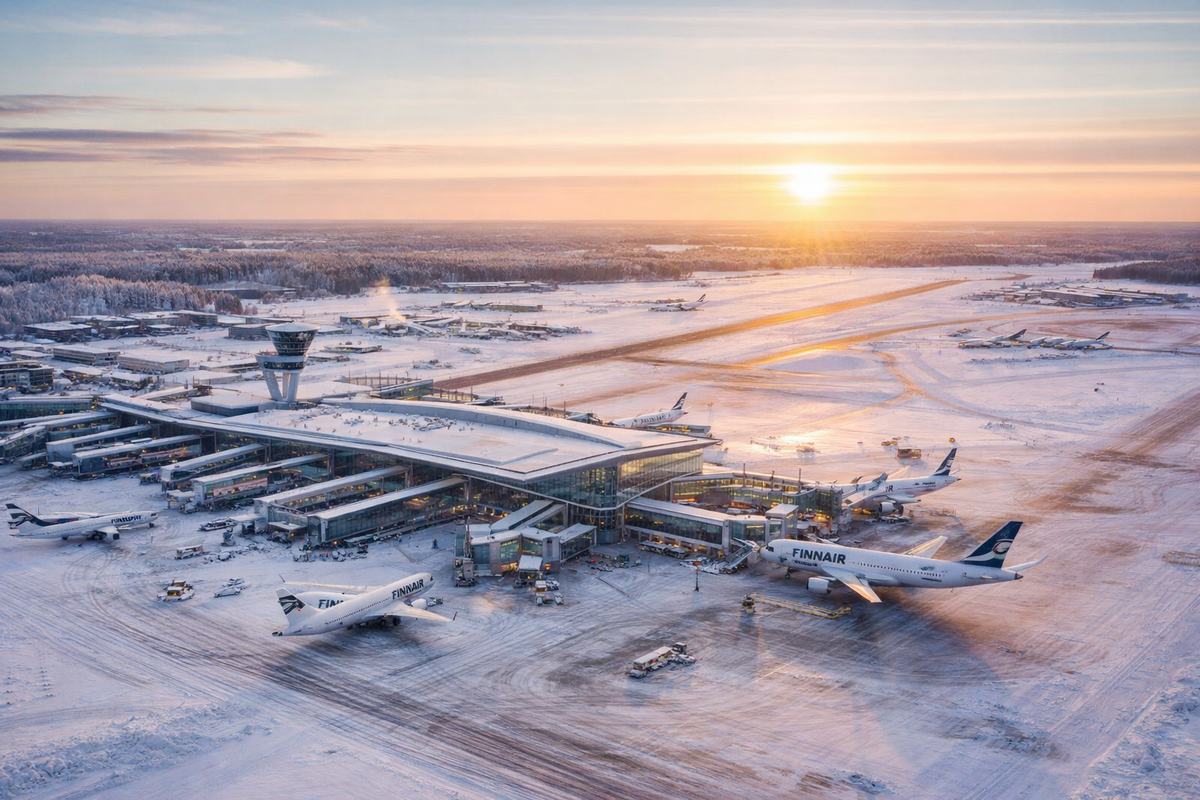
Situated at the northern edge of Europe, Finland lies along one of the shortest great-circle routes between Western Europe and Northeast Asia. This strategic location transformed Helsinki into one of the most efficient transit hubs linking Europe and Asia.
For years, this geographic positioning gave Finland a structural advantage that few other European countries could match.
In February 2022, following the invasion of Ukraine, Russian airspace was closed to European Union carriers.
What followed was not merely a change in scheduling. It marked a structural shift in Finland’s aviation model.
Finland’s Aviation Model Before 2022
Before geopolitical disruption and the COVID-19 pandemic, Finland’s aviation system was strongly oriented eastward.
In 2019, Helsinki Airport recorded 21.9 million passengers, the highest figure in its history. Of these, approximately 3.6 million were transfer passengers, many traveling between Europe and Asia.
Asian destinations formed a crucial part of long-haul operations, with direct connections to several cities in Japan, China, South Korea, Thailand, and Singapore.
The model worked because of efficiency.
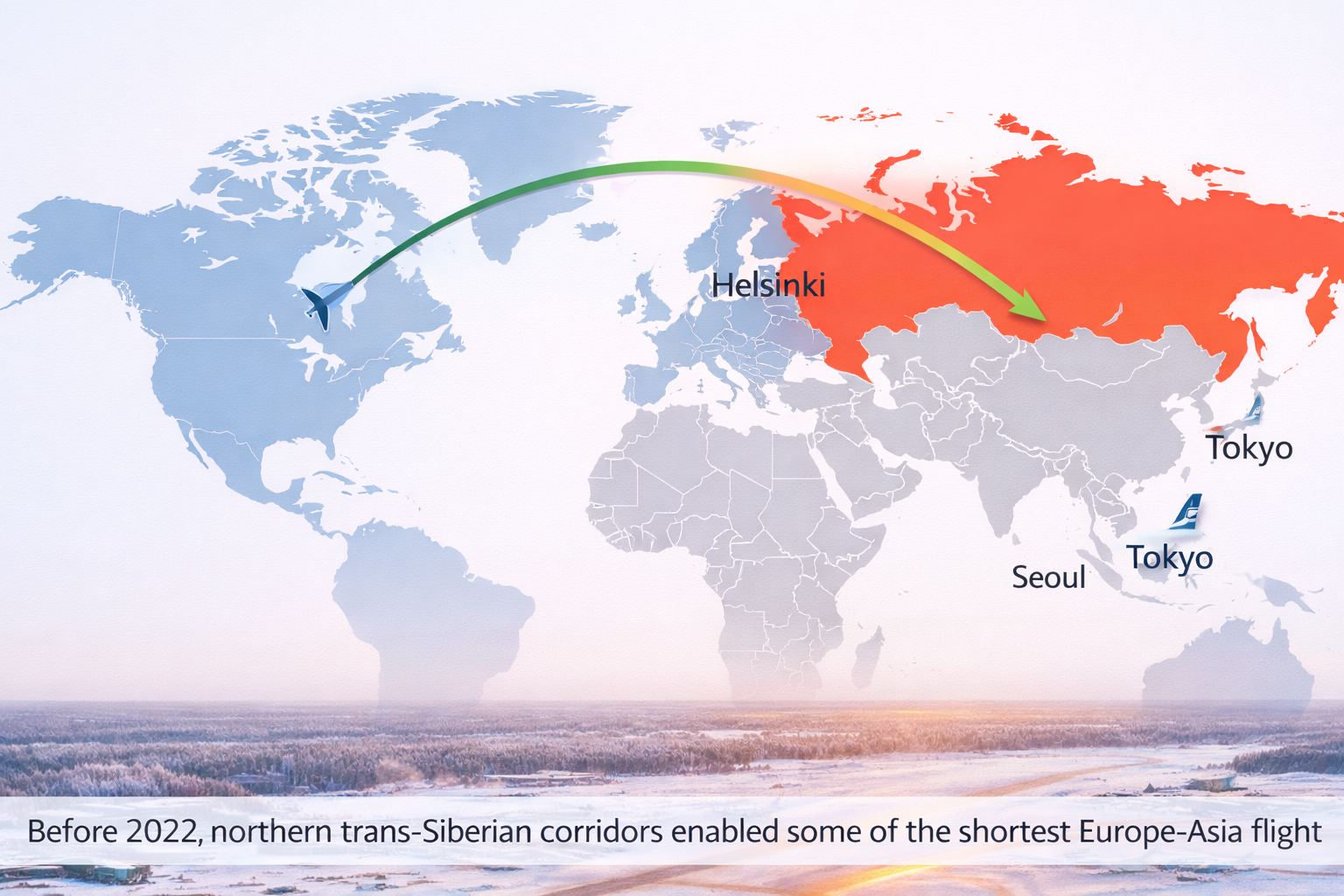
Northern routing through Russian airspace enabled shorter flight times compared to many Central European hubs. Flights between Helsinki and
Tokyo, for example, typically require around 9 to 10 hours via trans-Siberian corridors. This reduced fuel consumption, maximized aircraft utilization, and enabled tight connection windows at Helsinki Airport.
Finland’s broader aviation ecosystem, including airlines, airport services, ground handling, cargo operations, tourism, and export industries, developed around this east-west flow.
Geography was not simply an advantage. It functioned as infrastructure.
The Closure of Russian Airspace
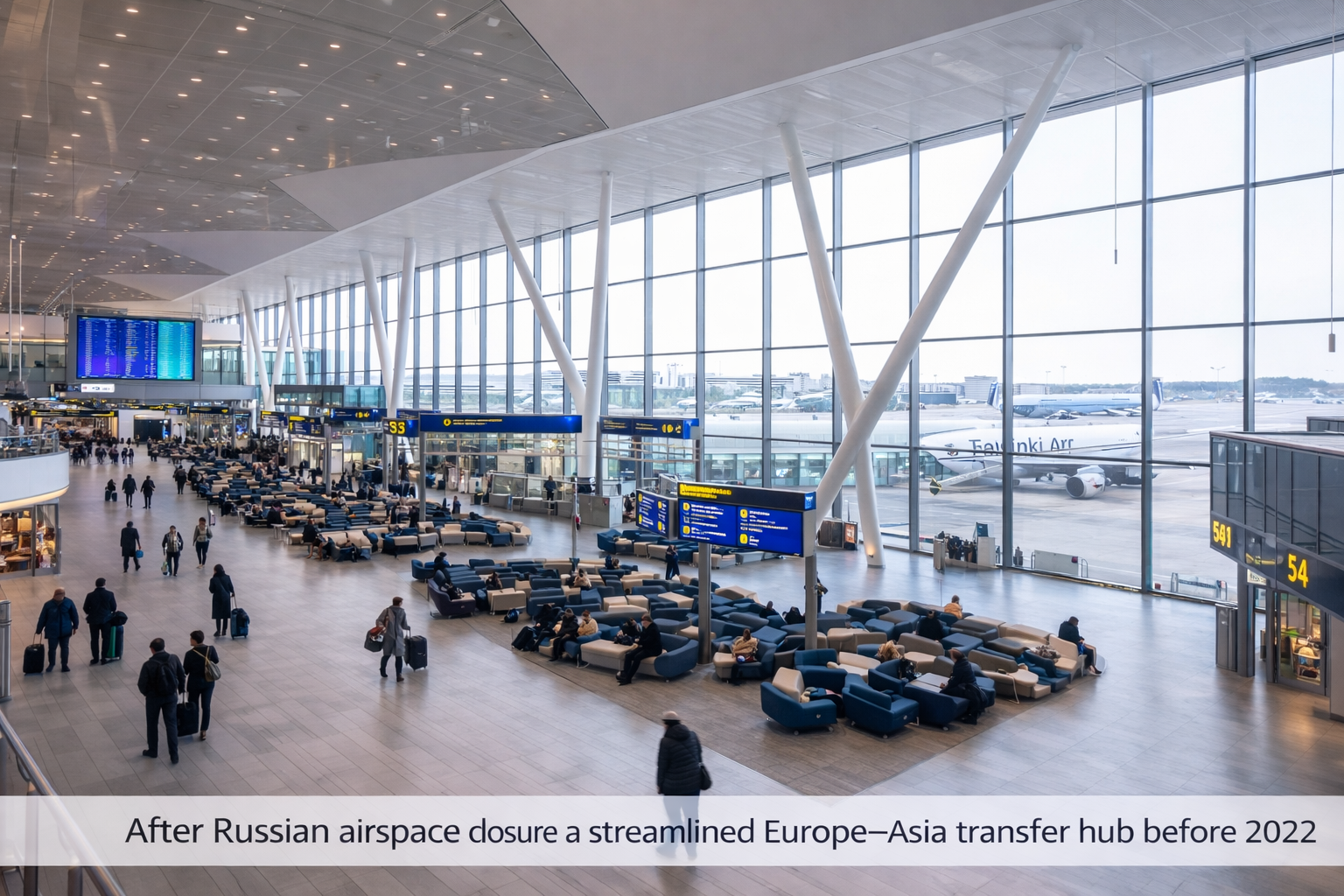
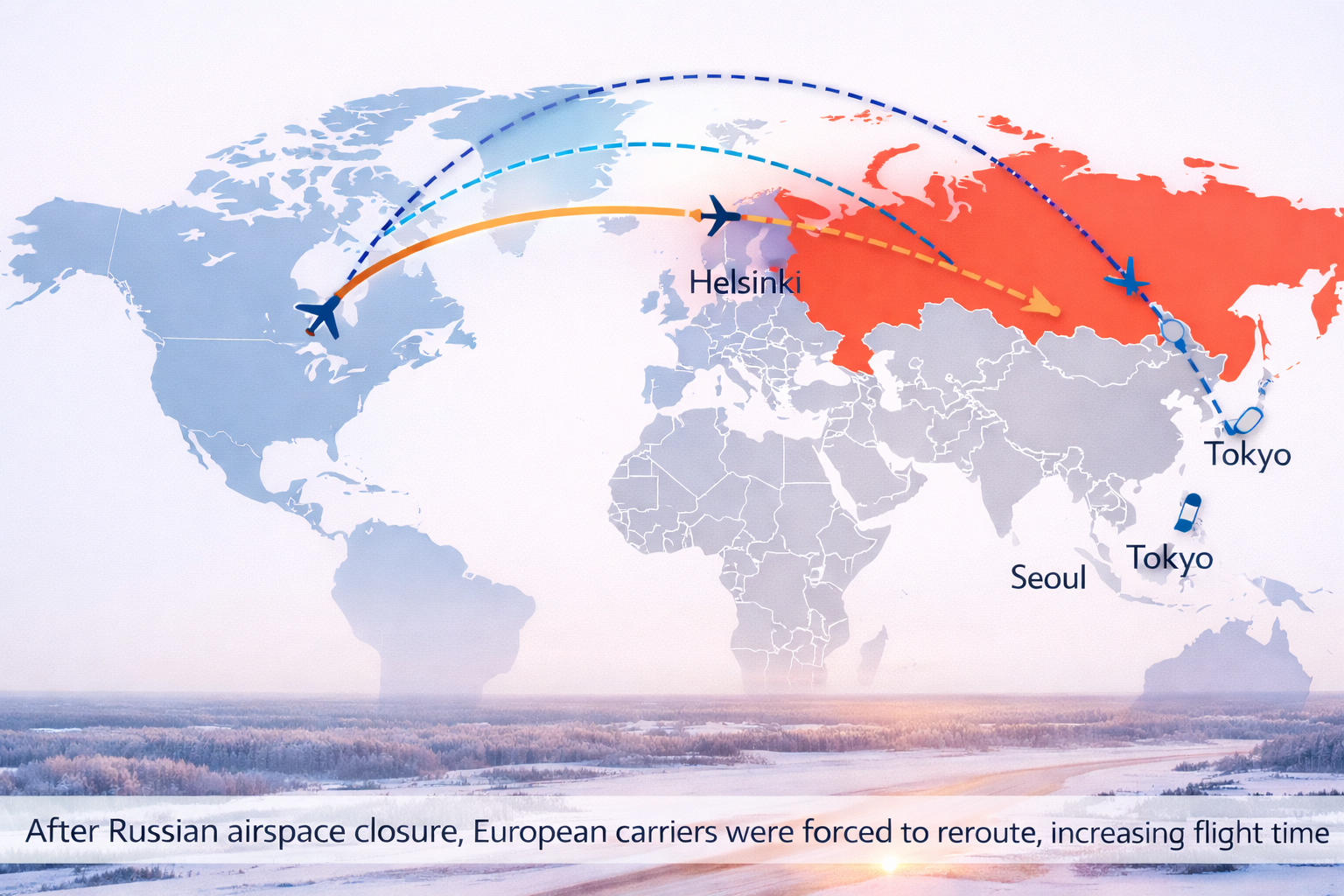
In early 2022, access to Russian airspace was revoked for EU carriers. Finnish airlines could no longer operate through the most direct northern corridors.
Flights to Asia were forced to reroute either southward or through alternative Arctic paths. Depending on destination and conditions, flight times increased by approximately 2 to 4 hours, and route distances expanded by roughly 10–15 percent.
In aviation, time equals cost.
Longer block times increase:
- Fuel consumption
- Crew duty expenses
- Aircraft maintenance exposure
- Carbon emissions per flight
- Fleet utilization inefficiencies
For countries with diversified long-haul exposure, the impact was manageable. For Finland, whose aviation model relied heavily on efficient Asia connectivity, the effect was disproportionate.
The geography itself had not changed. Access to it had.
Passenger Traffic Trends
The airspace closure occurred during the aviation industry's recovery from the pandemic, making the trends layered yet revealing.
Passenger statistics reflect the broader structural shift:
- 2019: 21.9 million passengers
- 2020: 5.0 million (pandemic collapse)
- 2022: Approximately 15 million (partial recovery)
- 2023–2024: Continued recovery, though Asia-related transfer traffic remains below 2019 levels
Transfer volumes in 2024 are estimated to remain 20–25 percent lower than pre-pandemic levels, largely due to reduced competitiveness in Europe–Asia connections.
Intra-European and North American demand has rebounded strongly. However, Asian traffic continues to face structural headwinds driven by longer routing and competitive imbalance.
This suggests that recovery is not purely cyclical; it is partly structural.
Competitive Imbalance
One of the most significant challenges for Finnish aviation has been competitive asymmetry.
Some non-EU carriers retained access to Russian airspace, allowing them to operate shorter Europe–Asia routes. This created time and cost advantages on specific corridors, particularly between Asia and Western Europe.
For Finnish aviation stakeholders, this meant:
- Reduced pricing flexibility
- Longer flight durations relative to some competitors
- Increased pressure on route profitability
- The need to reassess network balance
For years, geography provided Finland with a structural edge. After 2022, that edge became conditional.
Cargo and Trade Implications
Aviation plays a vital role in Finland’s export-oriented economy.
Before 2022, Helsinki served as an efficient northern corridor for air freight between Europe and Asia. Shorter routes supported time-sensitive logistics and predictable scheduling.
Longer routes increase fuel costs and complicate supply chain calculations. Although cargo operations continue, the economics of long-haul freight have become more complex.
Industries dependent on rapid global connectivity, including technology and specialized manufacturing, rely heavily on aviation efficiency. Reduced routing efficiency therefore carries broader economic implications beyond passenger travel.
Environmental Impact
Extended flight paths also complicate environmental targets.
Additional flight hours directly increase fuel consumption and carbon emissions per sector. Even with modern fuel-efficient aircraft, longer routes inevitably raise total emissions.
Finland, like other EU countries, faces growing pressure to meet climate objectives. The aviation sector continues investing in sustainable aviation fuel (SAF), fleet modernization, and operational optimization. However, route distance remains a fundamental determinant of emissions performance.
The intersection between geopolitics and climate strategy has become increasingly evident.
Structural Adaptation
Finland’s aviation system has responded with recalibration rather than retreat.
Key adjustments include:
Diversification of Long-Haul Focus
Greater emphasis on North American routes and strengthened intra-European connectivity.
Reduced Dependence on a Single Directional Strategy
Before 2022, Asia dominated long-haul growth planning. The network has since become more balanced.
Cost Discipline and Operational Efficiency
Extended routing requires tighter financial management and optimized fleet scheduling.
Infrastructure Stability
Helsinki Airport remains modern, efficient, and strategically located within Northern Europe, even if routing advantages have narrowed.
The hub model is evolving. It has not collapsed — but it has matured into a resilience-focused structure.
A Broader Aviation Lesson
The Russian airspace closure highlights a fundamental reality of global aviation:
Airspace rights are political instruments.
International agreements, diplomacy, and sanctions govern them. Access can change rapidly.
For Finland whose aviation identity was closely linked to northern efficiency — the experience has been transformative. The country’s geographic position remains the same, but the operational freedom to capitalize on it has been constrained.
Geography alone does not guarantee competitiveness.
Adaptability does.
Looking Forward
Passenger volumes continue to rise. European and transatlantic routes remain strong. Infrastructure is modern and demand for connectivity persists.
Yet the structural nature of airspace restrictions means Finland’s aviation system operates in a fundamentally different competitive environment than in 2019.
The future depends on:
- Continued network diversification
- Sustainable fuel integration
- Strategic partnerships
- Operational efficiency
- Geopolitical developments
The past decade demonstrated how powerful geography can be. The years since 2022 have shown that resilience matters more.
Conclusion
When Russian airspace closed, Finland’s aviation geography changed overnight.
The country’s northern position once provided one of Europe’s most efficient bridges to Asia. That efficiency fueled passenger growth, transfer traffic, and economic integration.
Today, Finland’s aviation sector operates within a more complex and competitive environment. The advantage of proximity has been replaced by the necessity of strategic flexibility.
In aviation, maps matter.
But strategy ensures survival.