What is Docker and how it works?


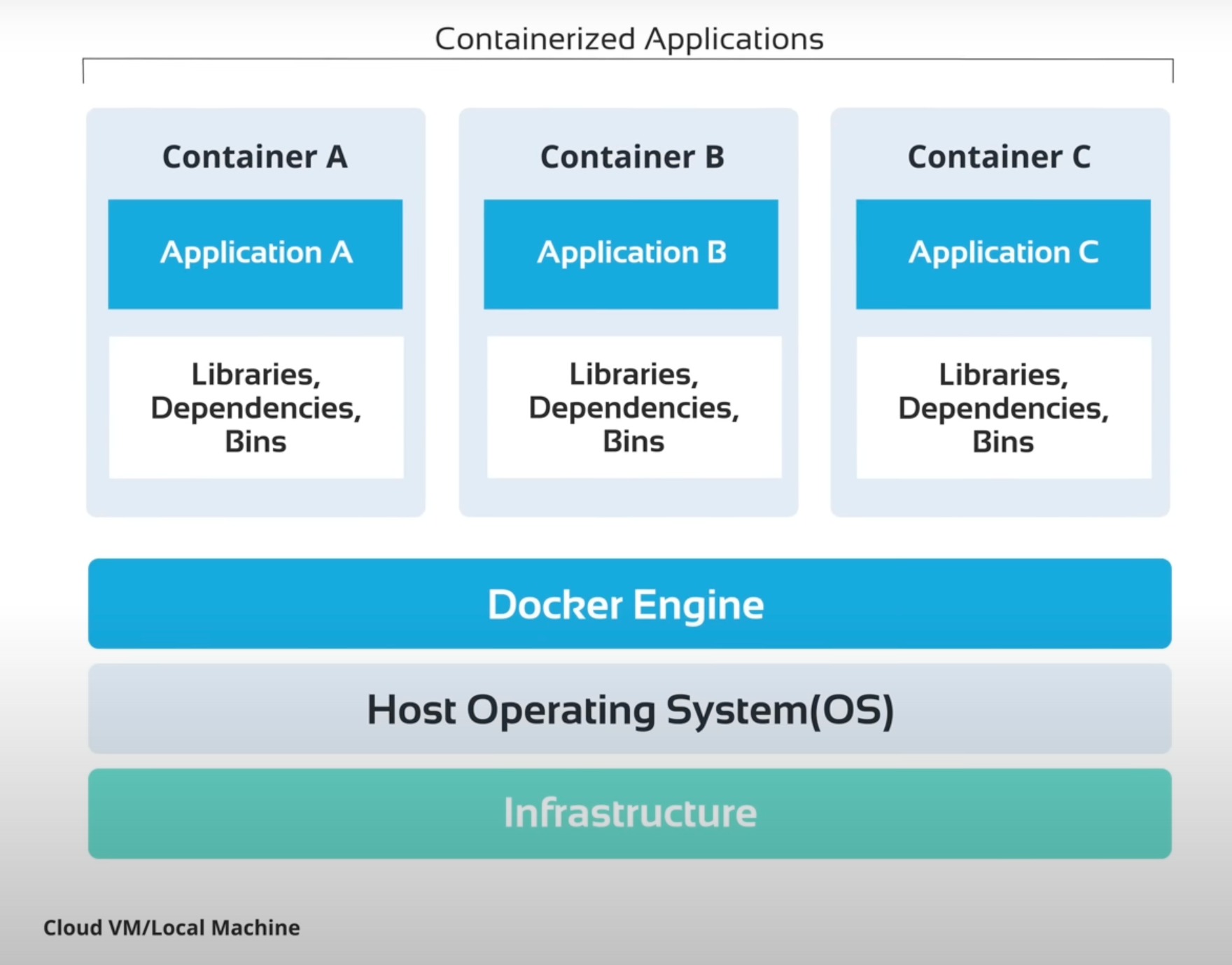
Docker is a containerization technology. Unlike traditional virtual machines, which run an entire operating system, Docker containers share the host system’s OS kernel while keeping applications isolated. This makes containers lightweight, fast, and efficient.
Docker is widely used in software development, DevOps, cloud computing, and microservices architecture because it simplifies application deployment and scaling.
What Is a Container?
A container is a lightweight, standalone package that contains:
- Application code
- Runtime environment
- Libraries and dependencies
- Configuration files
Because containers are isolated, multiple applications can run on the same system without interfering with each other.
How Does Docker Work?
Docker works using a client–server architecture:
- Docker ClientThe Docker client is the tool developers use to interact with Docker. Commands like docker build, docker run, and docker pull are sent from the client.
- Docker EngineThe Docker Engine is the core component that runs on the host machine. It receives commands from the client and manages containers, images, networks, and storage.
- Docker ImageA Docker image is a read-only template used to create containers. It includes the application and all its dependencies. Images are built using a file called a Dockerfile.
- Docker ContainerA container is a running instance of a Docker image. You can start, stop, delete, or scale containers easily.
- Docker RegistryDocker registries store images. Docker Hub is the most popular public registry where developers can share and download images.
Docker vs Virtual Machines
Docker containers are faster and use fewer resources compared to virtual machines. Virtual machines include a full operating system, while Docker containers share the host OS. This makes Docker ideal for modern, cloud-based applications.
Why Use Docker?
Docker offers several advantages:
- Consistent development and production environments
- Faster application deployment
- Better resource utilization
- Easy scalability and portability
- Simplified CI/CD pipelines
Common Use Cases of Docker
Docker is commonly used for:
- Application development and testing
- Microservices architecture
- Cloud and server deployments
- DevOps and automation workflows
- Continuous integration and delivery (CI/CD)
Is Docker Secure?
Docker provides isolation between containers, but security depends on proper configuration. Using trusted images, keeping Docker updated, and following best security practices are essential for safe deployments.
Conclusion
Docker is a powerful tool that makes application development and deployment faster, more reliable, and more portable. By using containers, Docker ensures that applications run consistently across different environments, making it an essential technology in modern software development.