What is Cervical Spondylosis?

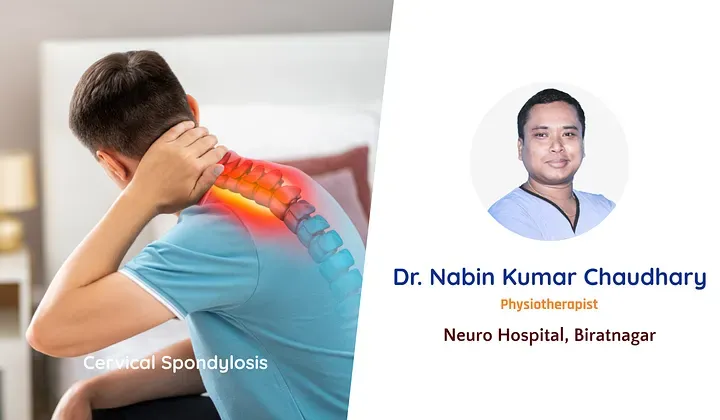
Cervical Spondylosis is a general term for age-related wear and tear affecting the spinal disks. As the disk dehydrates and shrinks, signs of osteoarthritis develop. It starts with degeneration of the disc resulting in reduced space in between two vertebrae, later osteophytes are formed in the periphery.
The osteophytes formed may also compress the cord which will produce weakness of the whole of limbs and pain with tingling, numbness and radiating in nature.
// Symptoms
- Neck stiffness and pain.
- A nagging soreness in the neck.
- Spasm of the neck and shoulder girdle muscles.
- A clicking, popping or grinding sound when you move your neck.
- Dizziness / vertigo / nausea / headache/ unsteadiness.
- Loss of neck movements.
- Less commonly ( a. Slurring of vision, b. Tinnitus {ringing in the ears}, c. Dysphagia { difficulty in Swallowing }.
// Advice/ Reassurance
Advice related to the individuals requirements and must include the following :
- Collar — when to wear and when not to wear.
- Sleep — position so that the neck and head are supported.
- Relaxation — practice in lying, sitting, standing, working, walking.
- Exercises — performed regularly and progressed as treatment progresses.
- Work — Return depends on the nature of the work eg: concentrated reading (or) writing may give rise to headache and neck-pain therefore, part-time work may be better.
// Tips / Precautious
- Avoid sitting for a long time in stressful postures.
- Avoid Running and high-impact aerobics.
- Don’t lift heavy weights on the head or back.
- Avoid bad roads and long driving hours if traveling by two or four wheelers.
- Avoid holding the telephone on one shoulder and leaning for a long time.
- Refrain using many pillows while sleeping.
- To turn around, don’t twist your neck or body, instead, turn around moving your feet.
Risk factors / Predisposing factors
(I) Repetitive Neck motions
- Repeated over exertion/ wrong posture, wrong habits, anxiety and mental tension.
- Smoking
- Overweight & inactive
- Neck injuries
- Genes
(II) Occupational Stresses
- Officers, typists and others working poorly (or) wrongly positioned desks tables.
- Drivers prone to prolonged driving.
- Persons involved in occupations including lifting and carrying things on the head.
- Habit of holding phone on one shoulder while talking.
- Sleeping in an awkward position, using inappropriate pillows.
// Treatment
Rest in bed rest — Butterfly pillow Support the neck. When sitting, support the arms and neck with a pillow in a high back chair.
// Medications
Physiotherapy Management
- Heat modalities / Electrotherapy — Hot packs , SWD , TENS , IFT, infrared.
- Manipulative therapy — Mobilizations and soft- tissue techniques, muscles strengthening exercises.
a) Isometric Contraction of cervical muscles.
b) Manual Resistance
c) Postural awareness - PNF
- Traction
- Hydrotherapy
- Relaxations
It’s critical that people with cervical spondylosis seek medical assistance in order to receive an accurate diagnosis and the best course of treatment. In addition, lifestyle changes including proper posture, consistent exercise, and avoiding extended periods of neck strain can help prevent or treat cervical spondylosis.