What is BitChat and How It Works?

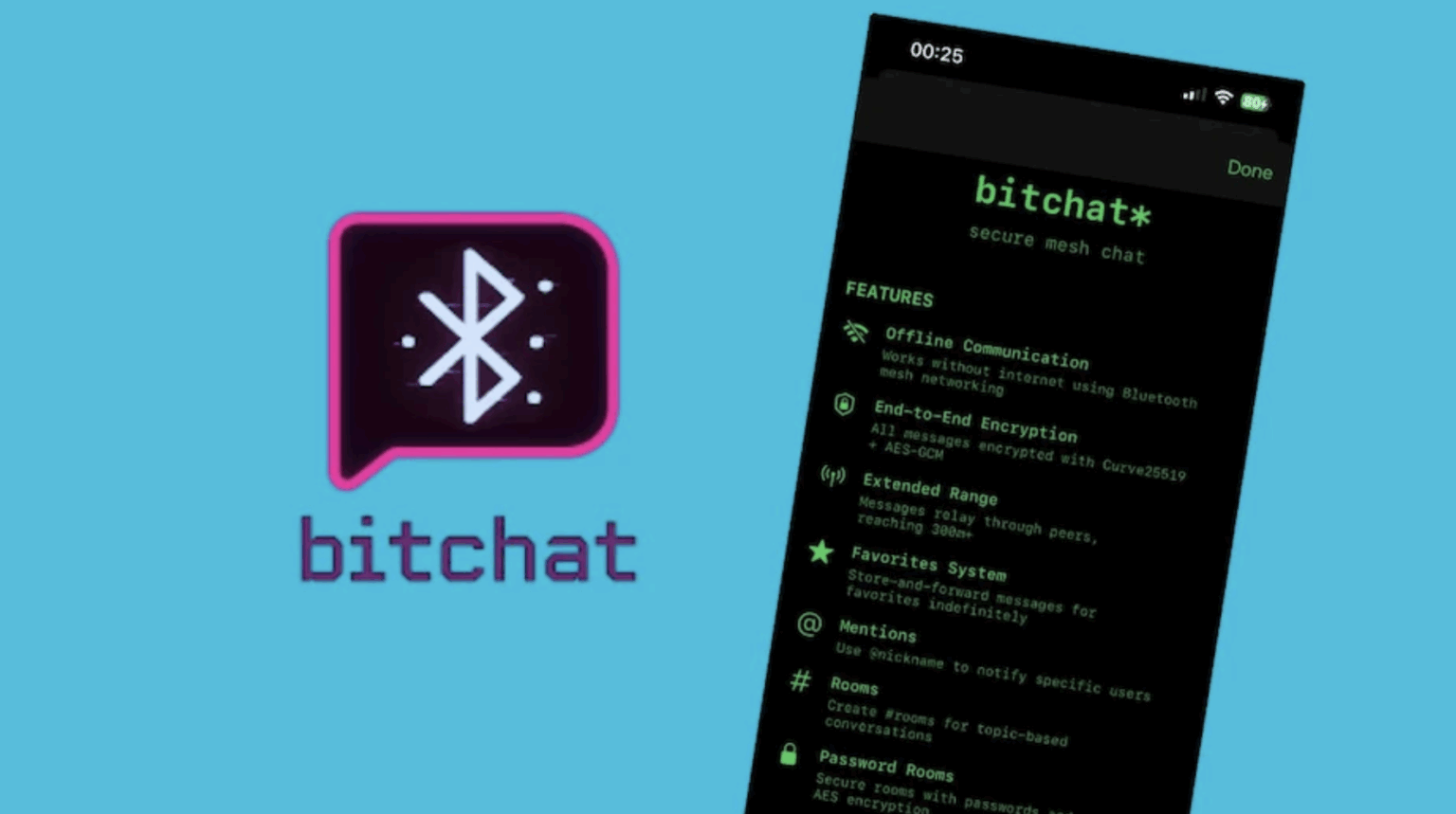
BitChat is a messaging app designed to work without the internet. No mobile data, no Wi-Fi, no phone network. At first, that might sound impossible, but BitChat uses a different approach to communication that makes it especially useful in situations where normal messaging apps fail.
Created by Jack Dorsey, one of the co-founders of Twitter, BitChat focuses on decentralization, privacy, and offline communication. Instead of relying on central servers owned by a company, BitChat lets phones talk directly to each other using Bluetooth. This makes it very different from apps like WhatsApp, Telegram, or Signal.
So how does it actually work?
The Core Idea Behind BitChat
BitChat uses Bluetooth Low Energy, often called BLE, to connect nearby devices. When you open the app, your phone starts looking for other phones around you that also have BitChat installed. Once it finds them, it creates a direct connection.
Because Bluetooth works over short distances, BitChat is mainly designed for local communication. But this is where it gets interesting. BitChat doesn’t stop at direct connections. It uses something called mesh networking to extend how far messages can travel.
How Mesh Networking Works
In a mesh network, every device plays two roles. It is both a user and a relay point. This means your phone can pass messages along to other phones, even if those messages are not meant for you.
Let’s say you want to send a message to a friend who is too far away for your Bluetooth signal to reach. If there are other BitChat users between you and your friend, your message can hop from phone to phone until it reaches the right person.
Think of it like passing a note through a crowd. You don’t need to shout across the room. You just hand it to the person next to you, who passes it to the next person, and so on. Eventually, it reaches its destination.
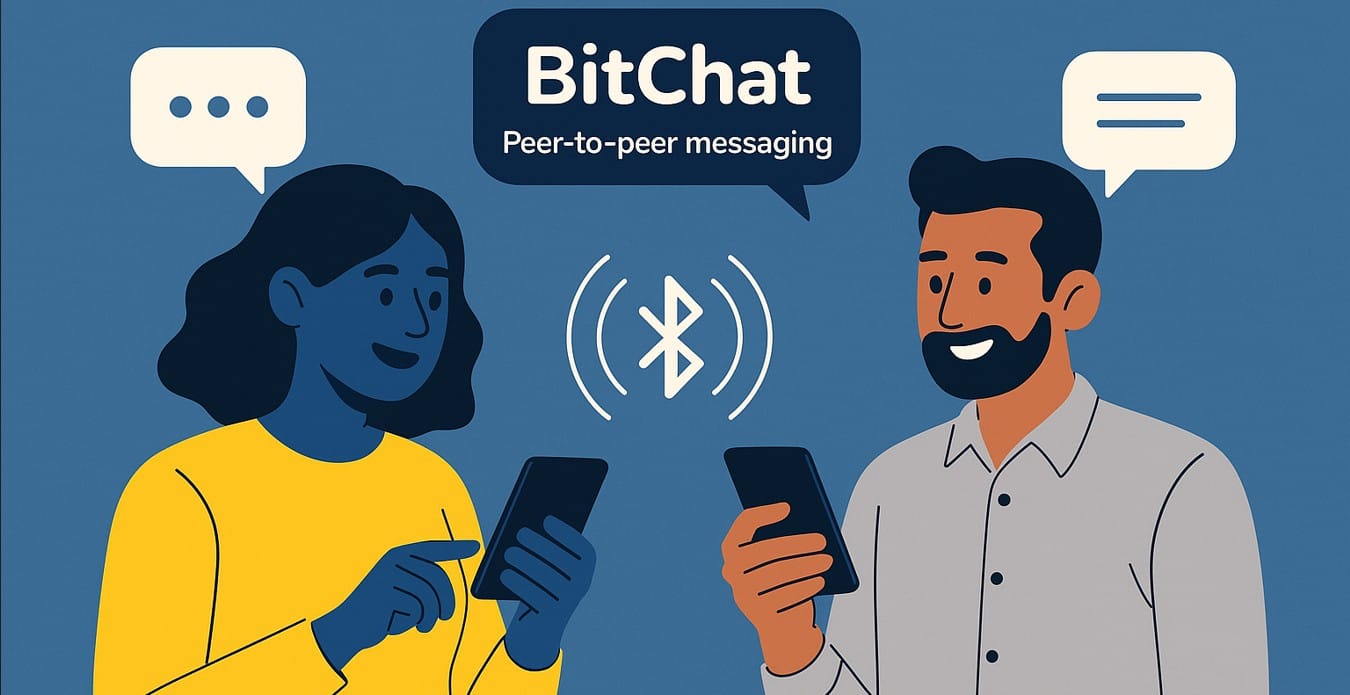
This allows BitChat to cover much larger areas than normal Bluetooth connections, as long as enough people are using the app nearby.
No Internet, No Servers
One of the most important things about BitChat is that it does not use central servers. Traditional messaging apps send your messages to a server first, then forward them to the recipient. Those servers store data, manage accounts, and control how communication flows.
BitChat removes that entire layer. Messages move directly between devices. There is no company server in the middle, no cloud storage, and no single place where messages are collected.
This design makes the system more resistant to outages, censorship, and shutdowns. If the internet goes down or access is restricted, BitChat can continue working as long as Bluetooth connections are possible.
Privacy and Security
Privacy is a major focus of BitChat. Messages are encrypted from end to end, meaning only the sender and the receiver can read them. Even if a message passes through multiple phones in a mesh network, those phones cannot see the message content.
Another big difference is that BitChat does not require accounts. You don’t need to sign up with a phone number, email address, or username. There is no personal profile stored on a server. You simply install the app and start using it.
This makes BitChat appealing to people who want to communicate without sharing personal information or leaving a digital trail tied to their identity.
Some versions of BitChat also include features like temporary messages and emergency data deletion, which allow users to quickly wipe local chat history if needed.
What Can You Do With BitChat?
Even though BitChat is simpler than many mainstream apps, it still offers useful features.
You can send direct messages to specific people within range. You can also join local group chats or channels where anyone nearby can participate. These group chats are especially useful in shared spaces like events, campuses, or neighborhoods.
BitChat can also store messages temporarily if a user goes out of range and deliver them later when a connection becomes available again, depending on how the network is set up.
Where BitChat Is Useful
BitChat is not meant to replace internet-based messaging for everyday global communication. Instead, it shines in specific situations.
In emergencies or natural disasters, mobile networks often become overloaded or shut down. BitChat can help people stay connected locally when other options fail.
In remote or rural areas with weak network coverage, BitChat provides a way to communicate without relying on infrastructure.
It has also been used in places where internet access is restricted or monitored, since it does not depend on centralized services.
Even in normal situations, BitChat can be useful at crowded events like festivals or conferences where mobile networks are slow or unreliable.
Limitations to Keep in Mind
BitChat is not perfect. Because it depends on nearby users, it works best in areas where many people have the app installed. In places with very few users, messages may not travel far.

Bluetooth is also slower than internet-based messaging, so BitChat is not designed for large media files or high-speed communication.
The app is still evolving, and it may feel less polished than popular messaging platforms. That said, its simplicity is part of its purpose.
Final Thoughts
BitChat is a fresh take on how messaging can work without relying on the internet or centralized control. By using Bluetooth and mesh networking, it allows people to communicate directly, privately, and locally.
While it may not replace mainstream apps, BitChat fills an important gap. It shows that communication doesn’t always need servers, accounts, or constant connectivity. In a world where access to the internet isn’t guaranteed, BitChat offers a glimpse into a more resilient and decentralized future of messaging.