What is a Growth Engine and How It Really Works in Any Business
A growth engine can be defined as a repeatable and scalable system that consistently attracts customers, generates revenue, and expands a company’s market presence. Instead of relying on random success or one-time deals.


In today’s competitive business environment, companies constantly look for ways to scale their operations, increase revenue, and remain relevant in the market. Many organizations grow for a short period and then stagnate because their growth depends on occasional opportunities rather than a systematic process. This is where the concept of a growth engine becomes important. A growth engine is not just a marketing strategy or sales tactic. It is a structured system that continuously generates business growth.
A growth engine can be defined as a repeatable and scalable system that consistently attracts customers, generates revenue, and expands a company’s market presence. Instead of relying on random success or one-time deals, a growth engine focuses on building processes that work repeatedly and predictably.
At its core, a growth engine combines several key components: product value, marketing channels, sales processes, customer experience, and data-driven decision-making. When these components work together efficiently, they create a cycle that drives sustainable growth.
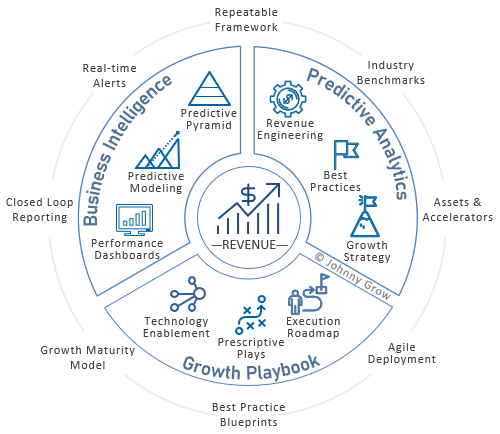
The first element of a growth engine is a strong value proposition. Every successful business begins with a product or service that solves a real problem. If a product does not provide value to customers, no amount of marketing or sales effort will create long-term growth. Companies must clearly understand their customers’ needs and design solutions that address those needs effectively.
The second element is customer acquisition. A growth engine must have a consistent method for attracting new customers. Businesses typically use channels such as digital marketing, referrals, partnerships, search engines, social media, or direct sales. The key is to identify which channels deliver the highest return on investment and focus on scaling those channels. For example, a technology startup may rely heavily on content marketing and search traffic, while a local service business might grow through word-of-mouth and community networks.
The third component is conversion and sales systems. Attracting attention is not enough; businesses must convert interested prospects into paying customers. This is where sales funnels, pricing strategies, and clear communication become important. A well-designed sales process reduces friction for the customer and makes purchasing simple and convenient.
The fourth component is customer retention and satisfaction. Many companies focus only on acquiring new customers, but a strong growth engine also focuses on keeping existing customers happy. Retained customers often generate repeat purchases, recommend the business to others, and become brand advocates. In many industries, retaining customers is far more profitable than constantly acquiring new ones.
Another essential part of a growth engine is scalability. A process that works for ten customers must also work for a thousand. This requires systems, automation, and operational discipline. Businesses must design workflows, standard operating procedures, and technology infrastructure that allow them to handle increasing demand without sacrificing quality.

Data and analytics also play a crucial role in a growth engine. Modern businesses rely on performance metrics to understand what works and what does not. Metrics such as customer acquisition cost, lifetime value, conversion rates, and retention rates help leaders make informed decisions. By continuously measuring and optimizing these metrics, companies can refine their growth strategies.
A growth engine also requires organizational alignment. Marketing, sales, product development, and operations must work toward the same goals. When departments operate in isolation, growth becomes inefficient. However, when teams collaborate and share insights, the entire organization becomes more effective.
Another important aspect is continuous experimentation and improvement. Markets change rapidly, and customer preferences evolve. Companies with strong growth engines constantly test new ideas, analyze results, and adapt their strategies. This mindset of experimentation ensures that the growth system remains effective even as market conditions shift.
Real-world examples show how growth engines work in practice. Technology companies often build product-led growth engines where the product itself drives adoption and expansion. E-commerce companies create growth engines through digital marketing, logistics efficiency, and customer loyalty programs. Service businesses build growth engines through reputation, referrals, and consistent service quality.
However, building a growth engine takes time and discipline. Many organizations fail because they focus on short-term wins rather than long-term systems. True growth comes from designing repeatable processes, aligning teams, and continuously improving the business model.
In conclusion, a growth engine is the system that powers sustainable business expansion. It is not a single tactic or campaign but a combination of product value, customer acquisition, conversion systems, retention strategies, and operational efficiency. When these elements work together effectively, they create a powerful cycle of growth that allows businesses to scale consistently and compete successfully in their industries.