Finland: Why Everyday Life Here Ranks Among the Happiest in the World

For eight consecutive years, Finland has ranked first in the World Happiness Report. In the 2025 edition, Finland once again secured the top position with a life evaluation score of 7.736 out of 10, based on survey data collected between 2022 and 2024 across more than 140 countries.
The global average score stands at approximately 5.6, meaning Finland scores more than two full points above the world mean. Denmark, Iceland, and Sweden closely follow, yet Finland has remained at the top since 2018.
Still, everyday life in Finland does not feel dramatic or celebratory. Finnish happiness is rarely loud. It is steady, practical, and often quiet.
The World Happiness Report does not measure how often people smile. It measures how people evaluate their lives as a whole, their safety, trust, health, freedom, and stability. In those areas, Finland consistently performs well.
A Society Built on Trust
Finland is regularly ranked among the least corrupt countries in the world according to Transparency International’s Corruption Perceptions Index. Institutional trust remains high, and surveys show strong public confidence in government, the legal system, and the police.
Gallup data used in the 2025 World Happiness Report indicates that over 95% of Finns report having someone they can rely on during difficult times, one of the highest rates globally.
Trust influences everyday life in visible ways:
- Children commonly walk or cycle to school independently.
- Public spaces are generally safe and clean.
- Lost property is frequently returned.
This level of predictability reduces daily stress. When systems function reliably, life feels stable.
Health, Security, and Social Stability
Life expectancy in Finland is approximately 81.7 years, according to OECD and national statistics.
Finland maintains:
- Universal tax-funded healthcare
- Low homicide rates (around 1.6 per 100,000 population)
- Strong social security systems, including unemployment benefits and pensions
Although public debate around healthcare resources and economic pressures continues, access to services remains broadly guaranteed.
Happiness in Finland is not about perfection. It is about security.
The Finnish Rhythm of the Seasons
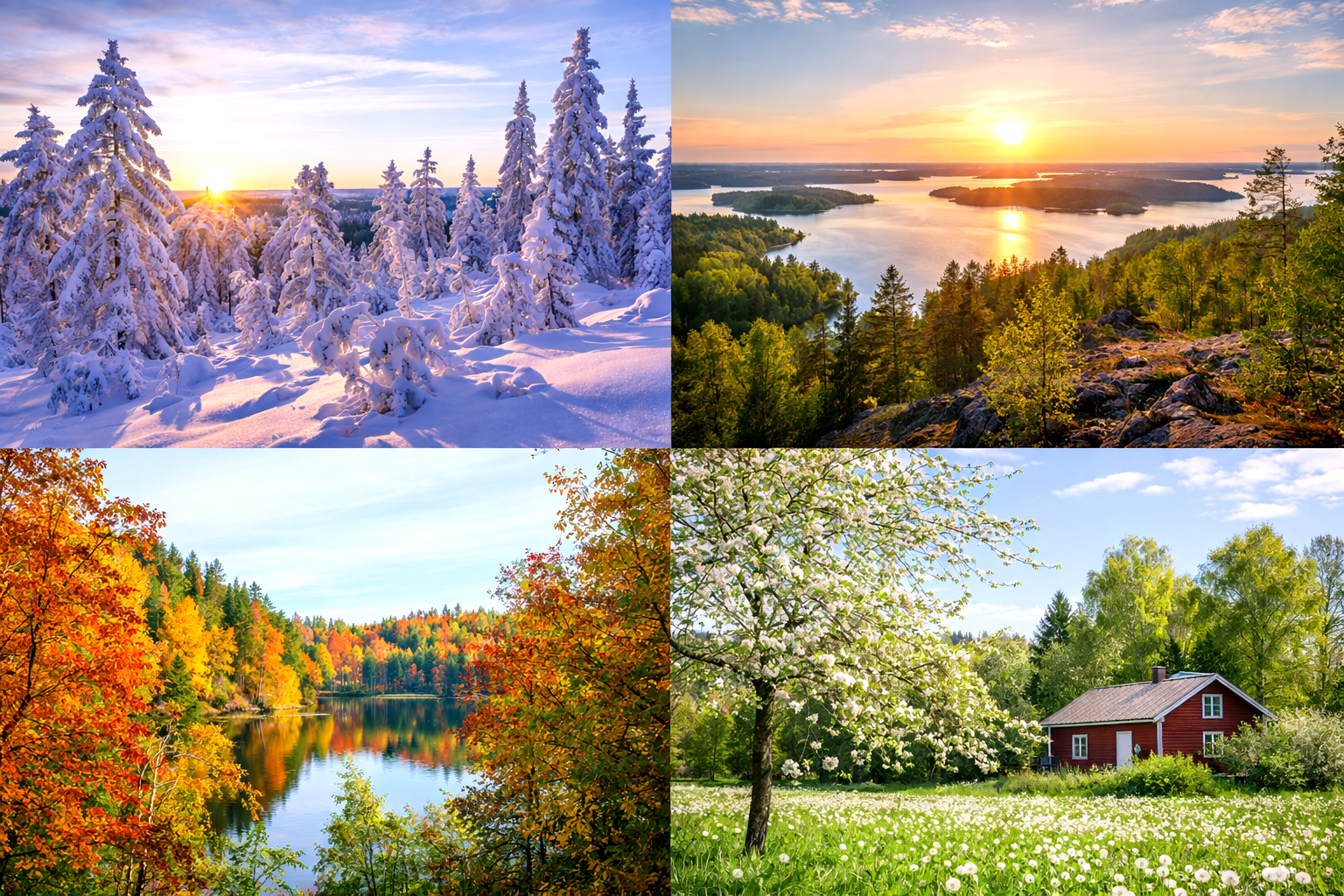
Life in Finland is deeply influenced by the seasons.
Winter brings long darkness, snow-covered forests, skiing, and ice swimming.
Spring slowly restores daylight and energy.
Summer offers long evenings and lakeside living in the north, where the midnight sun barely sets.
Autumn fills forests with color and berry picking.
Instead of resisting climate change, Finnish culture adapts to it. Seasonal rhythm creates balance in life.
Nature Is Not a Luxury
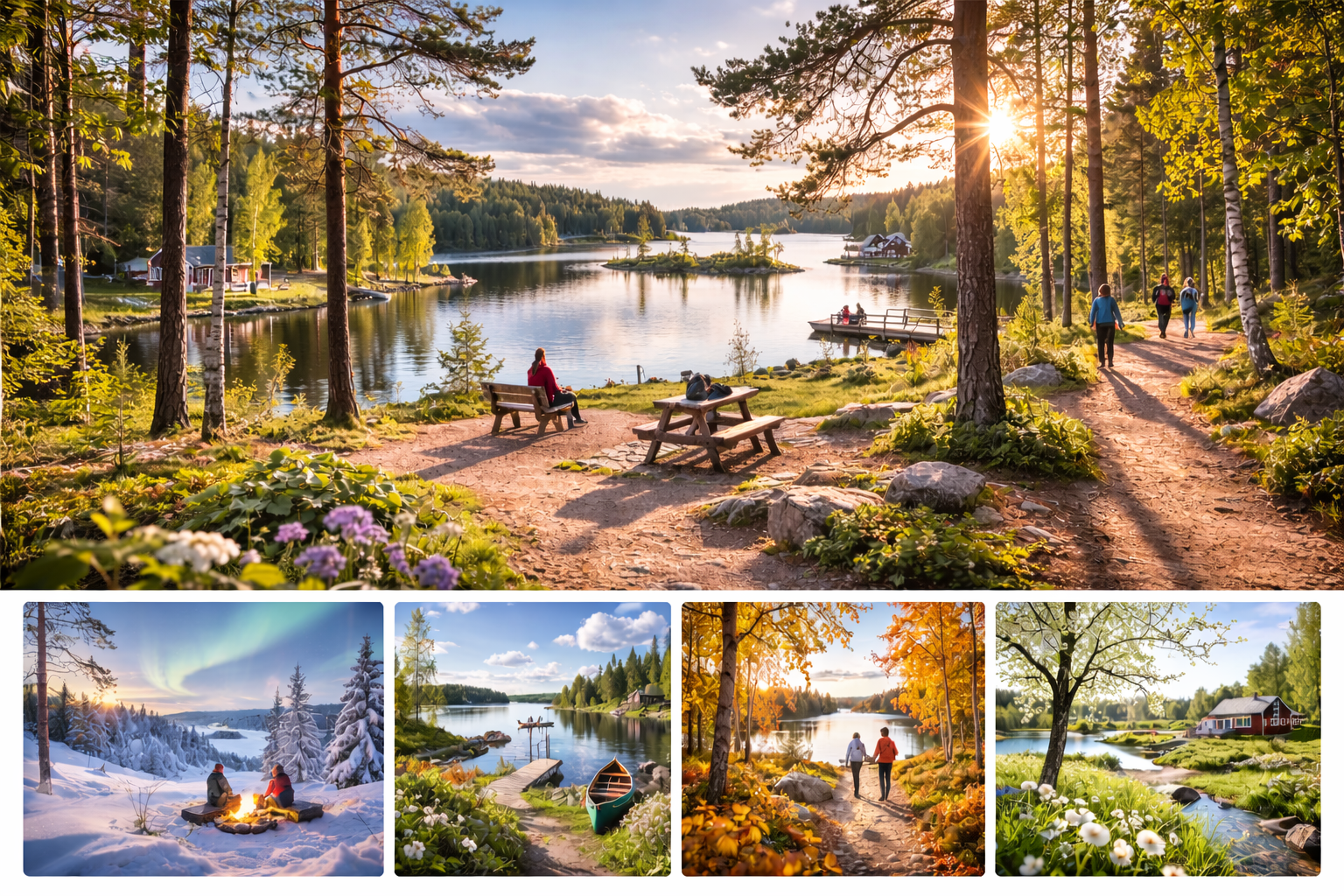
Approximately 75% of Finland’s land area is covered by forest, and the country has more than 180,000 lakes.
Through the principle known as Everyman’s Right, individuals can freely explore forests and natural spaces while respecting the environment.
Whether it is a short walk in a nearby forest, a visit to a summer cottage, or winter skiing, interaction with nature is part of normal life.
Research consistently shows that exposure to green environments lowers stress and improves mental well-being.
In Finland, nature functions almost like public infrastructure.
Sauna: More Than Heat
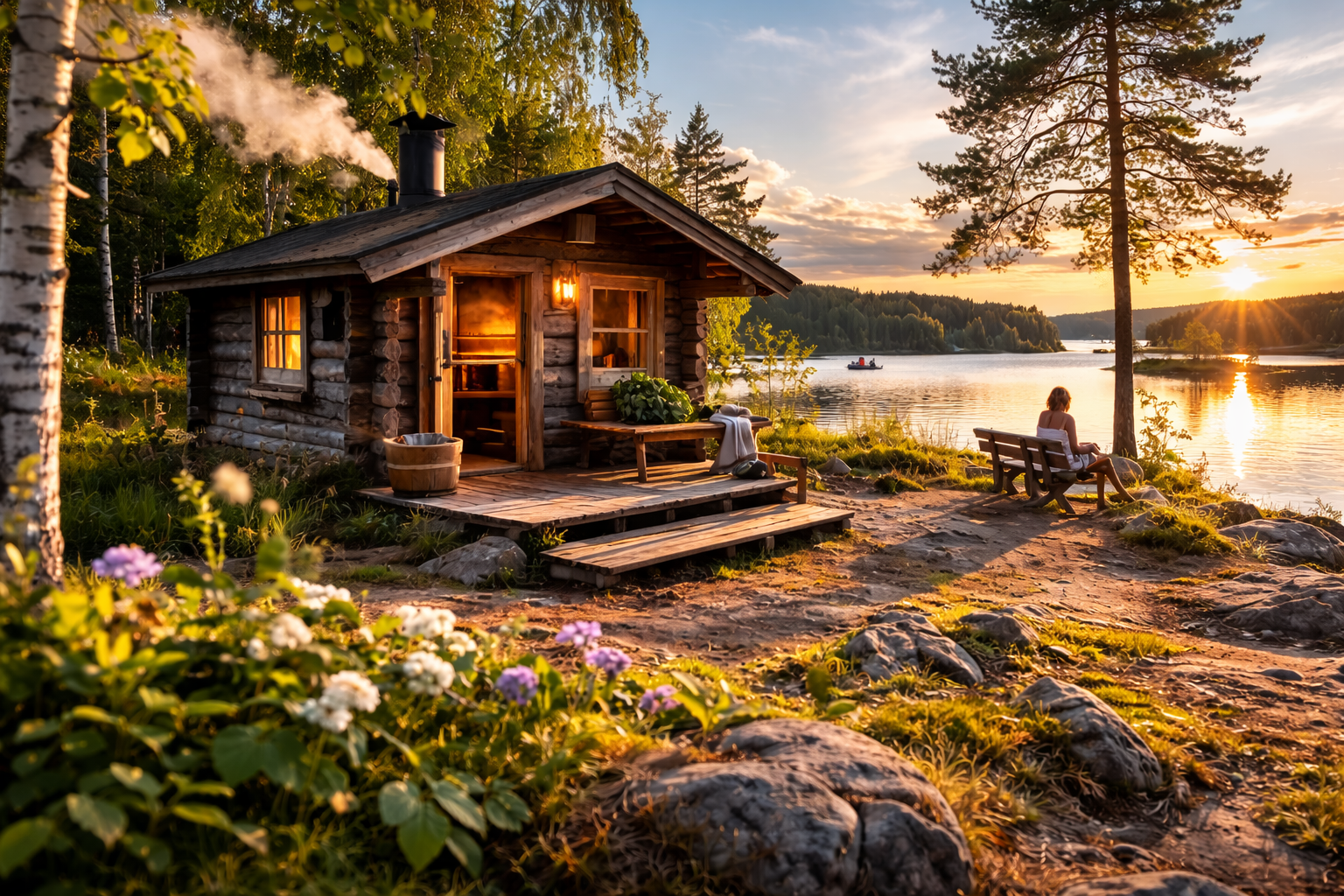
Finland has approximately 3 million saunas for a population of 5.5 million.
Sauna is not a luxury or tourist activity. It is routine. Many families use sauna weekly, sometimes daily.
Medical research conducted in Finland has linked regular sauna use to improved cardiovascular health and reduced stress.
Beyond health, sauna represents equality. Inside the sauna, hierarchy disappears. Conversation becomes direct and relaxed.
It reflects the Finnish preference for simplicity and balance.
Food and Everyday Simplicity
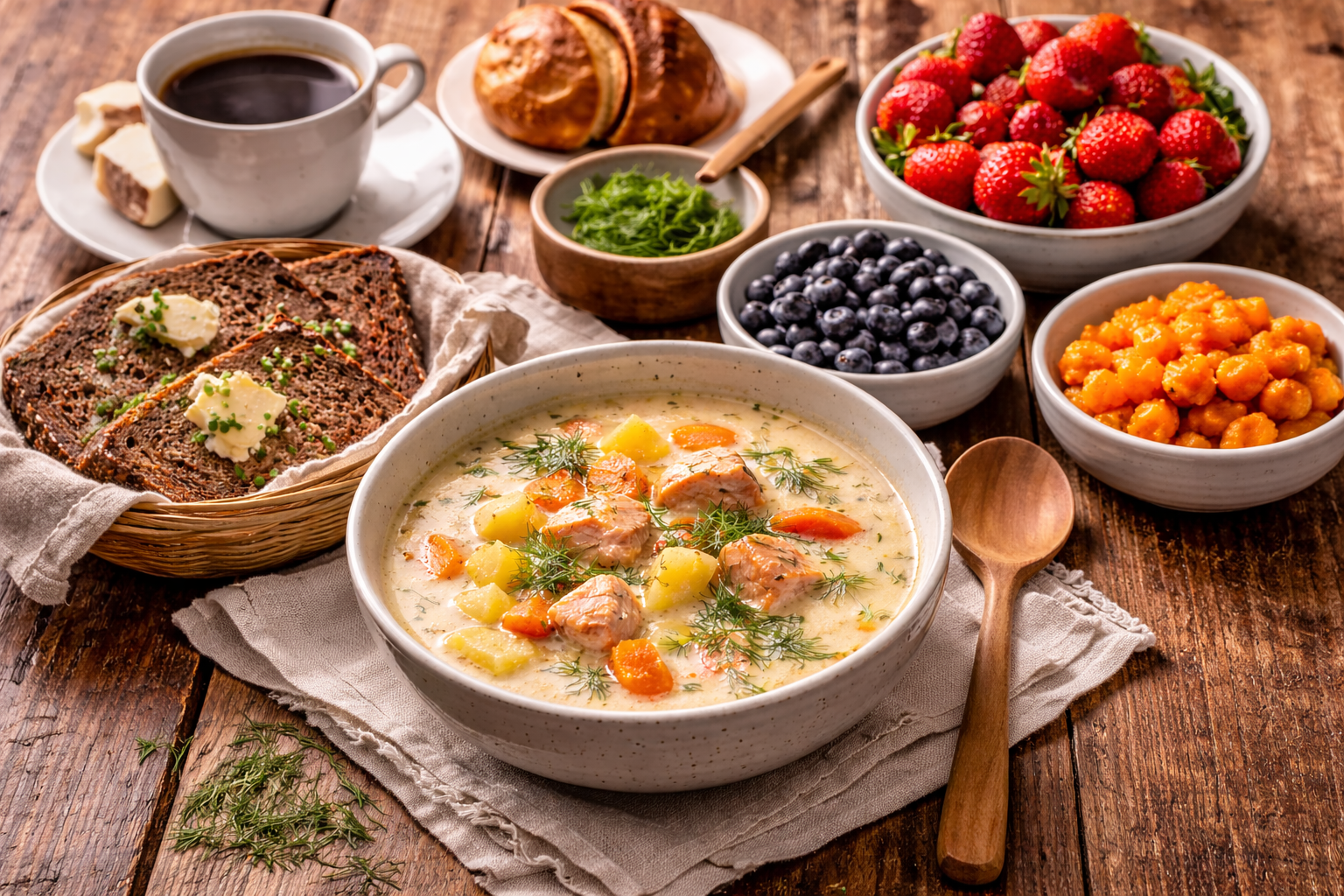
Finnish cuisine reflects the environment and climate.
Traditional foods include:
- Salmon soup (lohikeitto)
- Rye bread (ruisleipä)
- Karelian pies (karjalanpiirakka)
- Forest berries such as blueberries and lingonberries
Meals are often simple, seasonal, and practical. Food culture emphasizes nourishment rather than extravagance.
Simplicity reduces pressure — a subtle but important element of wellbeing.
Work, Rest, and Balance
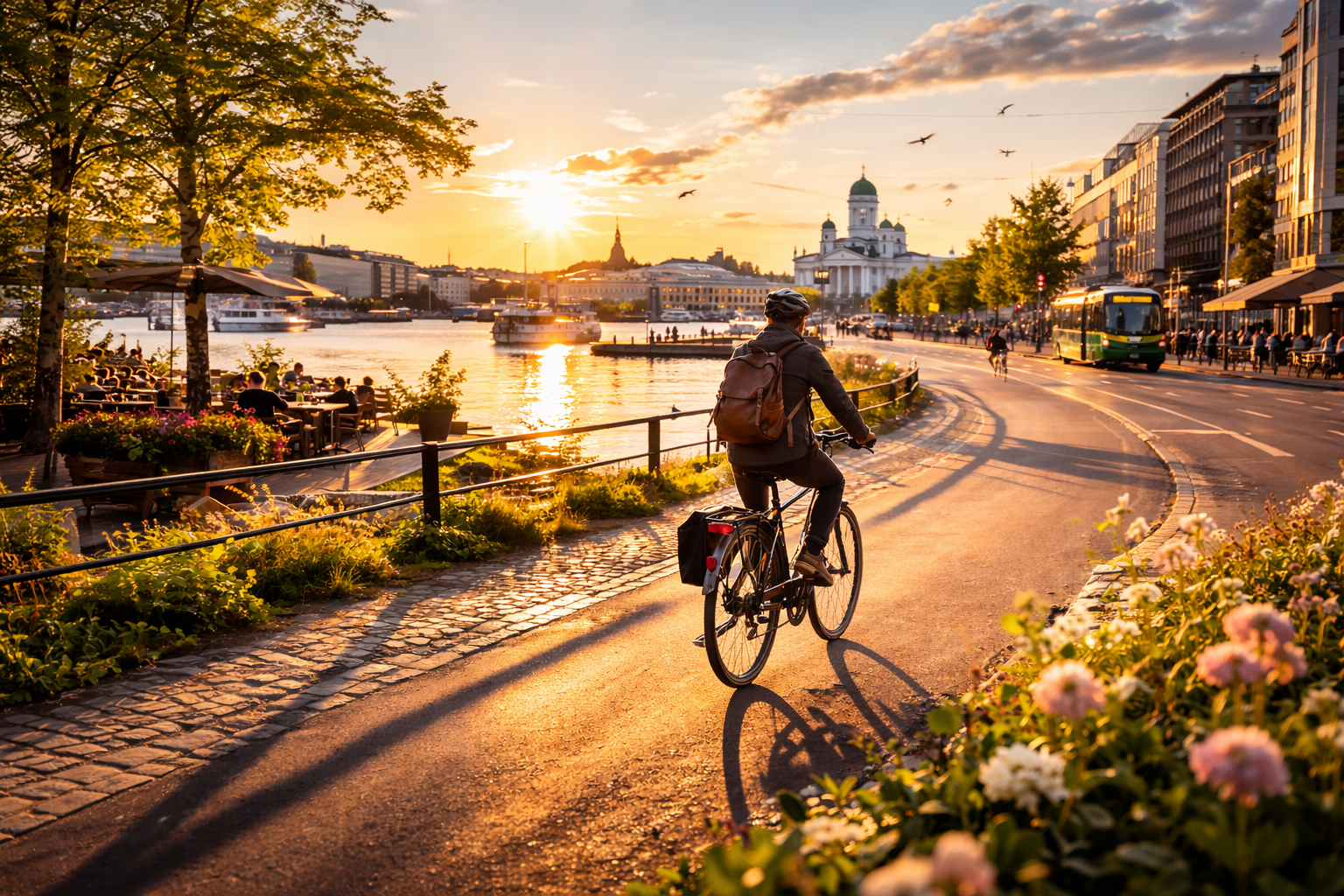
Finnish employees work approximately 1,550 hours per year, lower than in many OECD countries.
Standard labor conditions include:
- At least four weeks of paid leave
- Strong parental leave policies
- Collective bargaining coverage
Culturally, there is value placed on finishing work efficiently and leaving on time. Evenings and weekends are not typically seen as extensions of the office.
Time outside work matters.
Education and Opportunity
Education in Finland is free at all levels. Teachers must hold master’s degrees, and standardized testing is limited compared to many other systems.
Finland consistently performs well in OECD PISA assessments, particularly in literacy and science.
The system emphasizes equality. Performance gaps between socioeconomic groups are smaller than in many other countries.
Equal opportunity strengthens long-term stability.
Learning Finnish Language and Culture at Etelä-Pohjanmaan Opisto, Ilmajoki
My understanding of Finnish culture deepened during my Finnish language studies at Etelä-Pohjanmaan Opisto in Ilmajoki. Under the guidance of Silvendoin Terhi, language became more than vocabulary and grammar. Through her teaching, I began to understand how deeply culture and communication are connected.
Terhi, as a Finnish citizen and a dedicated language teacher, brought authenticity into every lesson. She was not only teaching us how to form sentences correctly — she was helping us understand how Finns think, communicate, and live. Her approach was patient, caring, and encouraging. She created a classroom environment where questions were welcomed and cultural differences were discussed openly.
We explored why Finnish communication is often direct and honest. Why silence is comfortable rather than awkward. Why punctuality reflects respect rather than strictness. She explained how equality shapes everyday interaction — from the workplace to schools and public spaces.
Through her guidance, we learned about Finnish life from top to bottom — daily routines, work culture, food traditions, housing styles, and seasonal habits. We discussed how Finnish homes are often simple, functional, and designed around practicality and comfort. We learned about traditional foods such as rye bread, salmon soup, and Karelian pies, and how seasonal ingredients like berries and mushrooms connect people to nature.
She also explained how work culture in Finland values responsibility and independence, but also balance. Employees are trusted to manage their tasks, and time outside work is respected. This balance between duty and personal life became clearer through her cultural explanations.
Concepts such as sisu, equality, and shared responsibility were not abstract ideas — they were visible in everyday life. Through examples and discussions, she showed how resilience, modesty, and trust shape Finnish society.
Studying the language under her guidance made it clearer how Finnish culture blends independence with community, simplicity with strength, and modesty with quiet confidence.
Through that experience, the idea of Finland as the world’s happiest country felt less theoretical and more lived.
A Word About “Happiness”
Many Finns respond to the happiness ranking with humor or skepticism.
The World Happiness Report does not claim that Finland is free from challenges. It measures overall life evaluation.
In Finland, that evaluation reflects:
- Trust
- Safety
- Fairness
- Access to services
- Work-life balance
- Connection to nature
Happiness here often resembles contentment rather than excitement.
Conclusion
Finland’s life satisfaction score of 7.736 reflects structure more than emotion.
It reflects reliable systems, strong institutions, accessible healthcare, equal education, work-life balance, cultural resilience, and closeness to nature. For many Finns, this does not feel extraordinary. It feels normal. And perhaps it is that quiet normality that the ranking truly measures.