Biliary Atresia: A Silent but Serious Liver Disease in Infants
Babies with biliary atresia have poop that’s light beige or pale in color. Healthcare providers call these, “acholic stools.” The poop is too light because bile can’t reach their intestines.

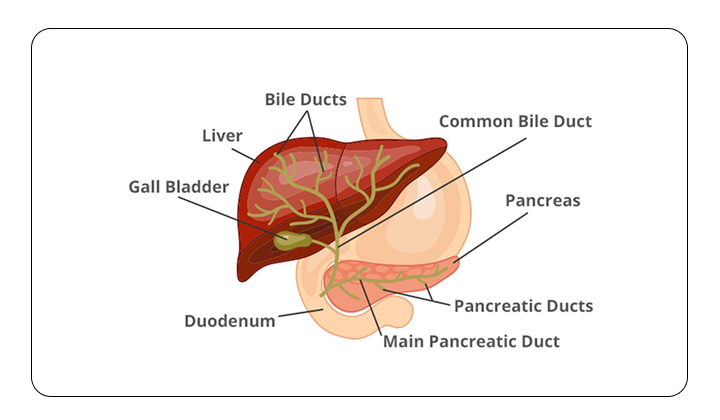
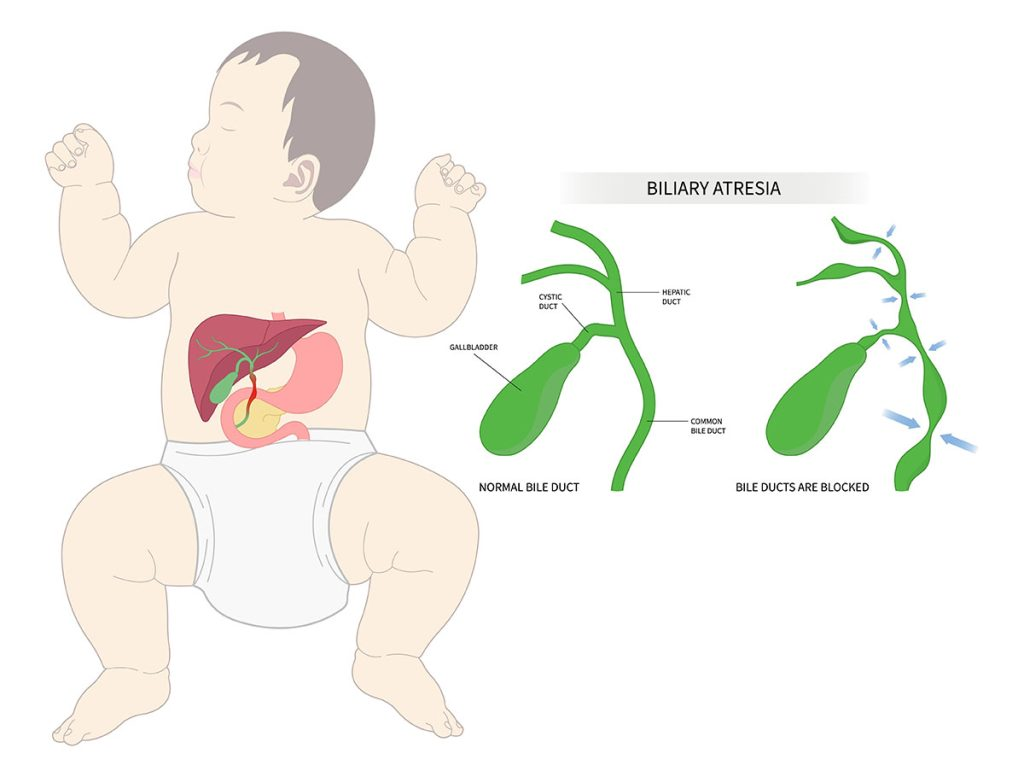
Biliary atresia is a serious condition that affects newborn babies. In this disease, your baby's bile ducts are blocked or are missing and can't send bile from their liver to their small intestine.
Overview
Biliary atresia is a rare but life-threatening liver disease in infants, causing progressive liver damage if not treated early.
Although it is rare, biliary atresia is one of the most common causes of liver transplantation in children.
Causes of Biliary Atresia
It can be frustrating to hear that there’s no clear cause of your baby’s condition. The exact cause is still unknown. However, researchers believe it may include:
- Fetal Developmental Errors: A failure in the remodeling of the ductal plate during embryonic growth.
- Viral Infections/Toxins: Potential prenatal infections (e.g., cytomegalovirus) or exposure to toxins that trigger an autoimmune, inflammatory response that destroys the bile ducts.
- Genetic Factors: While not directly inherited, specific mutations (e.g., CFC1 gene) may be associated with syndromic types.
Importantly, it is not caused by anything the mother did during pregnancy.
Symptoms of Biliary Atresia
The first signs of biliary atresia usually appear a few weeks after birth and include:
- Persistent jaundice (yellow -colored skin and eyes) beyond 2 weeks
- Pale or clay-colored stools
- Dark or amber-colored urine.
Later signs and symptoms of Biliary Atresia
These symptoms may develop by the time your baby is 6 to 10 weeks old:
- Itchy skin
- Irritability
- Poor weight gain as nutrients aren’t getting absorbed.
- Swollen abdomen (belly) due to fluid buildup.
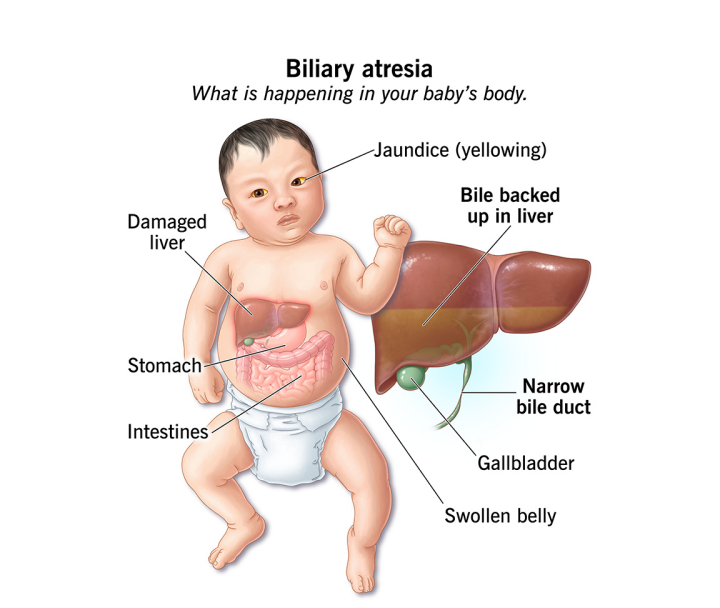
While mild jaundice is common in newborns, jaundice that does not improve after 2–3 weeks needs urgent medical evaluation.
Why Bile Flow is Essential?
- Prevents Liver Damage: Trapped bile acts as a toxin, causing inflammation and rapid scarring (cirrhosis) of the liver.
- Digestion and Nutrition: Bile is necessary for the intestines to break down fats and absorb fat-soluble vitamins (A, D, E, K), which are vital for growth.
- Waste Removal: Bile carries waste products, such as bilirubin, out of the liver. Without this, bilirubin accumulates, causing yellow skin (jaundice), pale stools, and dark urine.
Biliary Atresia Poop
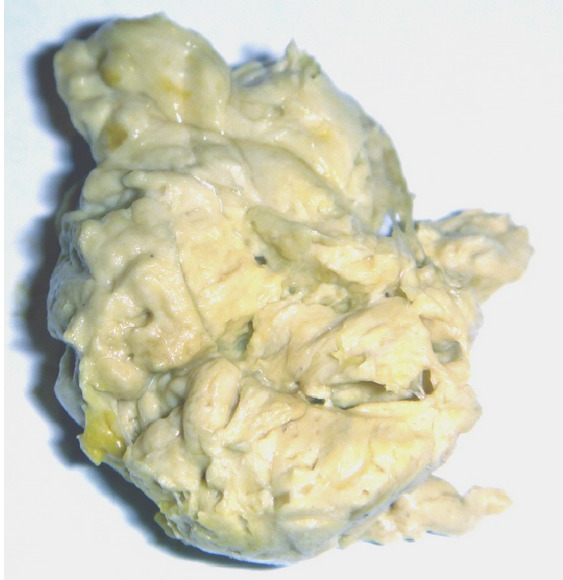
Babies with biliary atresia have poop that’s light beige or pale in color. Healthcare providers call these, “acholic stools.” The poop is too light because bile can’t reach their intestines. Bile gives poop its normal color, which is typically yellow, brown or green. Call your baby’s provider if you think your baby’s poop isn’t a normal color.
Key Characteristics of Biliary Atresia Poop:
- Color: The stool lacks the normal yellow, brown, or green pigment, appearing clay-colored, pale white, or light gray.
- Consistency/Smell: The stool may be foul-smelling or, in some cases, appear greasy due to malabsorption of fats.
- Timing: These stools appear within the first few weeks of life (often around 2–8 weeks).
Diagnosis and Tests
How is biliary atresia diagnosed?
Healthcare providers diagnose biliary atresia through a physical exam and tests. If your baby has light-colored poop and/or jaundice that lasts longer than two weeks, take them for a checkup. Your baby’s provider will:
- Look for signs of biliary atresia, including jaundice and a swollen belly.
- Take a blood sample to check how well your baby’s liver is working and look for causes of jaundice.
- Take a pee sample to look for causes of jaundice.
- Order additional tests as needed.
Tests to diagnose biliary atresia
Your baby may need further tests to show how their bile ducts, liver and gall bladder are working. Possible tests include:
- Ultrasound of your baby’s belly.
- HIDA scan (hepatobiliary iminodiacetic acid scan).
- Liver biopsy
Treatment
What is the treatment for biliary atresia?
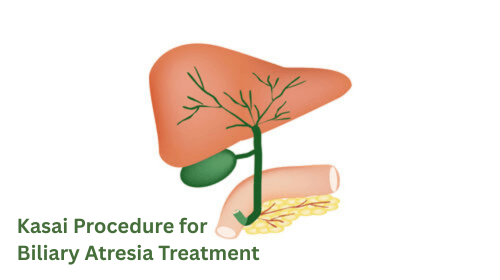
Healthcare providers can’t cure biliary atresia. But they can perform a surgery called the Kasai procedure that helps bile flow from your baby’s liver to their small intestine.
During the Kasai procedure, a surgeon removes blocked bile ducts. Then, they use part of your baby’s small intestine to create a new path for bile to flow out of their liver. This relieves the blockage and allows bile to flow normally again.
Why Early Detection Matters
The earlier biliary atresia is treated, the better the outcome. Delayed treatment can lead to:
- Cirrhosis (severe liver scarring)
- Liver failure
- Life-threatening complications
Prevention
Can biliary atresia be prevented?
There’s no known way to prevent biliary atresia. While a genetic mutation may play a role in causing the condition, the mutation isn’t passed down from a baby’s biological parents. Nothing you do during pregnancy is known to cause this condition, and it’s not your fault if your baby develops it.
Living with Biliary Atresia
Children with biliary atresia may need:
- Regular medical follow-ups
- Nutritional support
- Vitamin supplements
- Monitoring for liver function
Emotional and family support also plays a vital role in long-term care
Final Thoughts
Biliary atresia may be silent at first, but its impact can be severe if ignored. Awareness, early diagnosis, and timely treatment can save lives. If your baby has persistent jaundice or unusual stool color, consult a pediatrician immediately. Early action can make all the difference.