WordPress Vs BroadPress
BroadPress typically includes support, onboarding, and training as part of its service, and its trial options allow organizations to test the platform before committing; this can be appealing for businesses that want less hands-on maintenance from their internal teams.

When comparing WordPress and BroadPress as platforms for building and managing websites, it helps to understand what each one is and how they serve different needs in the world of content management. WordPress is one of the most popular open-source content management systems (CMS) in the world. It was originally created as a blogging platform but has since evolved into a flexible system that powers a huge variety of websites, from personal blogs to large corporate sites, online stores, portfolios, forums, membership sites, and more.
WordPress is free to download and use (though you need to pay for hosting and a domain), and it runs on PHP with a MySQL or MariaDB database. Its strength lies in its huge ecosystem of thousands of plugins and themes, which allow users to customize nearly every aspect of a site’s design, functionality, and performance without writing code. WordPress is widely used because it is flexible, scalable, and supported by a vast global community that creates tools, tutorials, and help forums, making it accessible even for beginners.
It also has strong SEO capabilities and extensibility, so it can grow with your needs if you want to add features like e-commerce, multilingual support, or advanced marketing tools.
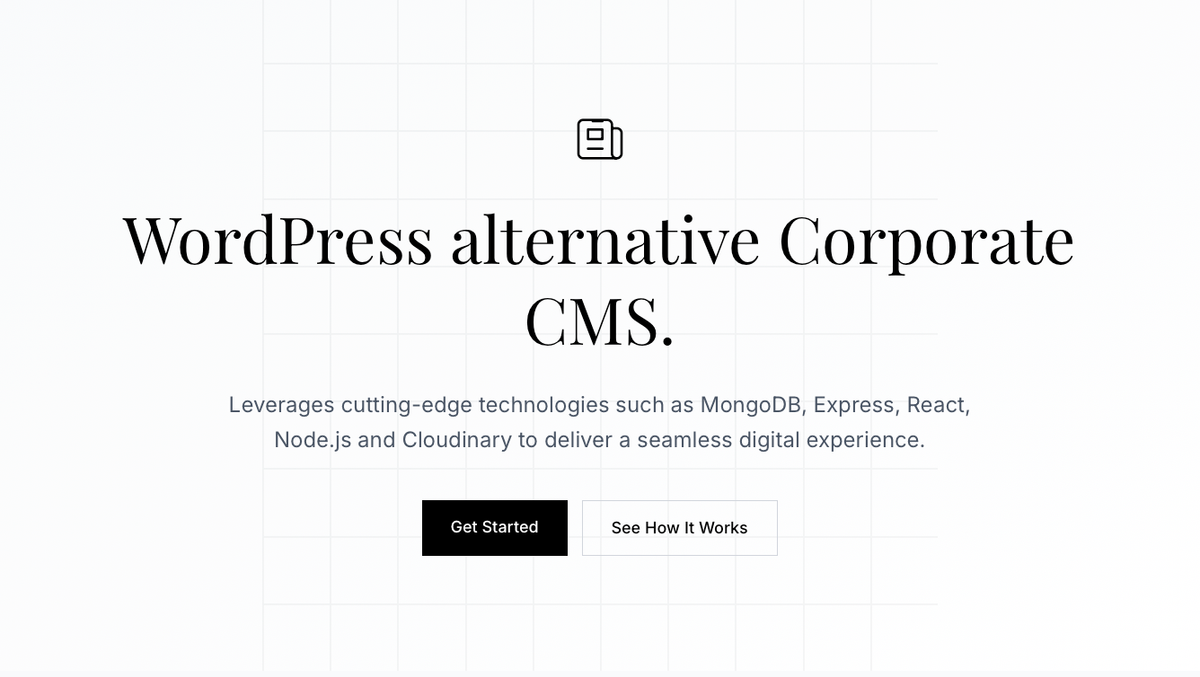
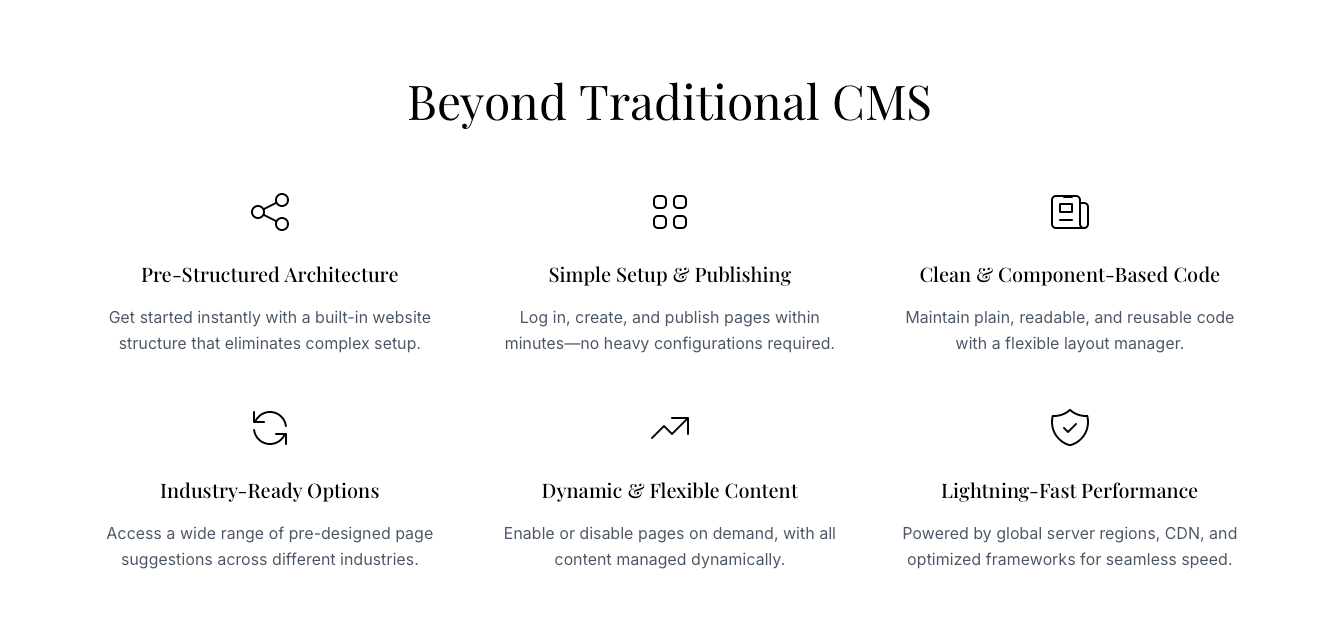
BroadPress, on the other hand, is a newer CMS platform that positions itself as an enterprise-grade alternative to WordPress, especially for businesses that manage large or complex digital content operations. Rather than being an open-source community project, BroadPress is built with enterprises in mind, offering a component-based architecture, pre-structured templates, built-in workflows, and features designed to make publishing and content management faster and more consistent across multiple pages or sites.
BroadPress emphasizes easier content publishing, real-time updates, integrated analytics, cloud scalability, and managed performance, which can reduce the time spent on manual updates and repetitive tasks. According to its developers, BroadPress can streamline content workflows for large organizations, allowing teams to manage and publish content more efficiently with less technical overhead than traditional CMS systems.
It aims to provide enterprise scalability and faster site speed out of the box, as well as tools for collaborative editing and automated publishing.
One of the biggest differences between WordPress and BroadPress is their approach to customization and flexibility. WordPress, with its massive library of plugins and themes, gives users flexibility to build nearly any type of website, but this can also lead to complexity: managing many plugins can become time-consuming, and ensuring compatibility between themes and extensions sometimes requires technical knowledge.
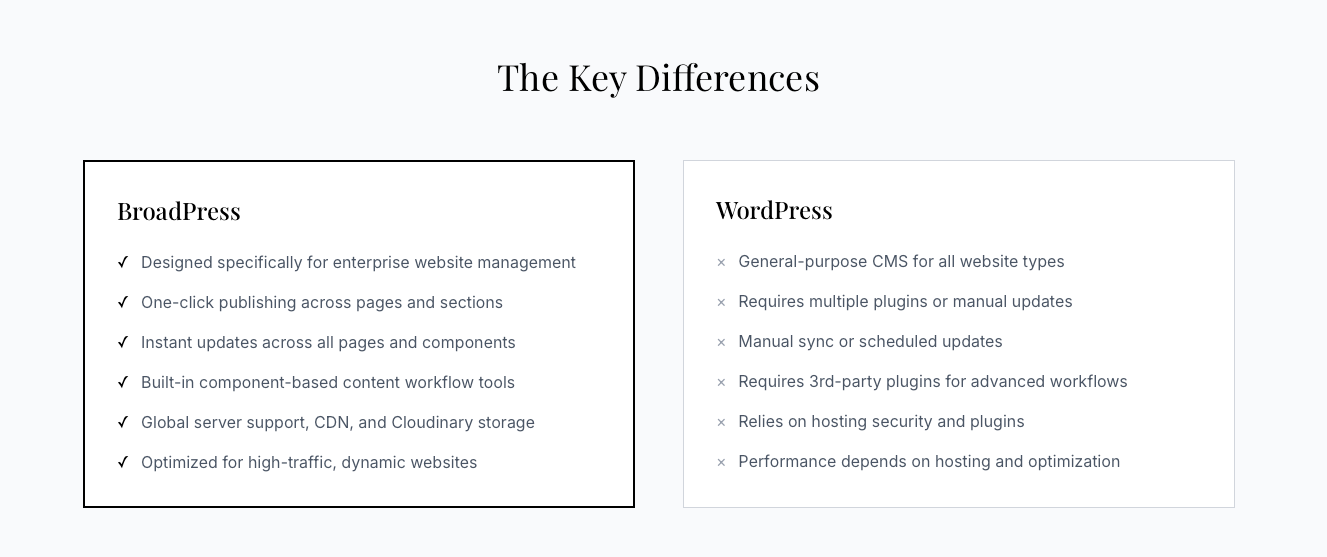
BroadPress focuses on having built-in enterprise features that reduce the need for third-party plugins, which can simplify workflows and performance tuning for businesses, but that also means fewer options for customization outside its provided framework. WordPress’s open-source nature means anyone can contribute to or modify the software, while BroadPress appears to be a proprietary solution geared toward organizations that want a more guided, all-in-one content management experience.
Another key distinction is the target audience. WordPress is suitable for almost anyone who wants to build a website—individuals, small businesses, bloggers, and even large enterprises—because of its versatility and the fact that it can be hosted on a wide range of hosting providers and configured to different needs.
BroadPress, by contrast, markets itself specifically to medium to large enterprises that need robust content management across multiple domains or sections, high performance, and built-in workflows that reduce manual work. This focus means that smaller websites or simple personal projects might not benefit as much from BroadPress’s enterprise features and managed approach.
In terms of cost and maintenance, WordPress itself is free, but users are responsible for hosting, security updates, plugin maintenance, and backups. Many hosting providers automate some of these tasks, and there are managed WordPress hosting services that handle updates and security for you, but you still have control over how the site is configured.
BroadPress typically includes support, onboarding, and training as part of its service, and its trial options allow organizations to test the platform before committing; this can be appealing for businesses that want less hands-on maintenance from their internal teams.
Because BroadPress is designed for enterprise use, it may include premium support and security features that small WordPress installations would need additional plugins or services to match.
Choosing between WordPress and BroadPress depends largely on your goals and the scale of your project. If you want maximum flexibility, customization, a large community, and low entry cost, WordPress is often the go-to choice and is proven across millions of websites worldwide. If you represent a business with complex content management needs, require integrated publishing workflows, and want to minimize the time your team spends on manual website updates, BroadPress might offer a more streamlined and enterprise-focused solution.
Both platforms serve the fundamental purpose of managing digital content, but WordPress offers broad adaptability and a huge ecosystem of themes and plugins, while BroadPress aims to simplify enterprise content management with built-in tools designed for efficiency and scalability.