Why Are Grooming and Personality are Important in Great Hospitality?

Before You Speak, What Does Your Presence Say?
In hospitality, you speak long before you open your mouth.
The moment a guest walks into a hotel compound, observation begins. Within seconds, impressions are formed. The uniform. The posture. The hairstyle. The smile. The confidence. The energy. Even silence communicates something. Before any greeting is exchanged, before any reservation is confirmed, before any service is delivered, perception is already created.
This is the silent language of hospitality: grooming and personality.
In Nepal, we are naturally warm, respectful, and emotionally intelligent. Our cultural upbringing teaches us humility and kindness. However, an important question must be asked with honesty and responsibility:
Does our external presentation reflect the same level of professionalism as our internal kindness?
Because in hospitality, appearance is not about fashion. It is about trust. It is about credibility. It is about representing a brand, an institution, and ultimately, a nation.
The Psychology of First Impressions in Hospitality
Hospitality is an experience-driven industry. Guests do not pay only for rooms, food, or facilities. They pay for how they feel. Comfort, security, respect, and confidence are emotional outcomes influenced by service presentation.
When a staff member is:
- Well-groomed
- Neatly dressed
- Clean and hygienic
- Confident in posture
- Calm and composed in behavior
The guest feels safe.
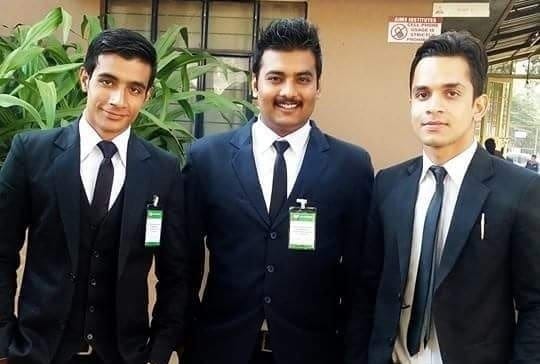
Professional grooming silently communicates:
- Discipline
- Self-respect
- Attention to detail
- Responsibility
- Preparedness
If a hospitality professional cannot maintain their own appearance properly, it naturally raises a concern: how will they maintain the standards of a luxury brand, a premium restaurant, or an international hotel?
Grooming is not vanity. It is professionalism.
Grooming Is Not About Beauty, It Is About Maintenance
One critical misunderstanding in many hospitality environments, especially in developing markets, is the belief that grooming is about natural looks. This is incorrect.
Professional grooming is not about being fair or dark, tall or short, lean or heavy. It is not about facial features, skin tone, or body type. These are natural characteristics. They do not define professionalism.
What defines professionalism is maintenance.
You might be dark or fair - but is your skin clean and healthy?
You might be short or tall - but is your posture confident?
You might be lean or heavy - but are you well-fitted in your uniform?
You might have a beard - but is it properly trimmed and shaped?
Professional presence is not about what you were born with. It is about how responsibly you manage what you have.
A polished shoe on a modest uniform looks better than expensive clothing worn carelessly. A confident smile on an ordinary face leaves a stronger impact than beauty without discipline.
In hospitality, maintenance reflects mindset.
The Current Gap in Nepal’s Hospitality Education
Nepal has made progress in hospitality education. Many colleges teach hotel terminology, management theory, food production techniques, front office operations, and accounting systems. These are important foundations.
However, a serious gap remains.
Still, many colleges and institutions lack structured and consistent grooming standards. In some classrooms, students attend hospitality programs without strict uniform discipline. Grooming inspections are irregular or absent. Posture correction is not emphasized.
Communication confidence is not consistently developed. Personality building is often treated as a secondary topic rather than a core requirement.
Hospitality cannot be taught only through textbooks.
 Amir Aryal
In some international hospitality institutes, students are trained as if they are already hotel professionals. Daily grooming checks are mandatory. Uniform standards are non-negotiable. Shoes must be polished. Hair must be properly styled. Nails must be clean. Communication is practiced every day. Eye contact is corrected. Voice modulation is refined. Body language is monitored.
This consistency builds identity.
When students start seeing themselves as professionals, they begin behaving like professionals. When institutions set high standards, students rise to meet them.
Without discipline, natural warmth alone is not enough to compete globally.
Personality: The Energy You Bring into the Room
Technical skills can be trained. Systems can be memorized. Procedures can be practiced. But personality must be developed intentionally.
You may know how to serve a five-course meal perfectly. You may understand reservation software thoroughly. You may have theoretical knowledge of hotel management. But if your communication lacks confidence, if your body language shows insecurity, if your tone sounds uncertain, the guest will feel it immediately.
Hospitality is emotional.
These small details define your personality more than your resume.
In global hospitality industries, promotions are often influenced not only by competence but by presence. Leadership potential is judged by confidence, communication clarity, emotional control, and professional appearance.
Personality is silent authority.
What Defines True Professional Appearance?
Professional appearance is not about expensive brands or luxury fashion. It is about discipline in details.
A true professional appearance includes:
- Clean and properly ironed uniform
- Polished shoes
- Appropriate haircut
- Maintained beard or clean shave
- Neat and simple hairstyle
- Subtle and pleasant fragrance
- Clean hands and nails
- Upright posture
- Controlled gestures
- Calm facial expressions
Physical and Mental Fitness
It also includes physical fitness and mental balance.
Hospitality is physically demanding. Long working hours, constant interaction, and pressure situations require stamina and emotional stability. A fit and energetic professional delivers better service. A mentally balanced professional handles stress gracefully.
Your body language communicates your inner state. If you are tired, careless, or disengaged, guests sense it. If you are alert, energetic, and confident, guests feel reassured.
Professionalism is visible.
The Connection Between Grooming and Leadership
Leadership in hospitality is not limited to decision-making. It begins with example-setting.
A manager who is consistently punctual, well-groomed, composed, and confident commands respect without demanding it. Their presence sets the standard for the entire team.
If future Nepali hospitality professionals aspire to hold global managerial positions, grooming and personality development must become non-negotiable habits.
Before you manage others, you must manage yourself.
Self-discipline in appearance builds self-discipline in operations.
The Reality We Must Accept
Nepal has the natural hospitality touch. Our cultural kindness is authentic and powerful. However, natural warmth without professional presentation can limit growth.
In a competitive global market, hotels are judged instantly. International guests compare service standards with experiences in Singapore, Dubai, Europe, and beyond. Presentation becomes part of brand perception.
When grooming, personality, communication skills, and confidence are added to our cultural kindness, something transformative happens.
Natural hospitality plus professional presence equals industry leadership.
Conclusion: Your Greatest Investment Is Yourself
In hospitality, your greatest asset is not your degree. It is not your certificate. It is not your title.
The more disciplined and confident you look, the stronger the experience you create for others.
If Nepali hospitality professionals, and especially hospitality institutions, begin focusing seriously on structured grooming standards and personality development, service quality will rise dramatically. Institutional culture will improve. Industry reputation will strengthen. International competitiveness will increase.
Because in hospitality, the silent language of grooming speaks louder than words.
And before you say “Welcome,” your presence has already spoken.