What is Noonan Syndrome ?
Symptoms of Noonan syndrome vary from mild to life-threatening, depending on the affected part of your child’s body. Most symptoms start when the fetus is developing in the uterus or appear in children before age 11.
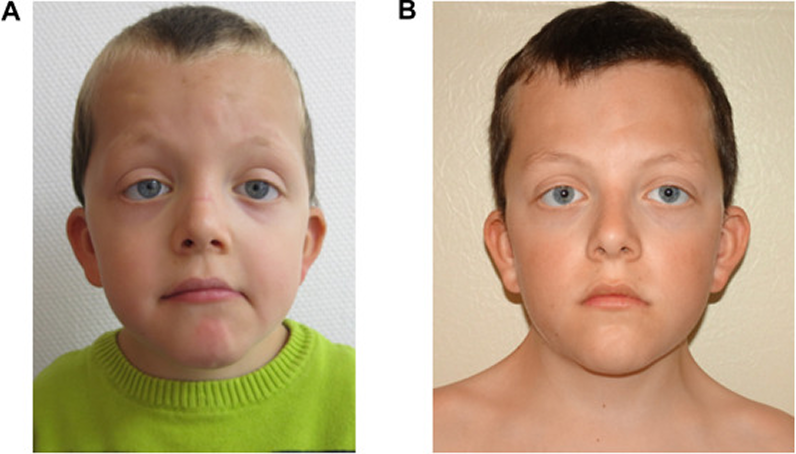
Noonan syndrome (NS) is a rare genetic disorder characterised by distinctive facial features, developmental delay, short stature, heart defects, bleeding problems and skeletal abnormalities.
Overview
Most patients with Noonan syndrome are intellectually normal as adults, but some may require multidisciplinary evaluation and regular follow-up care.
Features of Noonan Syndrome
Noonan syndrome is a genetic disorder that prevents normal development of various parts of the body. The cardinal features of Noonan Syndrome are:
Key Physical Features
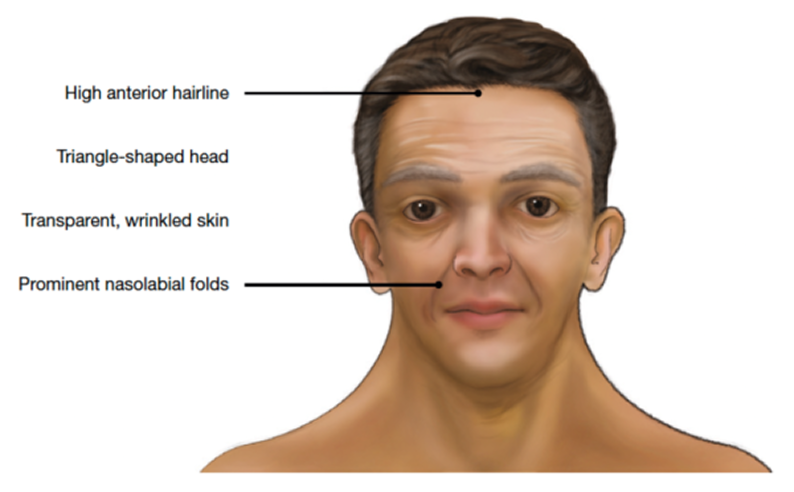
- Facial Features: Characteristic, often described as coarse in youth and sharper with age, include a large forehead, low hairline on the neck, a deep philtrum (groove between nose and mouth), and a small lower jaw. Eyes are frequently pale blue or blue-green.
- Head and Neck: A short neck, sometimes with excess skin folds or webbing, is common.
- Chest and Skeletal Abnormalities: The chest often has a deformity, such as pectus carinatum (protruding) or pectus excavatum (sunken). A broad chest with wide-set nipples is also common. Scoliosis or other spinal curves may occur.
- Growth and Stature: While birth length is often normal, affected individuals frequently experience delayed growth, leading to short stature in childhood and adulthood.
- Skin and Hair: Skin may appear thin or transparent with age. Some individuals experience café-au-lait spots (light brown patches) or follicular hyperkeratosis. Hair can be sparse or curly.
- Heart and Other Physical Findings: Congenital heart defects, such as pulmonary valve stenosis, are common. Other issues include lymphatic vessel dysfunction (lumphedema), cryptorchidism (undescended testicles) in males, and hearing/vision impairment.
Causes of Noonan Syndrome
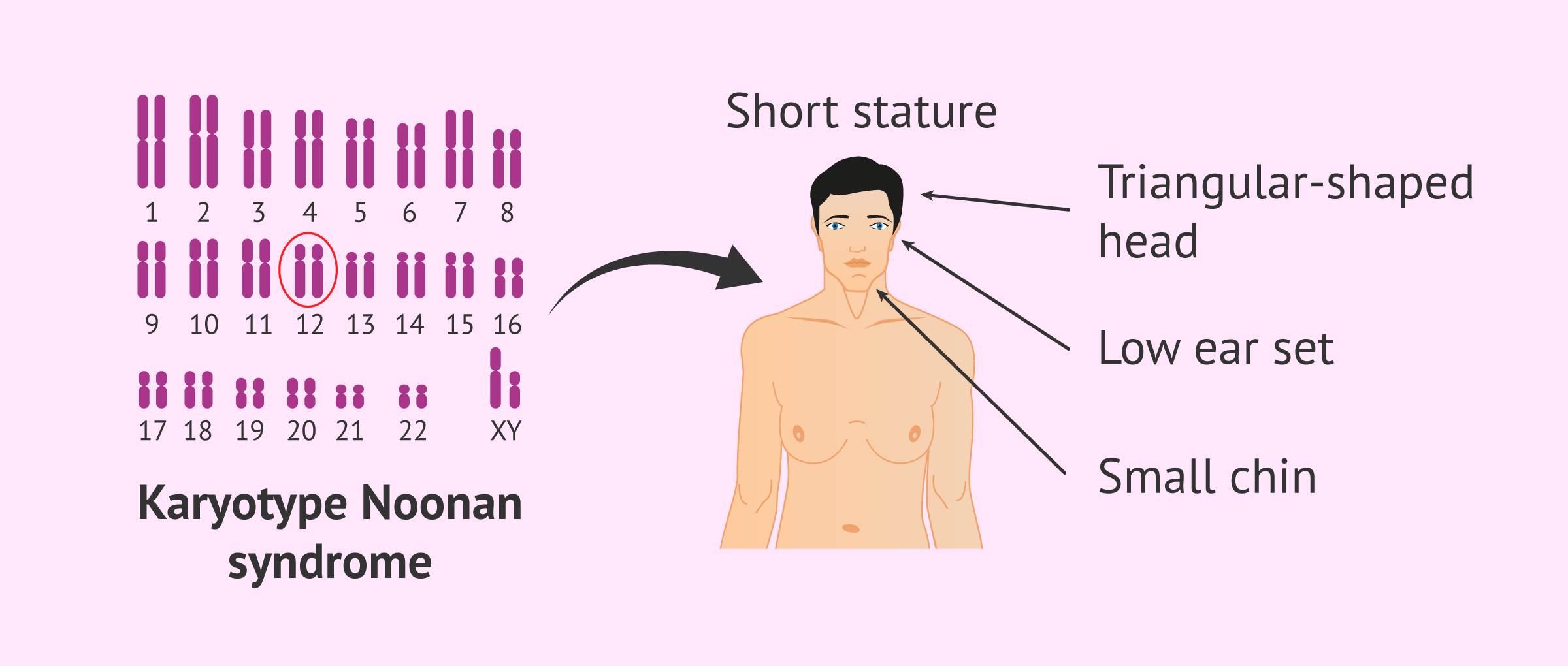
A change in one or more genes can cause Noonan syndrome. Changes in these genes produce proteins that are always active. Because these genes play a role in how tissues form in the body, this constant activation of proteins disrupts the typical process of cell growth and division.
The gene changes that cause Noonan syndrome can be:
- Inherited. Children who have one parent with Noonan syndrome who carries the changed gene have a 50% chance of developing the condition. This is called an autosomal dominant inheritance pattern.
- Random. Noonan syndrome can develop in a child because of a new changed gene — meaning the child did not inherit that gene from a parent. This is known as a de novo genetic condition.
In some cases, the cause of Noonan syndrome is not known.
Symptoms of Noonan Syndrome
Symptoms of Noonan syndrome vary from mild to life-threatening, depending on the affected part of your child’s body. Most symptoms start when the fetus is developing in the uterus or appear in children before age 11.
Facial features of children with Noonan syndrome often become less noticeable as children get older. They may include:
- Tall forehead.
- A deep groove in the middle of their upper lip.
- Drooping eyelid (ptosis).
- A flat nose with a wide base and bulbous (bulging) tip.
- Low-set ears.
- Pale blue or green eye color.
- Wide-set, downward-slanting eyes that may cross (strabismus).
Other common physical symptoms are:
- Bulging toes or finger pads.
- Nails that are abnormally shaped or discolored.
- Short neck with low hairline or extra folds of skin (webbing).
- Short stature.
- Sunken chest (pectus excavatum) or raised sternum (pectus carinatum).
Many children born with Noonan syndrome have heart disorders (congenital heart disease). They may require immediate treatment or develop symptoms later in life. Heart conditions include:
- Atrial septal defect.
- Hypertrophic cardiomyopathy. (thickening of the heart muscle).
- Pulmonary artery stenosis.
Diagnosis and Tests
How is Noonan syndrome diagnosed?
Your healthcare provider may suspect Noonan syndrome after a physical exam and review of your child’s symptoms. Your provider may order genetic tests to confirm a diagnosis and rule out other conditions.
Tests may include:
- Complete blood count (CBC)
- Chest X-ray
- CT scan
- Echocardiogram
- Electrocardiogram (EKG)
- Genetic tests
- Ultrasound
Management and Treatment
Is there a cure for Noonan syndrome?
Noonan syndrome has no cure. But effective treatments can help you and your child manage symptoms.
What is the treatment for Noonan syndrome?
Your child’s healthcare team develops a treatment plan for Noonan syndrome based on your child’s symptoms and their severity. Your child may receive:
- Assistive devices such as eyeglasses or hearing aids. Behavior or speech therapy.
- Educational support for learning disabilities.
- Medication to ease problems with your child’s heart, treat bleeding or improve slowed growth.
- Growth hormone therapy.
- Supportive therapies, such as compression therapy for lymphedema.
In some cases, your healthcare provider may recommend surgery. Early diagnosis is important for effective treatment and follow-up care.