What is Banana Republic
The most tragic consequence is that ordinary citizens never experience genuine development. National assets are sold under the guise of foreign loans or aid, citizen participation in policy-making is minimal, and power remains concentrated in a small elite.

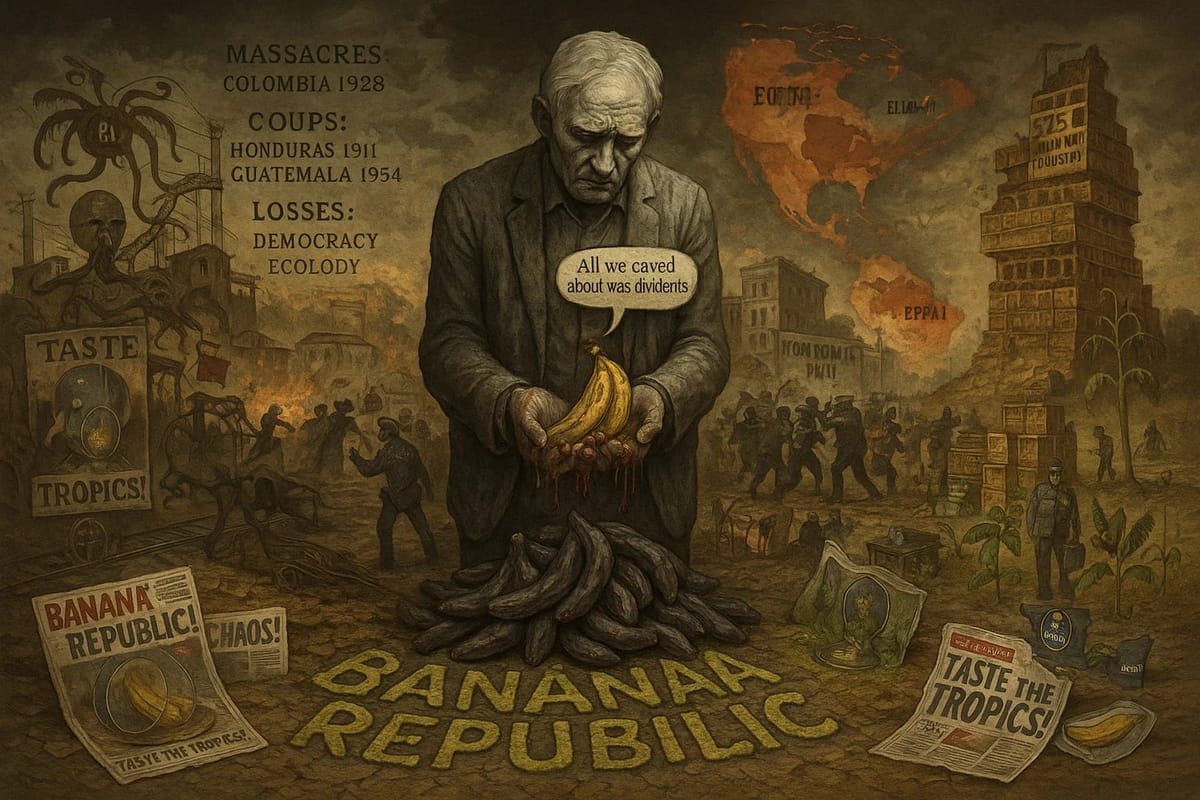
The term “Banana Republic” may sound simple at first, but it reflects the deep political, economic, and social problems of a country. The phrase was coined by American writer O. Henry in his novel Cabbages and Kings, where he referred to a fictional country as a “banana republic.” In reality, the term began being used in the late 1800s for countries in Central America and the Caribbean, where American companies—especially the United Fruit Company—established control over banana cultivation.
These companies colluded with political leaders and began interfering in local administration. Infrastructure like roads, railways, and ports was built primarily to facilitate their business. Workers’ rights were curtailed, and laborers were forced to work long hours for minimal wages. This made the general population dependent, poor, and trapped under opaque governance. In such cases, a country becomes a puppet of foreign interests, which is what is meant by a “banana republic.”
Characteristics and Structure of a Banana Republic
The term “Banana Republic” is not limited to agriculture or bananas. It is used for any country where foreign powers or large corporations heavily influence national decisions. In these countries, political leaders often work under foreign pressure, making policies that benefit private or foreign interests rather than the people.
In such a scenario:
- The judiciary is not independent.
- The parliament is symbolic, and the rule of law depends on the ruler’s will.
- Public voices are suppressed, journalism is censored, and the opposition faces threats or imprisonment.
- The military and security forces act as tools of oppression rather than protectors of the people.
- The economy depends on a few select sectors or commodities, with prices often dictated by foreign markets.
The most tragic consequence is that ordinary citizens never experience genuine development. National assets are sold under the guise of foreign loans or aid, citizen participation in policy-making is minimal, and power remains concentrated in a small elite. Education systems are often designed to foster loyalty to the regime rather than independent thought. This long-term pattern undermines self-reliance, democracy, and sovereignty.
The Modern Form of Banana Republics
Today, the concept of a banana republic is less obvious. It is no longer just about military coups or economies dependent solely on bananas. Modern banana republics are often influenced by multinational corporations, international financial institutions, and foreign aid organizations.
If a country relies on international donors’ advice or permission for policy-making, this is an indirect sign of banana republic dynamics. In Africa, South America, and Asia, foreign companies exploit minerals, water resources, and labor. Local authorities may sign foreign agreements for personal gain, resulting in long-term poverty, lack of education, and political instability.
Countries often take foreign loans in the name of development, which leads to changes in labor laws, tax policies, and education systems that prioritize creditors over citizens. Policy-making lacks transparency, and fulfilling international expectations takes precedence over national needs. This is the complex but persistent reality of modern banana republics.
Nepal and the Risk of Becoming a Banana Republic
Nepal’s political history over the past few decades also shows signs of potential banana republic dynamics:
- Political instability and frequent government changes
- Policies favoring those in power rather than citizens
- Heavy influence of foreign donors in development projects
Many development projects rely on foreign loans or aid, benefiting a small group or institutions rather than the general public. Foreign investors increasingly influence sectors like water resources, minerals, and tourism, sometimes without public awareness. Policies often prioritize foreign programs over domestic alternatives in education, health, and agriculture.
If these trends are not carefully addressed, Nepal risks falling into a long-term cycle of banana republic dependency. Preventing this requires:
- Transparent governance
- Accountable leadership
- A self-reliant economic model
- Civic awareness, independent media, and an impartial judiciary
True development can only be ensured through domestic efforts and long-term planning, not by foreign aid alone. If Nepal adopts a self-reliant and citizen-accountable governance system, it can protect itself from the dangers of becoming a banana republic. This requires serious self-reflection and conscious decision-making from leaders, citizens, and institutions alike.