Preparation Underway to Reinstall King Mahendra’s Statue at Mahendra Chowk, Biratnagar
Sanatan Yuba Manch Nepal remains optimistic that with collective support, the statue will soon stand once again at Mahendra Chowk—serving as a reminder of the past and an inspiration for the future.

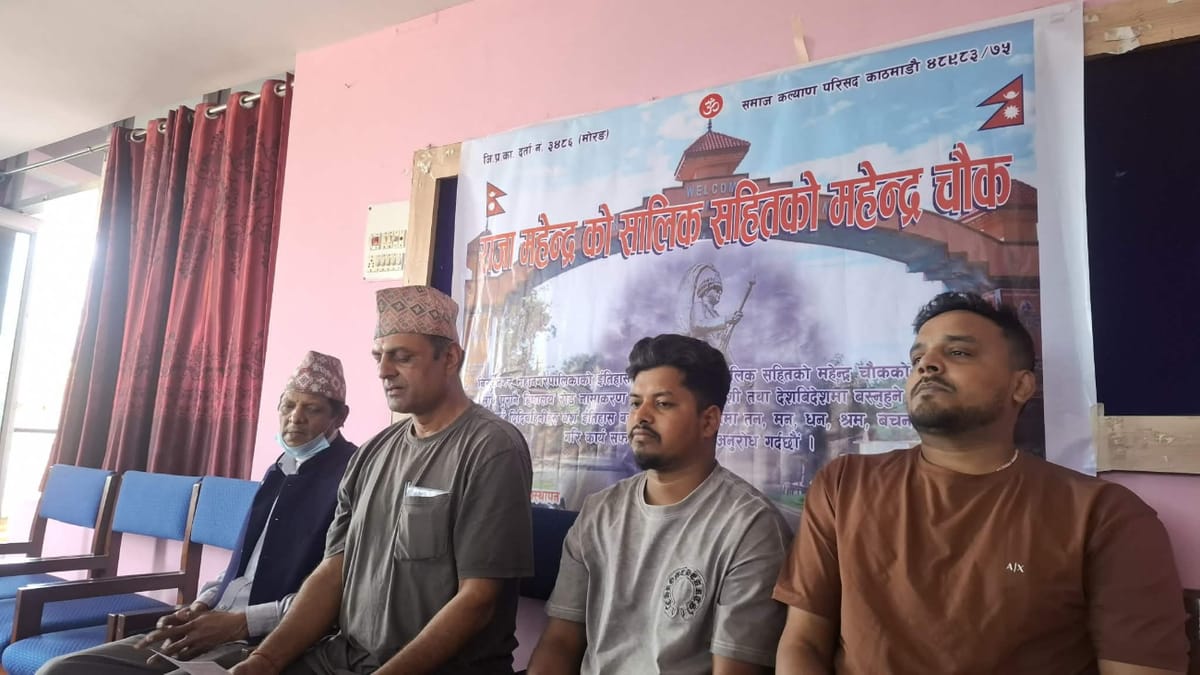
Biratnagar is once again witnessing a renewed effort to restore its historical identity, as preparations have begun to reinstall the statue of King Mahendra at Mahendra Chowk. This initiative is being actively led by Sanatan Yuba Manch Nepal, an organization known for its consistent involvement in social, cultural, and religious activities over the past eight years.
The announcement was officially made during a press conference held in Biratnagar on Thursday 9th April 2026 (Chaitra 26, 2082 B.S.). During the event, the organization revealed its plan to reinstall the statue at the historically significant Mahendra Chowk, a landmark that has long been associated with the city’s identity and heritage.
Restoring Historical Identity
According to the organization, the primary goal of this initiative is to preserve historical identity and cultural heritage.
The statue of King Mahendra, once a prominent feature of Mahendra Chowk, was demolished during the Second People’s Movement (Nepal). Since then, the absence of the statue has been viewed by many as a gap in the representation of Biratnagar’s historical narrative.
Sanatan Yuba Manch Nepal believes that reinstating the statue is essential to keeping history alive for future generations. The organization emphasizes that a society must respect and preserve its past in order to build a stronger and more informed future.
They argue that historical monuments like this statue serve as educational and cultural symbols, connecting younger generations with their roots.
Expansion of Heritage Campaign
In addition to reinstalling the statue, the organization has also announced plans to intensify its campaign to restore Himalayan Road to its original form. This initiative reflects a broader vision of urban heritage conservation, aiming to revive the traditional aesthetics and historical significance of key areas within the city.
The combined efforts—restoring the statue and revitalizing Himalayan Road—are part of a larger mission to enhance Biratnagar’s cultural landscape and promote tourism. By preserving historical landmarks, the organization hopes to position the city as a destination that values its heritage while embracing modern development.
A Non-Political, Community-Driven Initiative
In an official statement issued by the President of Sanatan Yuba Manch Nepal, Nawaraj Dhakal, it was clearly stated that the campaign is not driven by political motives. Instead, it is purely a social and cultural movement aimed at protecting historical identity.
Dhakal highlighted that the initiative is rooted in a sense of responsibility toward preserving national heritage. He also made a collective appeal to the residents of Biratnagar, social organizations, civil society members, and concerned stakeholders to actively participate in the campaign. According to him, such efforts can only succeed through unity and shared commitment.
Fundraising and Estimated Cost
The organization has already begun collecting financial contributions to support the construction of the statue. It is estimated that approximately NPR 1 million (10 lakh) will be required to complete the project. The fundraising campaign is open to individuals, organizations, and well-wishers who wish to contribute to preserving Biratnagar’s historical legacy.
This transparent and community-driven approach reflects the organization’s intent to make the project inclusive and participatory, ensuring that the people of Biratnagar feel a sense of ownership over the initiative.
Significance of the Reinstallation
The reinstallation of King Mahendra’s statue carries both symbolic and cultural significance. King Mahendra played a crucial role in Nepal’s modern history, and his contributions remain a subject of public memory and discussion. For many, restoring his statue is a way of acknowledging that history—regardless of differing perspectives—should be preserved rather than erased.
Moreover, Mahendra Chowk itself holds a special place in Biratnagar’s urban landscape. Reinstating the statue is expected to enhance the aesthetic and cultural value of the area, potentially making it a focal point for both locals and visitors.
Looking Ahead
As preparations move forward, the initiative has already sparked conversations across the community about the importance of heritage preservation. While the project may evoke diverse opinions, it undeniably highlights a growing awareness about the need to protect and celebrate historical identity.
Sanatan Yuba Manch Nepal remains optimistic that with collective support, the statue will soon stand once again at Mahendra Chowk—serving as a reminder of the past and an inspiration for the future.
In conclusion, the campaign to reinstall King Mahendra’s statue is more than just a construction project; it is a movement to reconnect Biratnagar with its history, strengthen community engagement, and promote a culture of preservation. With continued support and collaboration, this initiative has the potential to become a landmark example of how local communities can take the lead in safeguarding their heritage.