ICAN Conference Highlights Nepal’s Growing Potential in BPO, KPO, and IT Outsourcing

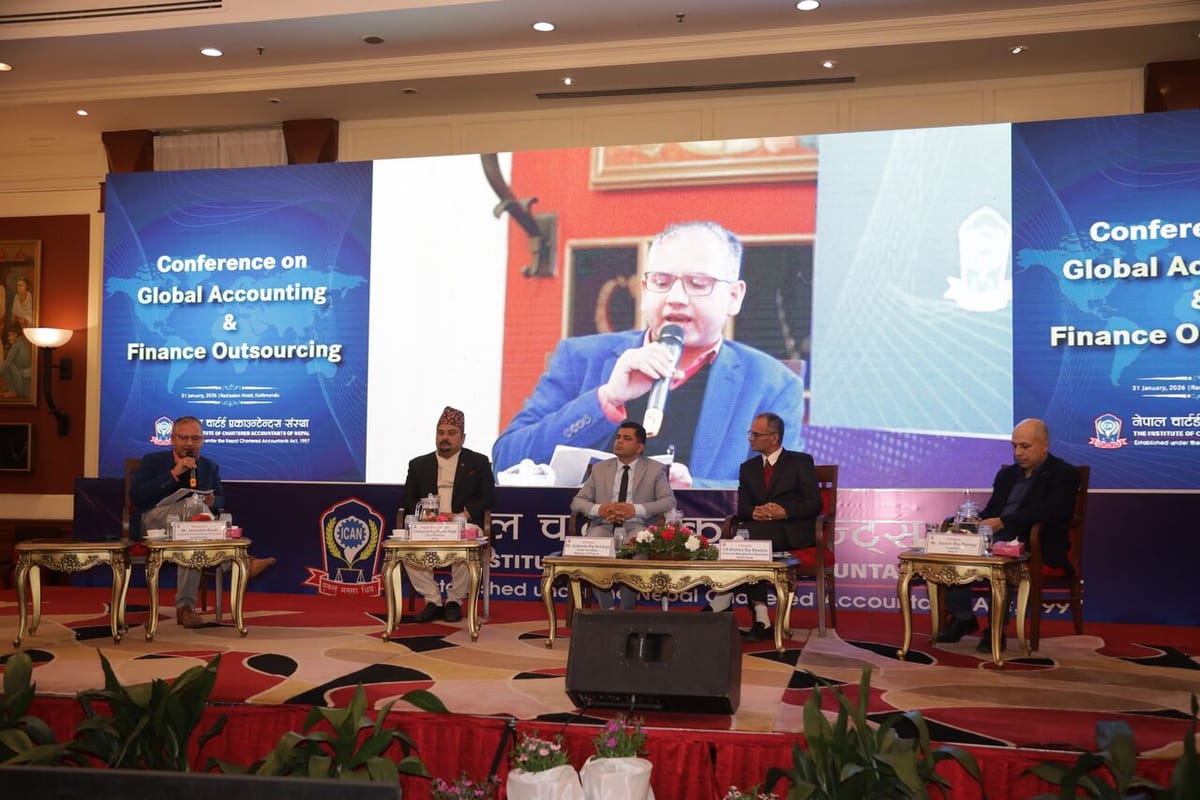
Kathmandu — A high-level discussion on Nepal’s expanding role in the global outsourcing industry took place during the Conference on Global Accounting and Finance Outsourcing organized by The Institute of Chartered Accountants of Nepal (ICAN). The session, chaired by the undersigned, focused on the theme “BPO, KPO, and IT Outsourcing in Nepal: Discussing Trends, Economic Impact, and Policy Interventions.”
The panel explored Nepal’s current policy framework, emerging opportunities, and structural challenges in the Business Process Outsourcing (BPO) and Knowledge Process Outsourcing (KPO) sectors. Speakers emphasized that with a young and tech-savvy workforce, competitive operational costs, and a growing IT ecosystem, Nepal has strong potential to position itself as a competitive outsourcing destination in South Asia.
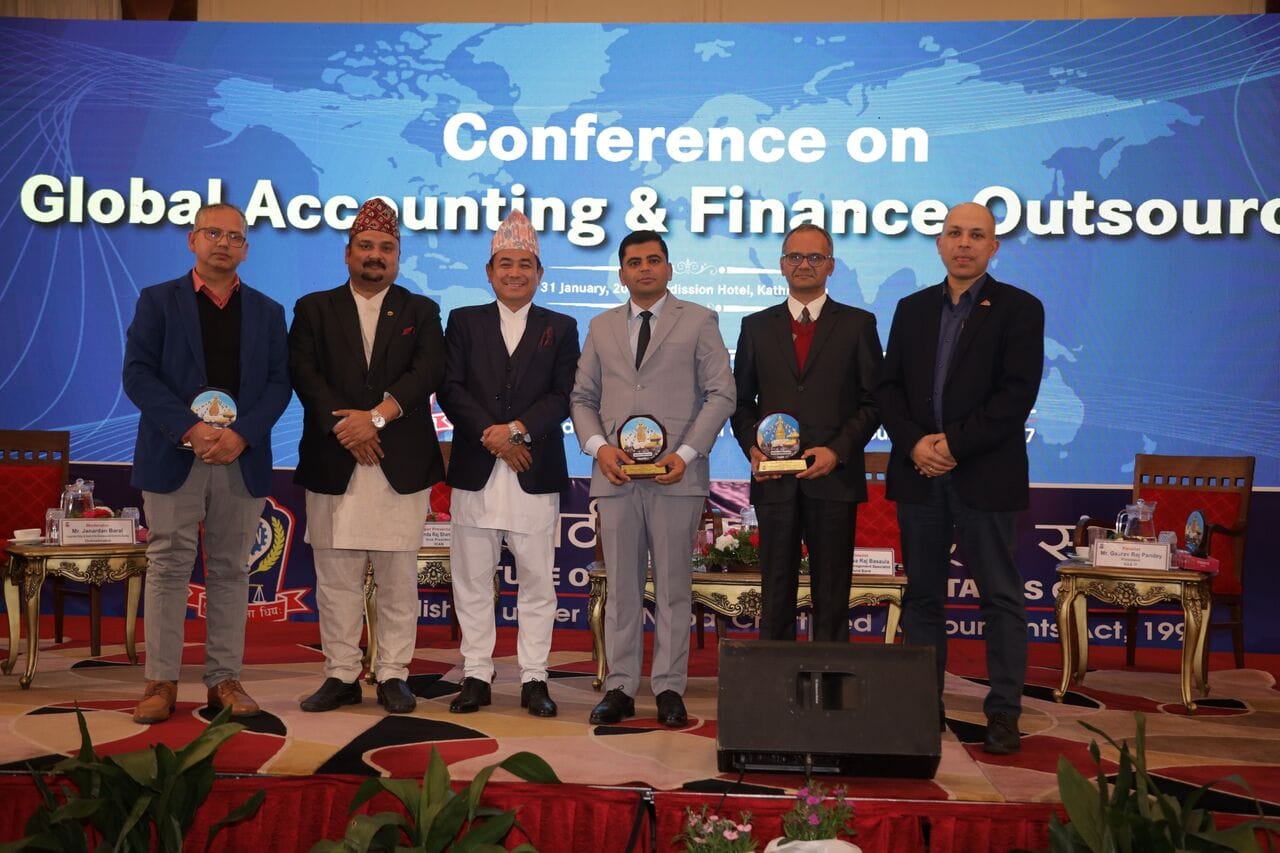
A key highlight of the session was the presentation by CA. Ananda Raj Sharma Wagle, Vice President of ICAN, who shared insights on the ambitious GAIN Project. According to him, the project aims to create more than 150,000 jobs and generate over USD 6 billion in foreign currency earnings annually within the next decade. He noted that the outsourcing sector could become a major pillar of Nepal’s economic transformation by boosting employment, increasing exports, and strengthening foreign exchange reserves.
The panel featured prominent representatives from government, international development agencies, and the private sector. Mr. Gobinda Raj Acharya, Under Secretary at the Ministry of Finance, stressed the importance of policy reforms, fiscal clarity, and regulatory efficiency to attract both domestic and foreign investment in the outsourcing industry. He highlighted the government’s role in ensuring policy stability and an enabling business environment.
CA. Bishwa Raj Basaula, Financial Management Specialist at the World Bank, underlined the need for institutional coordination and investment in human capital. He pointed out that countries that have successfully developed outsourcing industries did so through consistent policy implementation, strong digital infrastructure, and alignment between education systems and industry requirements.
Representing the private sector, Mr. Gaurav Raj Pandey, President of Nepal Association for Software and IT Services Companies (NAS-IT), discussed the rapid growth of Nepal’s IT services exports and remote digital work. He emphasized the need for improved internet reliability, streamlined regulations, and greater recognition of IT services as a priority export sector.
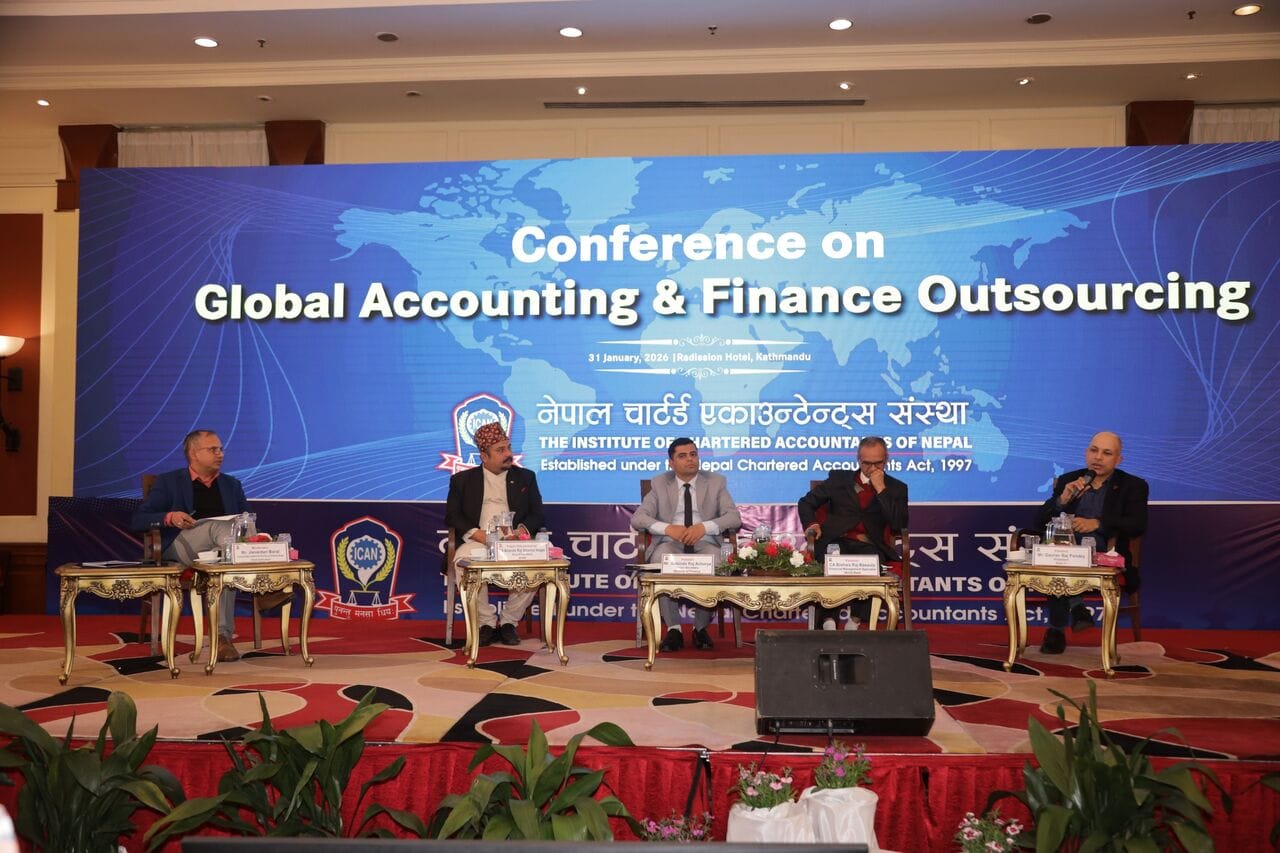
Throughout the session, speakers agreed that collaboration among government agencies, multilateral institutions, and the private sector is essential to ensure sustainable growth in the BPO and KPO industries. Policy consistency, infrastructure development, and strategic investment in skills training were identified as critical factors for long-term success.
The conference concluded with a shared optimism that Nepal can leverage its digital capabilities to expand its presence in global outsourcing markets. The session was described as a meaningful step toward shaping Nepal’s digital economy and strengthening its position in the global services sector.