From Fear to Fearlessness: How Meditation Strengthens Inner Courage
Each session strengthens the ability to notice fear, acknowledge it, and act despite it. Over time, this habitual response rewires the mind. What once felt paralyzing gradually becomes manageable.

Fear is a natural part of being human. It arises when we face uncertainty, risk, or challenges that push us beyond our comfort zone. At times, fear can protect us, keeping us safe from harm. But more often than not, it becomes a barrier that prevents growth, stifles creativity, and stops us from stepping into our full potential. From small daily anxieties to profound life challenges, fear can infiltrate every corner of our lives. The good news is that fear is not permanent, and courage is not an innate trait you are born with it can be cultivated. One of the most powerful tools to transform fear into courage is meditation.
Meditation is often associated with calmness, stress relief, or spiritual awakening. However, its impact on courage is profound and scientifically backed. Meditation strengthens the mind’s ability to observe thoughts, regulate emotions, and respond to challenges with clarity rather than panic. When practiced consistently, meditation allows us to move from fear-driven reactions to conscious responses, from hesitation to action, and from anxiety to inner strength.
Understanding Fear and Its Impact
Fear is a response generated by the brain when it perceives a threat. The amygdala, the brain’s fear center, reacts almost instantly, triggering a cascade of physiological responses: increased heart rate, rapid breathing, muscle tension, and a rush of stress hormones like adrenaline and cortisol. While this “fight or flight” response is evolutionarily protective, it can become counterproductive in modern life, where threats are often psychological rather than physical.

Chronic fear leads to hesitation, avoidance, and low self-confidence. Over time, it erodes mental resilience, reduces problem-solving ability, and may even contribute to anxiety disorders. Fear is not inherently negative, but when left unchecked, it dominates decision-making and prevents personal growth. Courage, in this context, is not the absence of fear, it is the ability to act wisely and consciously despite it.
How Meditation Transforms Fear
Meditation works on fear in several interconnected ways. First, it cultivates awareness. When you meditate, you begin to notice your thoughts and emotions as they arise, without judgment. This awareness creates distance between you and your fear. Instead of automatically reacting to anxious thoughts “I can’t do this,” “Something bad will happen” you recognize them as temporary mental events. Awareness allows you to respond rather than react.
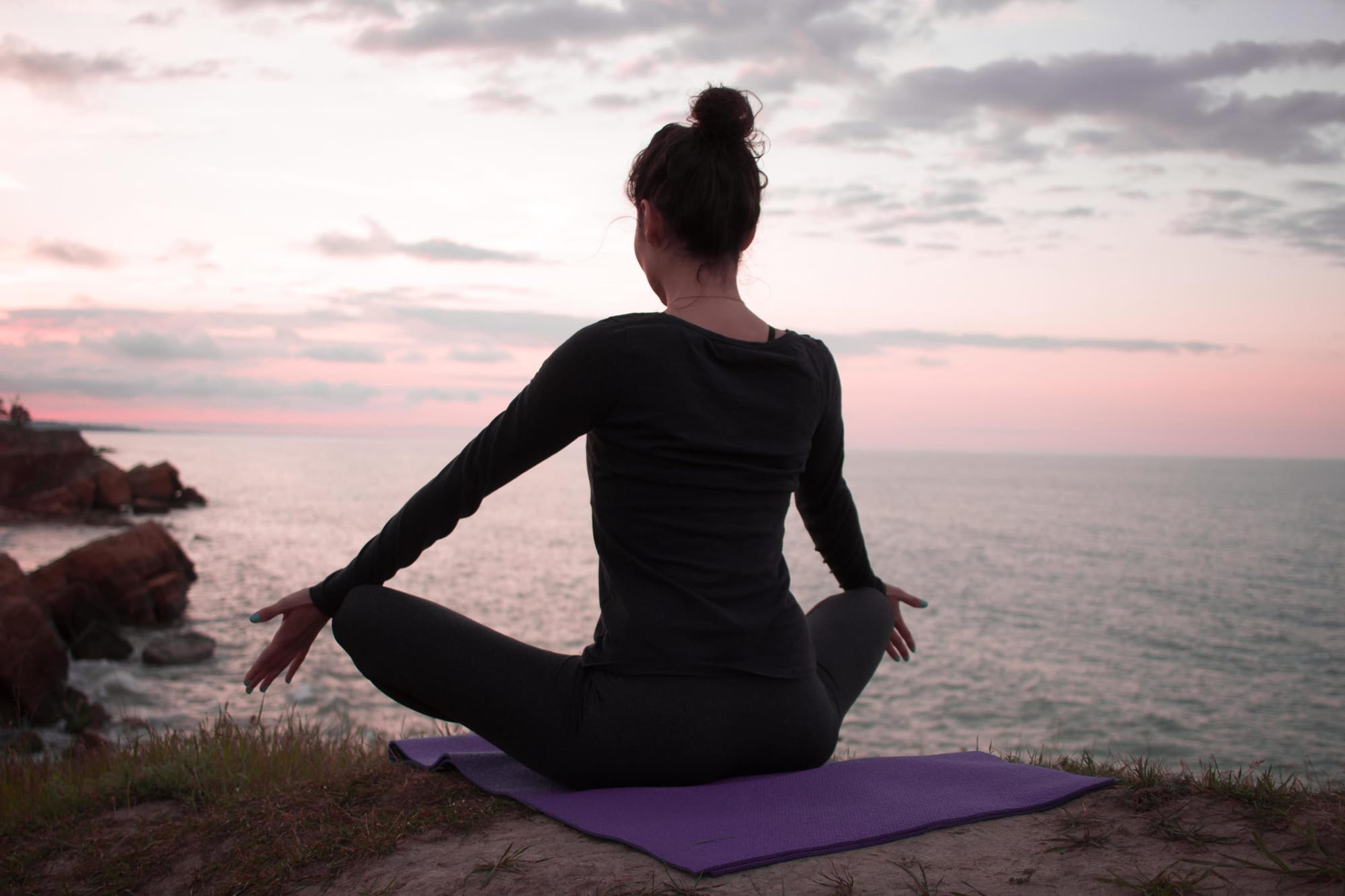
Second, meditation helps regulate physiological responses to fear. Techniques such as mindful breathing, body scanning, and progressive relaxation reduce the stress response in the nervous system.
By calming the heart rate, lowering cortisol levels, and slowing the breath, meditation teaches the body that it can remain steady even in the presence of perceived threats. Over time, this physical conditioning reinforces psychological courage.
Inner Courage Through Mindful Observation
A core principle of meditation is observing thoughts and emotions without attachment. This is particularly powerful in cultivating courage. Fear often feels overwhelming because we identify fully with it. Thoughts like “I am scared” or “I cannot do this” are internalized as truths. Meditation allows us to watch fear as it arises, acknowledging it without being dominated by it.

For example, during meditation, a fearful thought may surface about an upcoming challenge, public speaking, confronting someone, or taking a career risk. Instead of resisting or suppressing it, you notice: “Fear is present.” You recognize it as a natural emotional response, separate from your core self. This separation creates a mental space where conscious action becomes possible. The mind begins to understand that fear is not permanent, that it can pass, and that courage is a choice.
Building Resilience and Emotional Strength
Meditation also strengthens resilience, the ability to face adversity without being overwhelmed. Regular practice helps the mind recover quickly from stress, disappointment, or fear-inducing situations. By training attention, enhancing self-regulation, and reducing rumination, meditation allows individuals to respond to challenges with a steady, calm mind.

Research supports this. Studies on mindfulness and meditation show measurable changes in the brain, including increased activity in the prefrontal cortex, which is associated with decision-making, emotional regulation, and executive function. Meanwhile, the amygdala’s reactivity decreases, meaning that fear and stress responses are less intense. This neurological foundation explains why long-term meditators often report higher levels of courage, confidence, and emotional stability.
Daily Practices to Cultivate Courage Through Meditation
While the benefits of meditation accumulate over time, certain practices are particularly effective in developing inner courage:
- Mindful Breathing: Sit quietly and focus on your breath. Notice the inhale and exhale without trying to control it. When fearful thoughts arise, gently return attention to the breath. This trains the mind to anchor in calmness rather than panic.
- Body Scan Meditation: Move attention slowly through the body, noticing sensations without judgment. Recognize areas of tension or stress. This practice strengthens the connection between mind and body, helping you stay grounded even during fear-inducing situations.
- Visualizing Courage: During meditation, imagine yourself facing a fearful scenario with confidence. Visualization primes the brain to respond with courage in real-life situations.
- Loving-Kindness Meditation (Metta): Cultivating compassion toward yourself and others reduces fear of judgment, criticism, or failure. By strengthening emotional support internally, you enhance bravery externally.
- Observing Thoughts: Keep a meditation journal. Write down fears as they arise. Observing them on paper creates additional distance and reduces their power over your actions.
Courage as a Practice, Not a Trait
One of the most important insights is that courage is not a fixed trait. You are not born fearless. Fearlessness is a practice, a skill that grows with consistent awareness and intentional action. Meditation provides the structure for this practice.
 Swami Devraj
Each session strengthens the ability to notice fear, acknowledge it, and act despite it. Over time, this habitual response rewires the mind. What once felt paralyzing gradually becomes manageable.
Courage cultivated through meditation is subtle. It is not brash heroism or reckless boldness. Instead, it is quiet, steady, and resilient. It allows you to face life’s uncertainties with clarity, integrity, and inner calm. This type of courage becomes a foundation for making decisions, pursuing goals, and living authentically.
Conclusion
From fear to fearlessness is a journey that begins within. Meditation is not a magic cure that removes fear instantly. Rather, it is a deliberate practice that strengthens the mind, calms the body, and nurtures emotional resilience. By cultivating inner awareness, observing thoughts and emotions, and developing daily habits of mindfulness, we create a stable foundation for courage.
Fear will always arise, because it is a natural part of being human. What meditation teaches is that fear is not the enemy. It is a signal, a guide, and an opportunity for growth. Courage emerges not from eliminating fear, but from understanding it, witnessing it, and acting despite it. Over time, meditation transforms our relationship with fear. What once seemed intimidating becomes manageable. Hesitation gives way to confidence. Anxiety gives way to inner calm. And the journey from fear to fearlessness becomes a lived experience, grounded in awareness, strength, and quiet courage.