What is placebo & why it is vital in our life?

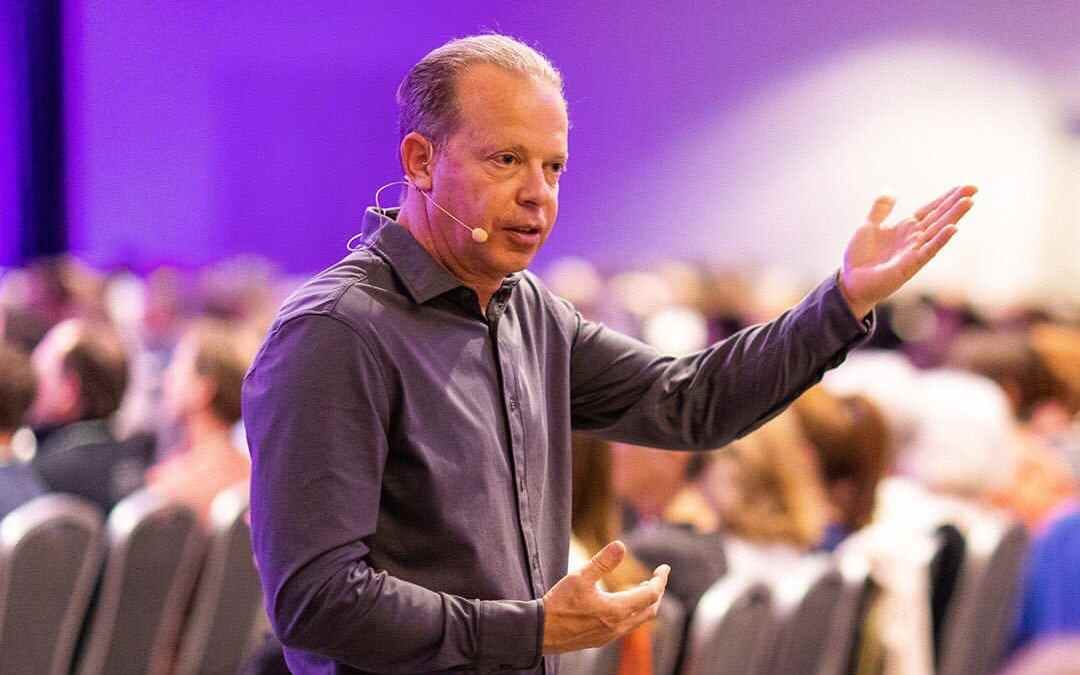
There is a story that most people find hard to believe when they first hear it. It is the story of a man who was told by doctors that he would likely never walk again, and who chose to prove them wrong using nothing but the power of his own mind. That man is Dr. Joe Dispenza, and his story has become one of the most talked about real life examples of what the human mind is truly capable of when it is pushed to its limits.
The Accident That Changed Everything
In 1986, Joe Dispenza was a 23 year old chiropractor who was taking part in a triathlon in Palm Springs, California.
He had completed the swimming and cycling portions of the race and was feeling good. But during the cycling leg, a truck came out of nowhere and hit him from behind. The impact threw him off his bike with tremendous force and he landed hard on the ground.
When people rushed to help him, it was clear that something was very seriously wrong.
He was in tremendous pain and could barely move. He was taken to hospital as quickly as possible, and when the doctors examined him and looked at his scans, the news was devastating.
Joe had fractured six vertebrae in his spine. The bones were not just cracked or slightly damaged. They were broken in a way that doctors described as very serious.
The vertebrae were compressing his spinal cord, which is the main highway that carries signals from the brain to the rest of the body. The doctors were deeply concerned about what this meant for his future ability to walk, or even to function normally.
What the Doctors Told Him
The medical team that treated Joe was clear and direct with him. They told him that the injury was severe and that he needed surgery right away.
The operation they recommended was complex and involved placing a rod in his spine to stabilize it and take the pressure off his spinal cord. Without this surgery, they warned, he faced a very real risk of being paralyzed for the rest of his life.

Several other specialists were brought in to look at his case. They all agreed with the first assessment. Surgery was necessary. Surgery was urgent. Without it, the outlook was very bleak.
Joe listened to what the doctors told him. He took it all in. And then he made a decision that shocked everyone around him. He decided to leave the hospital and refuse the surgery.
The Decision to Try Something Different
To most people, this would sound like the decision of someone who was not thinking clearly, or who did not understand how serious his condition was. But Joe Dispenza understood exactly how serious it was.
He had studied the human body and he knew what a spinal injury of this kind could mean. He was not refusing treatment out of fear or ignorance. He was making a deliberate and calculated choice based on something he deeply believed.
How Joe Dispenza Healed Himself with the Power of His Mind
Joe had spent years studying the relationship between the mind and the body. He had read widely about consciousness, about healing, and about what happens in the body when a person changes their thoughts and feelings.
He believed, at a level that went beyond simple hope, that the body has an extraordinary capacity to heal itself when given the right conditions. And he believed that the right conditions could be created from within, using the mind.
He went home and he began what he later described as one of the most intense experiences of his life.
He committed himself to a practice of deep mental focus and meditation, several hours a day. He did not simply sit and wish to get better. He worked with very specific and deliberate mental techniques.
He visualized his spine healing. He focused on his body as it would be when it was healthy and whole. He worked to feel, as completely as possible, the emotions of being well, being healed, and being free.
The Long Road Back
The first weeks were very hard. Joe was in constant pain. He had to discipline his mind constantly to stay focused on healing rather than on fear or discouragement.
There were moments of doubt. There were moments when the pain made it almost impossible to concentrate. But he kept going.
He later explained that he came to understand something important during this time.
He realized that most people, when they are in pain or in trouble, spend enormous mental and emotional energy thinking about how bad things are, imagining worst case scenarios, and feeling fear and despair.
All of that mental and emotional energy is real energy, and it goes somewhere. It affects the body. It affects the chemistry of the body, the hormones that are released, the signals that are sent to every cell.
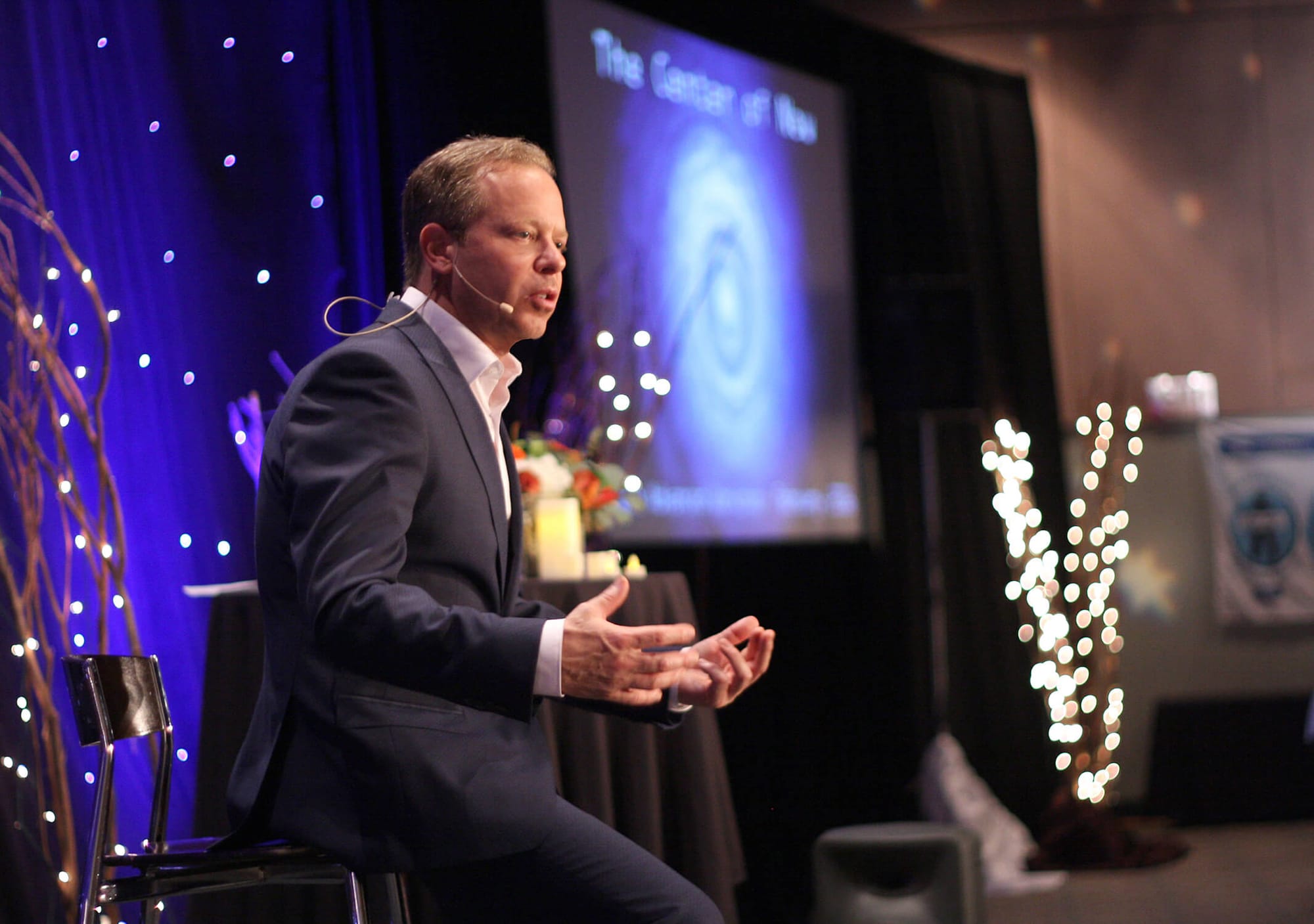
Joe made a conscious choice to redirect that energy. Instead of feeding thoughts and feelings of illness and damage, he would feed thoughts and feelings of health and wholeness.
He treated this as seriously as any prescription or medical treatment. He did not miss a session. He did not allow himself to indulge in negative thinking without catching it and bringing his focus back.
The Healing That Followed
What happened next is the part of this story that makes it so remarkable. Within a matter of weeks, Joe began to experience significant improvement.
The pain began to lessen. He began to regain feeling and function in his body. He started to be able to move in ways that had seemed impossible just a short time before.
Within nine and a half weeks of the accident, Joe Dispenza walked back into a gym. He was not fully recovered, but he was walking. Within twelve weeks, he was back to training. His recovery, by any medical standard, was extraordinary.
The doctors who had told him he needed urgent surgery were astonished by what had happened.
Joe did eventually have his spine examined again. The imaging showed that his vertebrae had healed.
Not perfectly and not in the way they would have been if the surgery had been done, but healed nonetheless, and healed in a way that allowed him to live a normal, active, and physically demanding life.
The Bigger Picture: What This Tells Us About the Placebo Effect
Joe Dispenza’s story is often described as a dramatic example of the placebo effect. But it is important to understand what that phrase really means, because many people think of the placebo effect as something small or even as a kind of trick.
They think it means that a person gets better simply because they believe they are getting a treatment, even when that treatment is actually just a sugar pill or a fake procedure.
That understanding is true as far as it goes, but it misses the deeper and more important point. The placebo effect is real.
It is not imaginary. It is a genuine physiological process in which the thoughts and beliefs of a person produce real, measurable changes in the body.
 Swami Devraj
Studies have shown that placebo treatments can reduce pain, lower blood pressure, alter brain chemistry, and even cause tumors to shrink in some cases. The mind is not separate from the body. It is intimately connected to every biological process that takes place within us.
What Joe Dispenza did was take this principle and apply it with extraordinary discipline and intention. He did not passively hope to get better. He actively and consciously used his mind as a tool to create the conditions for healing.
He understood that his thoughts and feelings were not just mental events floating around in some separate inner world. They were biological events that had direct consequences for his cells, his tissues, and his organs.
What Joe Dispenza Has Done Since
After his recovery, Joe Dispenza became deeply committed to understanding and sharing what he had experienced and learned.
He went on to study neuroscience, epigenetics, and the science of consciousness. He wrote several books, including Breaking the Habit of Being Yourself and Becoming Supernatural, which have been read by millions of people around the world.
He also began running workshops and retreats where he teaches people how to use meditation and focused mental practice to change their lives, their health, and their circumstances.
His work has attracted a great deal of attention from both the general public and from scientists. Some researchers have been skeptical, as is natural and healthy when extraordinary claims are made.
But others have been genuinely curious and have begun to study the outcomes of his workshops more carefully.
Some of those studies have produced results that are difficult to explain using conventional frameworks, including measurable changes in gene expression and immune function in people who attend his events.
The Lesson for All of Us
The story of Joe Dispenza is not just a personal story. It is a story that points toward something important about human beings and about what we are capable of.
Most of us have been trained to think of the body as a kind of machine that breaks down and gets repaired by external means, by doctors, by drugs, by surgery. And those things are often genuinely helpful and necessary.
But Joe’s story invites us to consider that there is another dimension to healing and to human potential. The mind is not a passenger in this process. It is an active participant.
The thoughts we think, the feelings we feel, and the beliefs we hold have real consequences for our biology. That does not mean that positive thinking is a cure for everything, or that people who get sick are somehow doing something wrong. Life is far more complex than that.
What it does mean is that we may have more influence over our own health and wellbeing than we have been taught to believe. And that is a genuinely hopeful and empowering idea.
Joe Dispenza chose to believe it at a moment when the stakes could not have been higher. His spine, and his life, are the result.