Remembering Jesse Louis Jackson

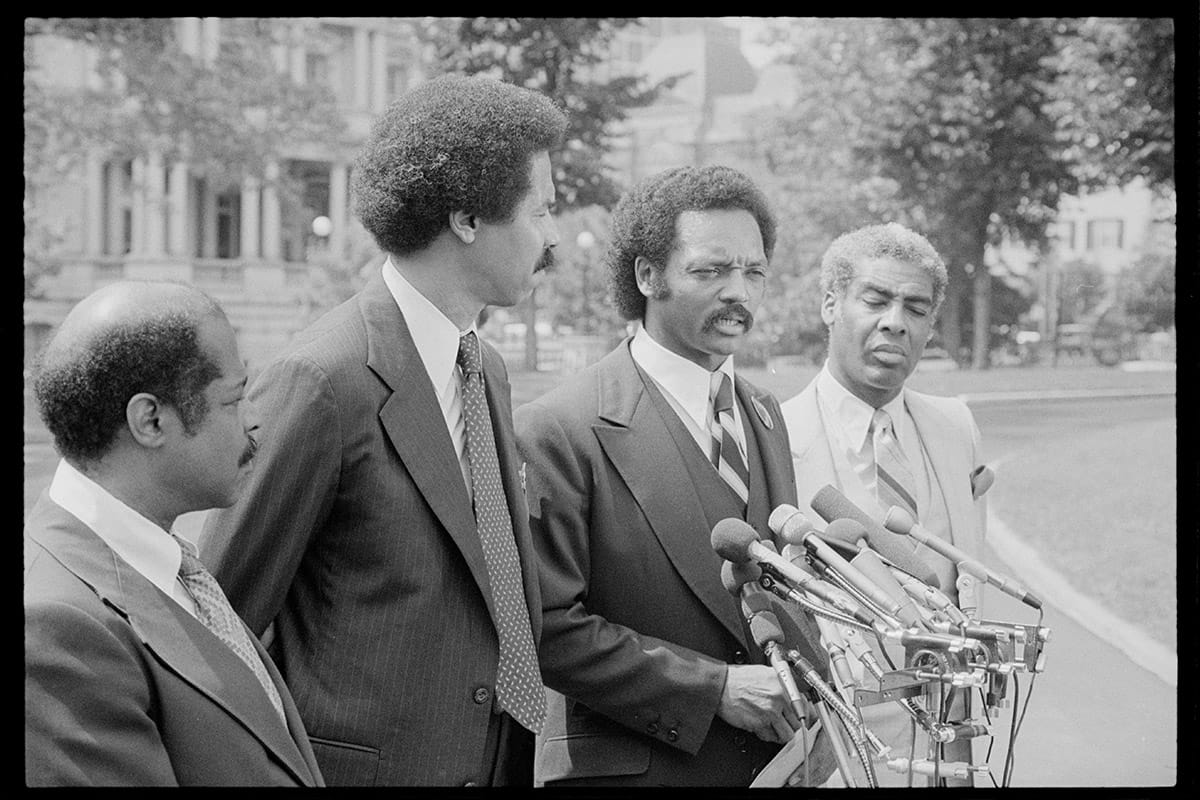
Jesse Jackson
Jesse Louis Jackson (lived; October 8, 1941 – February 17, 2026) was an American civil rights activist, politician, diplomat, and ordained Baptist minister whose influence spanned more than five decades of American public life. A protégé of Martin Luther King Jr. and James Bevel during the civil rights movement, Jackson emerged as one of the most prominent and enduring voices for racial equality, economic justice, and political inclusion in the late 20th and early 21st centuries.
From grassroots activism in the 1960s to presidential campaigns in the 1980s and diplomatic missions abroad, Jackson became a national figure known for his oratory, organizing ability, and commitment to expanding democratic participation.
Early Life and Education
Jackson was born Jesse Louis Burns on October 8, 1941, in Greenville, South Carolina. Raised by his mother, Helen Burns, he later adopted the surname Jackson after his stepfather, Charles Henry Jackson. Growing up in the segregated South deeply shaped his commitment to civil rights and social justice.
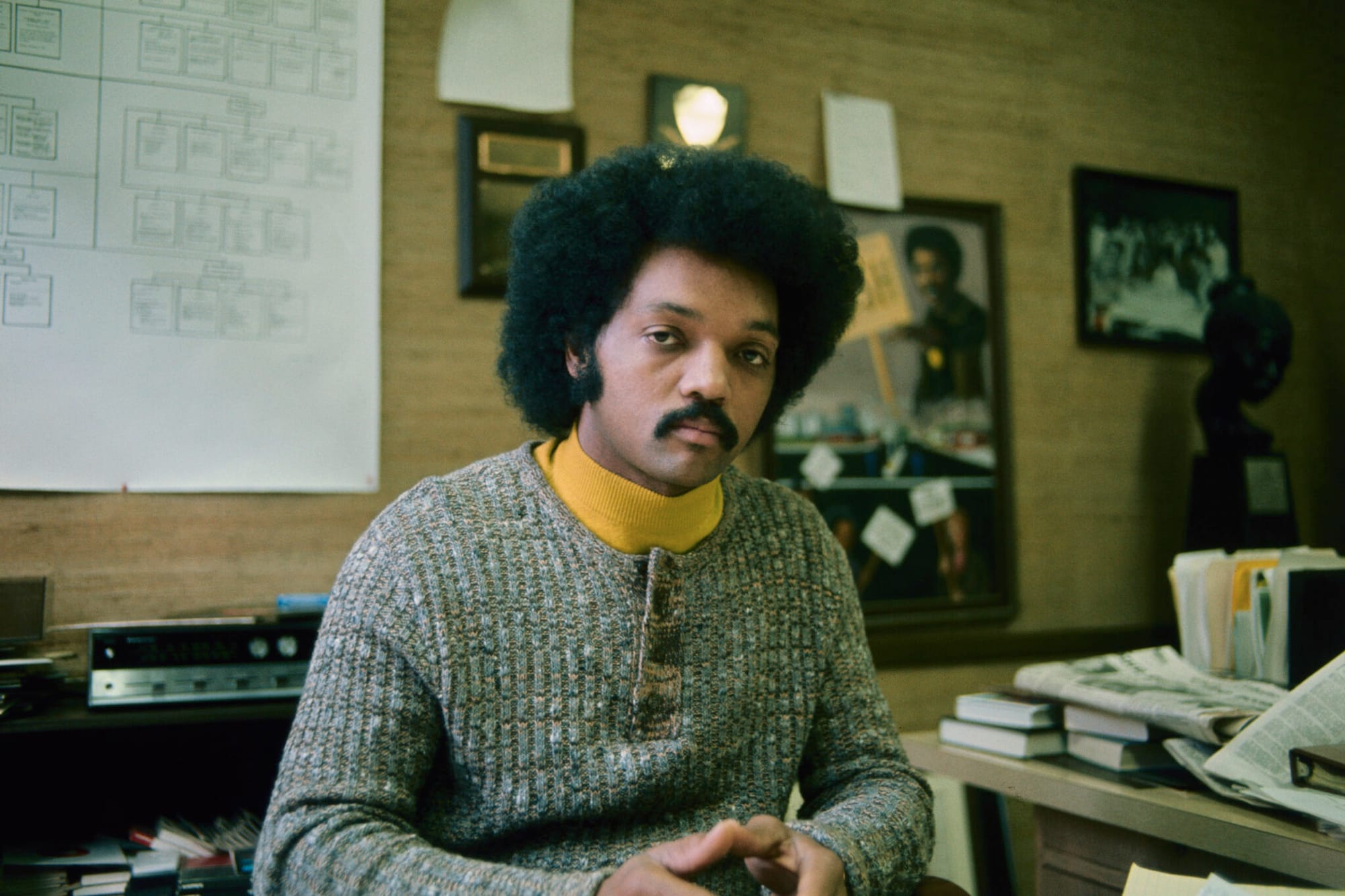
He attended North Carolina Agricultural and Technical State University, a historically Black university, where he earned a Bachelor of Science degree. During college, he became active in civil rights organizing. He later studied at Chicago Theological Seminary, earning a Master of Divinity degree and becoming an ordained Baptist minister.
Role in the Civil Rights Movement
In the 1960s, Jackson worked closely with Martin Luther King Jr. and the Southern Christian Leadership Conference (SCLC). He played an important role in economic justice initiatives, particularly Operation Breadbasket, which focused on improving employment and business opportunities for African Americans through boycotts and corporate negotiations.
Following King’s assassination in 1968, Jackson became a prominent national figure within the movement. Though sometimes controversial for his outspoken style, he remained committed to King’s philosophy of nonviolent protest and coalition-building.
Founding of Rainbow PUSH Coalition
In 1971, Jackson founded Operation PUSH (People United to Save Humanity) in Chicago. In 1996, it merged with the National Rainbow Coalition to form the Rainbow PUSH Coalition.
The organization advocated for:
- Economic empowerment
- Educational equity
- Voting rights expansion
- Workers’ rights
- International human rights
Through Rainbow PUSH, Jackson worked to build multiracial political coalitions that included African Americans, Latinos, labor unions, farmers, LGBTQ+ communities, and progressive whites.
Presidential Campaigns
Jackson ran for the Democratic presidential nomination in 1984 and 1988 as a member of the Democratic Party.
1984 Campaign
His first campaign was groundbreaking, as he became the second African American (after Shirley Chisholm) to mount a serious bid for a major party’s presidential nomination. He won several primaries and caucuses and demonstrated that a broad progressive coalition could compete nationally.
1988 Campaign
His 1988 campaign was even more successful. Jackson won multiple states, including Michigan, Virginia, and South Carolina, and finished second in the overall delegate count. His “Rainbow Coalition” platform emphasized:
- Universal healthcare
- Anti-apartheid sanctions
- Reduced military spending
- Expanded voter registration
His campaigns significantly increased Black voter participation and helped reshape the Democratic Party’s coalition politics.
U.S. Shadow Senator (1991–1997)
From January 3, 1991, to January 3, 1997, Jackson served as the United States Shadow Senator from the District of Columbia. The position was created by the District to advocate for full congressional representation and statehood. He was preceded by the establishment of the seat and later succeeded by Paul Strauss.
Although shadow senators do not hold official federal legislative power, Jackson used the role to champion:
- D.C. statehood
- Voting rights for District residents
- Expanded home rule
Diplomatic and International Work
Jackson often acted as an informal diplomat in international crises. He negotiated for the release of hostages and political prisoners in several countries, including:
- Syria
- Cuba
- Iraq
While some criticized his freelance diplomacy, others credited him with helping secure humanitarian outcomes and drawing attention to global human rights issues.
He was also a vocal opponent of apartheid in South Africa and supported the eventual release of Nelson Mandela.
Later Years and Legacy
In his later years, Jackson remained active in public life, advocating for criminal justice reform, voting rights, healthcare access, and economic equity. Even after health challenges—including a Parkinson’s disease diagnosis announced in 2017—he continued to speak publicly and mentor younger activists.
He died on February 17, 2026, at the age of 84.
Family
Jackson married Jacqueline Brown in 1962. The couple had six children, including:
- Santita Jackson
- Jesse Jackson Jr.
- Jonathan Jackson
Both Jesse Jackson Jr. and Jonathan Jackson served as U.S. representatives, continuing the family’s involvement in public service.
Historical Impact
Jesse Jackson’s legacy lies in his ability to connect grassroots activism with electoral politics. He helped normalize the idea of viable Black presidential candidates decades before the election of Barack Obama.
His organizing efforts expanded voter participation, strengthened multiracial political alliances, and influenced the direction of progressive politics within the Democratic Party.
Though often polarizing, Jackson remained one of the most influential American civil rights leaders of his generation—a bridge between the movement of the 1960s and the political realignments of the 21st century.