Is Nepal’s Education System Preparing Industry-Ready Graduates?
Nepal’s hospitality strength lies in its natural warmth, cultural kindness, and innate people skills. This foundation is unmatched in many parts of the world. However, natural talent alone is insufficient for global leadership.


Are Our Classrooms Creating Professionals, or Just Graduates?
Over the past decade, Nepal has witnessed a rapid and significant expansion in hospitality education. Dozens of colleges and institutes have opened, offering hotel management programs, tourism degrees, and hospitality certifications. Hundreds of young Nepalis enroll each year, driven by dreams of working in five-star hotels, international resorts, cruise ships, and global hospitality brands. The ambition is clear, the interest is evident, and the potential is enormous. Yet, despite this growth, an urgent question remains:
Are we producing industry-ready professionals, or are we simply producing degree holders?
This is not a rhetorical question. There is a profound difference between a graduate and a professional. A graduate may have theoretical knowledge, memorize definitions, and pass exams. A professional possesses not only knowledge but also confidence, practical skills, exposure, and a polished presence. In the hospitality industry, which is deeply human-centered, fast-paced, and emotionally charged, theoretical knowledge alone cannot create readiness. Students must be equipped to operate in real-world scenarios where decisions are made in minutes, and human emotions play a pivotal role in every interaction.
Is Theory Dominating Over Practical Skill?
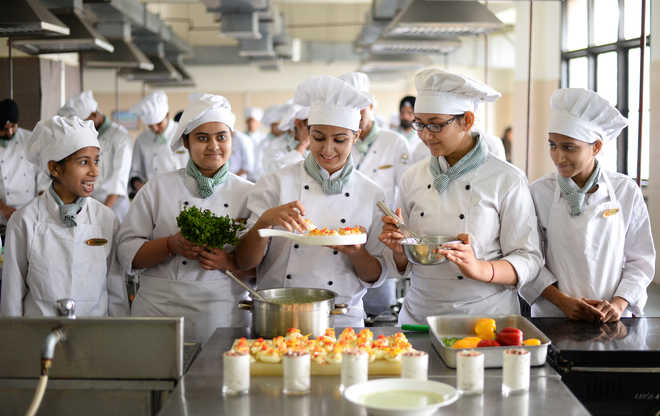
Many hospitality institutions in Nepal continue to emphasize classroom-based theory over hands-on practice. Lectures, textbook study, written examinations, and memorization of management principles dominate the curriculum. While foundational knowledge is undeniably important, hospitality is ultimately a practical art that cannot be mastered solely from a book.
The ability to navigate guest complaints, upsell services, communicate professionally under pressure, manage team conflicts, and make quick operational decisions are all core to professional success. These skills cannot be memorized; they must be experienced repeatedly in real-life or simulated environments. Without such exposure, students often step into hotels and resorts unprepared for the complexities and speed of daily operations.
The Importance of Real Industry Exposure
Industrial training or internships in Nepali colleges are often limited to a few weeks or months. While this provides some exposure, it is rarely enough to immerse students fully in the professional culture of hotels. True industry exposure goes beyond shadowing or performing routine tasks; it requires students to understand:
- Organizational culture: Observing hierarchy, workflows, and operational dynamics within hotels.
- Leadership behavior: Learning from experienced managers how decisions are made and teams are motivated.
- Time management under pressure: Handling peak hours in restaurants, check-ins during rush periods, and real-time problem-solving.
- International standards in action: Experiencing service expectations, hygiene norms, and operational procedures in top-tier hotels.
- Guest psychology: Understanding emotional cues, managing dissatisfaction, and delivering personalized experiences.
When students experience strong professional environments early, their mindset transforms. They start thinking strategically, acting confidently, and developing a sense of belonging in leadership roles. Exposure builds ambition; without it, potential remains latent, and natural talent is underutilized.
Are Professors Industry-Aligned?
A critical factor in shaping industry-ready professionals is faculty capability and alignment. In Nepal, many professors are academically qualified, yet few maintain strong links to industry operations. Hospitality is a dynamic, constantly evolving sector. Service styles change, technology evolves, and guest expectations rise continuously.
Professors should not only teach concepts; they must model professionalism. Students look to their mentors for guidance in appearance, demeanor, communication, and leadership. Faculty should:
- Maintain professional grooming and confident presence to inspire students
- Stay connected with evolving industry trends and technologies
- Regularly visit hotels and resorts to observe real operations
- Bring practical, real-world examples into classroom discussions
When education feels disconnected from industry reality, students struggle to bridge the gap once they graduate. The classroom must feel like an incubator for professional skills, not just a site for theoretical learning.
Should Colleges Function Like Miniature Hotels?
Imagine if hospitality colleges operated as small-scale replicas of professional hotels. In such an environment:
- Uniform standards are enforced strictly
- Daily grooming inspections are routine
- Communication is consistently professional
- Discipline and punctuality are non-negotiable
- Mock operational exercises occur weekly
- Leadership roles are assigned to simulate real responsibilities
When learning environments reflect professional standards, students do not just learn hospitality, they live it. They begin to internalize habits, develop soft skills, and understand the emotional and practical nuances of hospitality. Such immersion ensures that students are not overwhelmed when they encounter similar challenges in real hotels.
Confidence: The Missing Ingredient in Many Graduates
One of the most notable challenges Nepali graduates face is a lack of confidence, particularly in interviews, international environments, or high-pressure operational settings. The root cause is often systemic:
- Limited public speaking opportunities
- Rarely conducted mock interviews
- Lack of real leadership exposure during college
- Insufficient challenges outside comfort zones
Confidence is built through repetition. Students who regularly speak in front of peers, handle simulated guest complaints, participate in professional debates, and lead small teams gain communication skills and self-assurance. Without these opportunities, knowledge remains theoretical, and students struggle to assert themselves in the global hospitality market.
Quality Over Quantity
Nepal’s hospitality education sector is expanding rapidly. More colleges and institutes mean more graduates, but quantity does not guarantee quality. Producing large numbers of students without focusing on professional standards does little to elevate industry reputation.
True elevation comes from:
- Highly trained leaders
- Globally competitive professionals
- Strong communicators
- Disciplined and ethical managers
Even a small cohort of polished, professionally ready graduates can enhance Nepal’s image internationally. Quality shapes reputation; reputation shapes opportunity.
The Path Forward: Integrating Theory with Practice
To create industry-ready professionals, Nepali hospitality institutions must take concrete steps:
- Increase practical exposure: Extend internships, simulations, and live project work to supplement classroom theory.
- Daily grooming and personality training: Establish strict standards for professional appearance, communication, and behavior.
- Regular mock interviews and public speaking practice: Build confidence through repetition and constructive feedback.
- Invite industry experts: International and local hotel professionals can provide practical insights and mentorship.
- Evaluate on professionalism, not only academics: Performance metrics should include attitude, discipline, communication, and operational skills.
- Faculty development programs: Teachers must be continuously updated on industry trends, operations, and best practices.
When institutions combine academic knowledge with structured practical exposure, students graduate not just with a degree but with readiness for global careers.
The Bigger Picture
Nepal’s hospitality strength lies in its natural warmth, cultural kindness, and innate people skills. This foundation is unmatched in many parts of the world. However, natural talent alone is insufficient for global leadership. Structured, immersive, and professional education is the bridge between cultural aptitude and international success.
Education must not only inform, it must transform. It must:
- Build actionable skills
- Cultivate professional discipline
- Strengthen communication and confidence
- Develop leadership potential
- Instill practical problem-solving ability
Only then will Nepali graduates move seamlessly from classrooms to hotel floors, from theory to application, and from local competence to international recognition.
Conclusion: From Graduates to Professionals
Hospitality education should not simply produce degree holders. It should produce professionals who embody knowledge, confidence, and readiness.
A degree is proof of completion; professionalism is proof of preparation.
If Nepal wants to assert itself as a leader in the global hospitality industry, our education system must evolve. By emphasizing practical exposure, professional grooming, personality development, and immersive learning, Nepali institutions can transform natural hospitality into global excellence.
Only when classrooms prepare students for real-world challenges, and when graduates leave not just informed but transformed, will Nepal’s inherent hospitality truly reach its full potential on the world stage.