Inspection and Directive by Home Minister Sudan Gurung at Nepal Police Headquarters
Following the inspection, he addressed police officers and personnel both in person and virtually. He acknowledged that despite limited resources, Nepal Police has been effectively fulfilling its responsibilities and encouraged them to continue performing their duties with confidence.

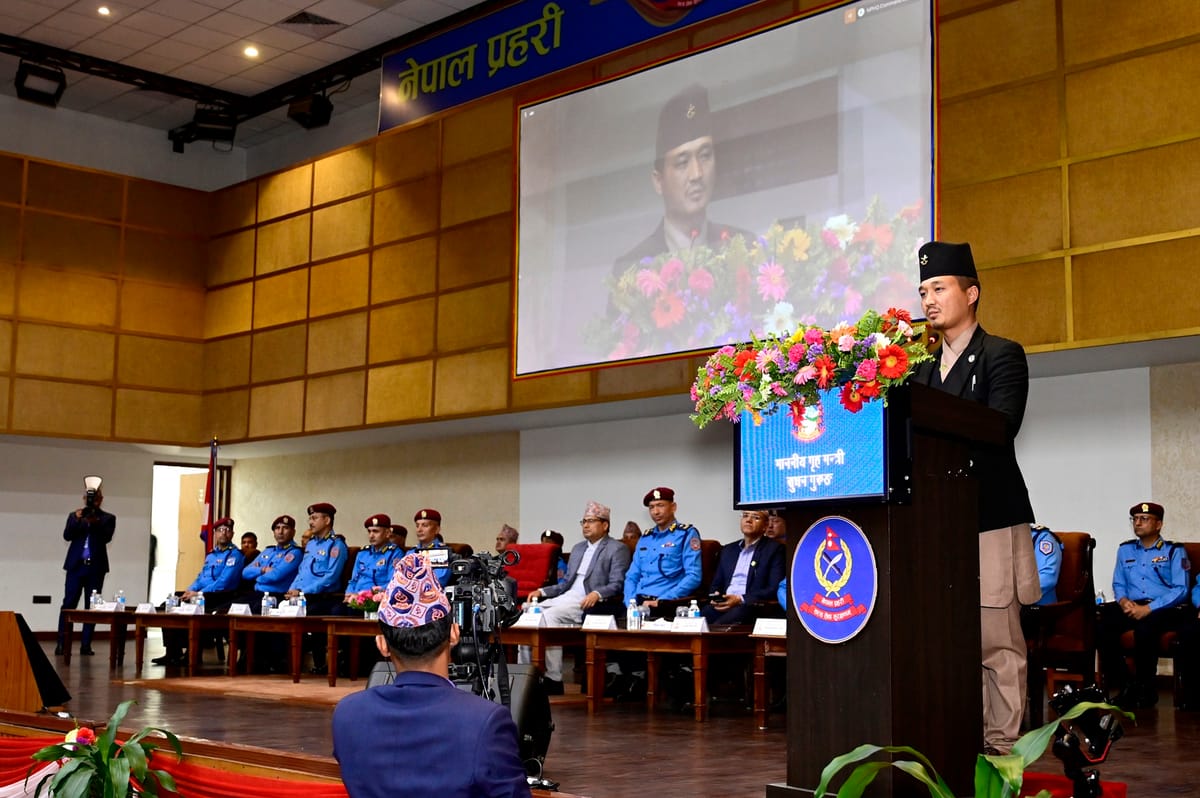
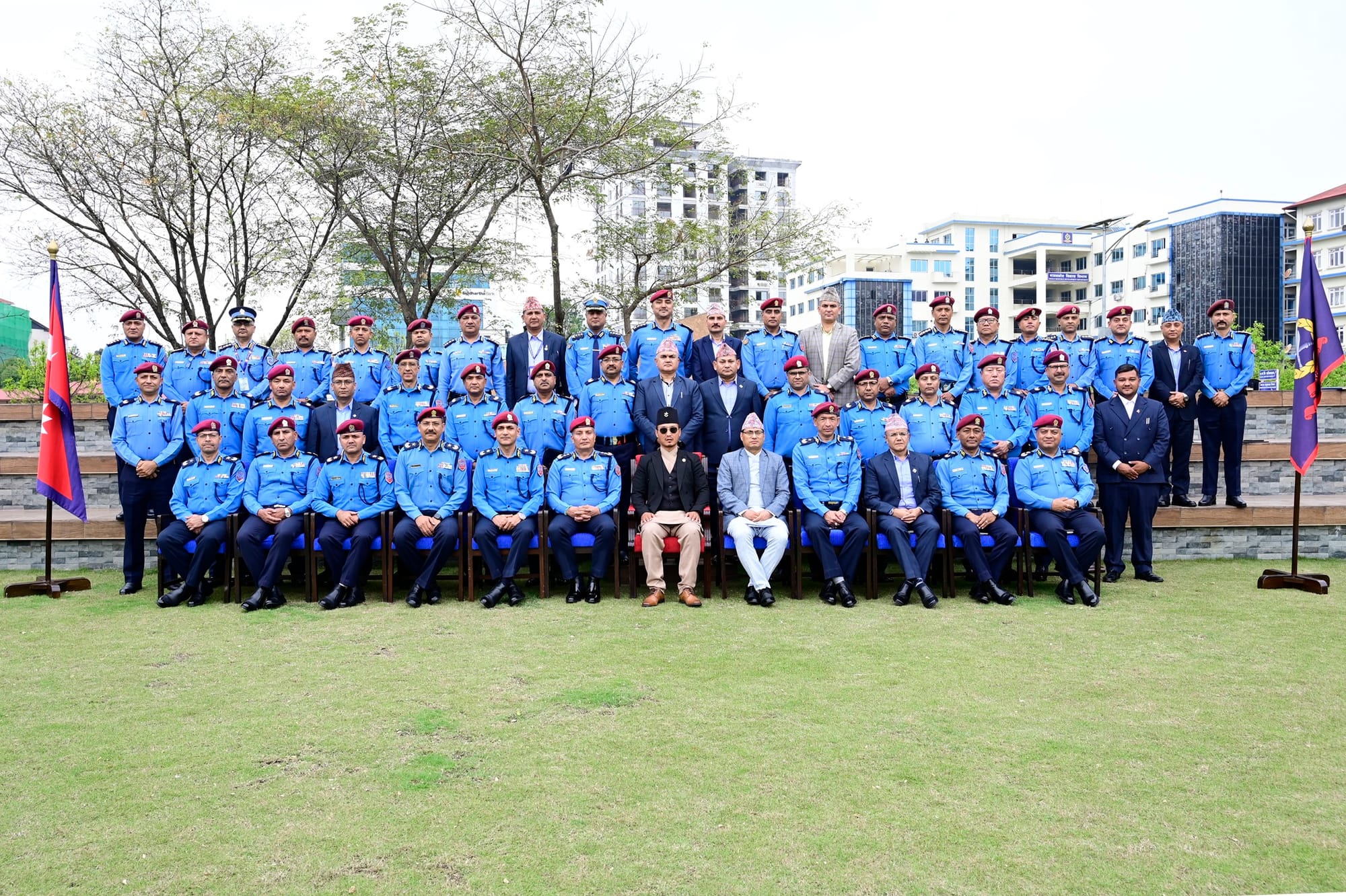
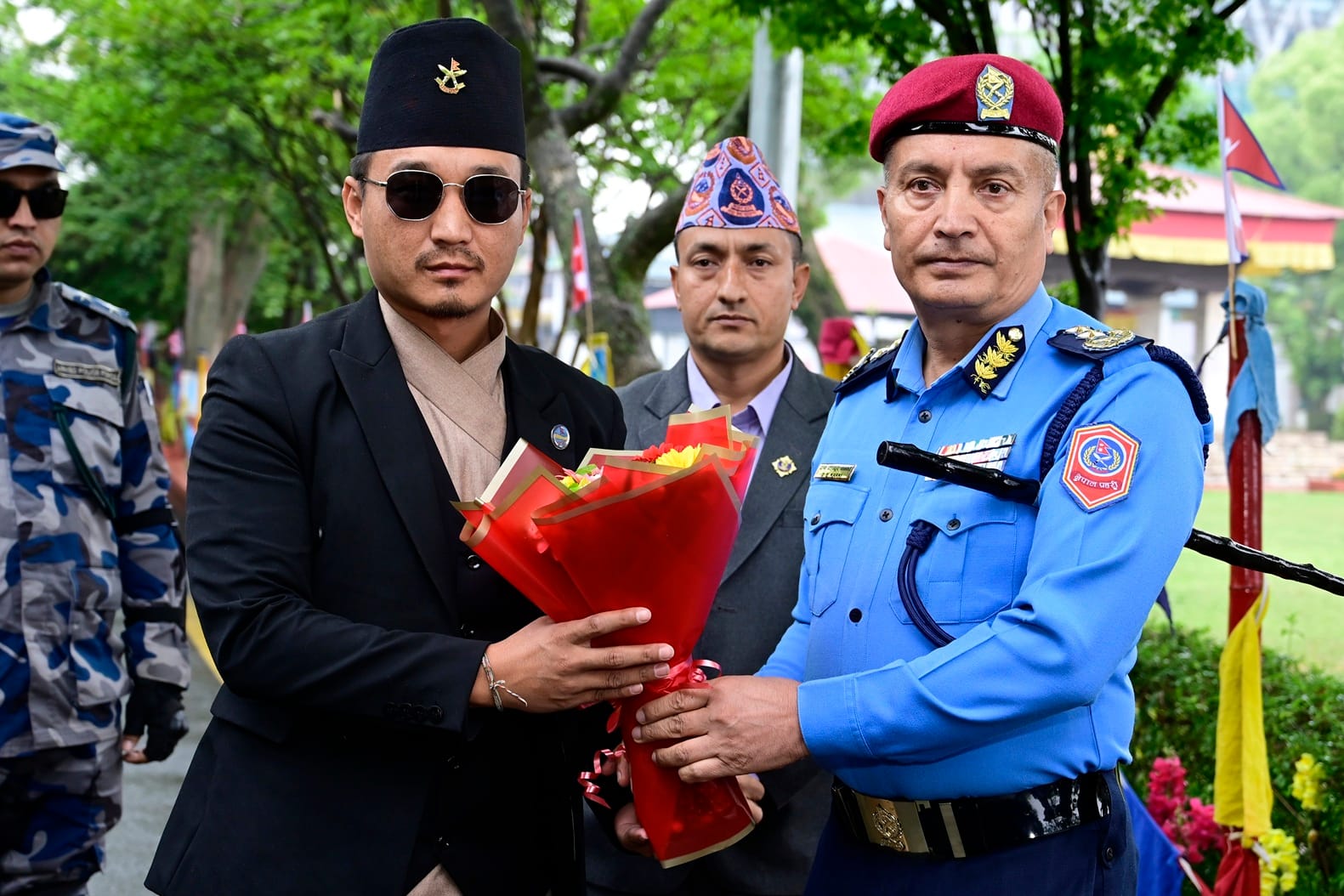
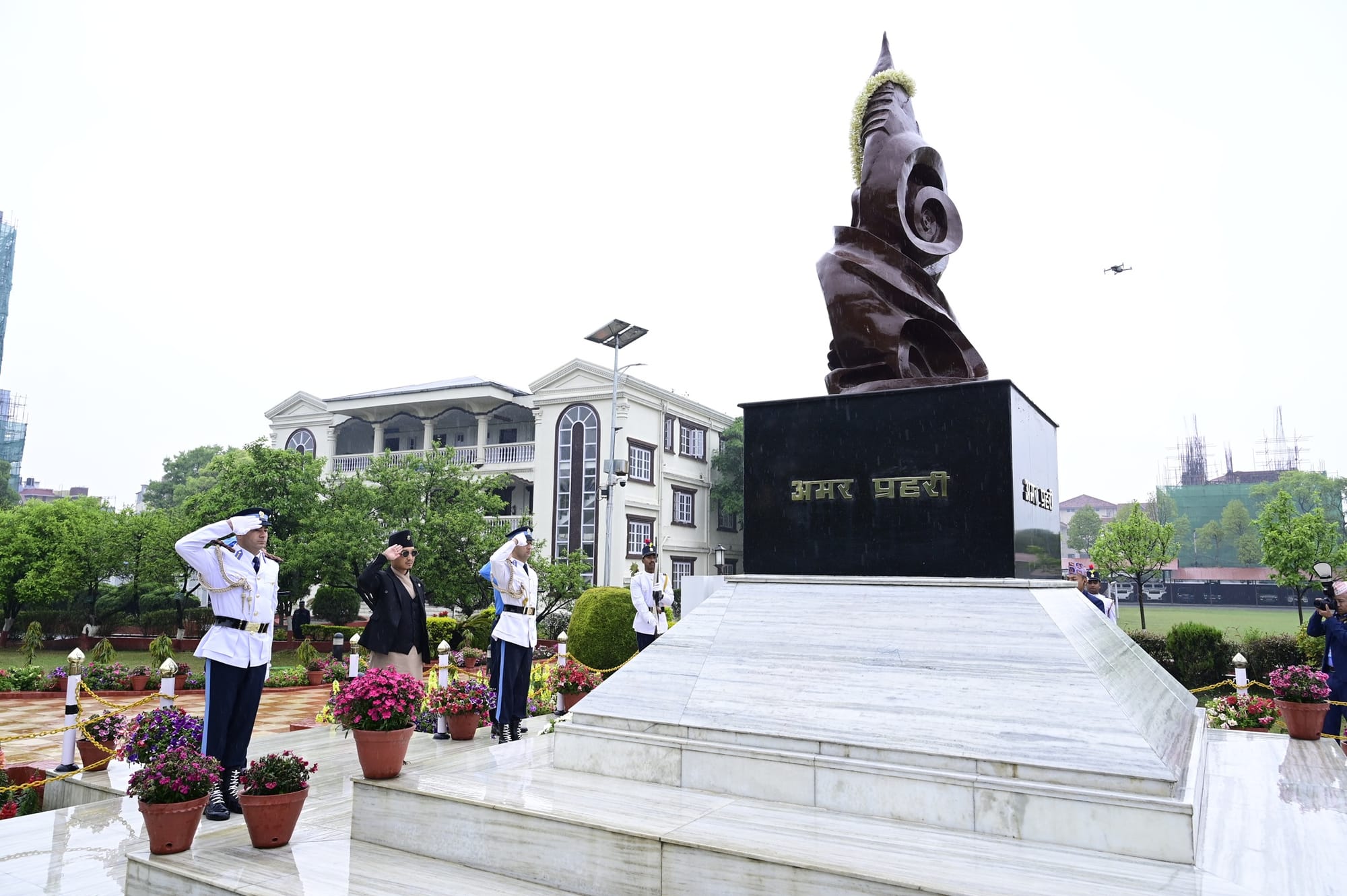
Home Minister Sudan Gurung conducted an inspection visit to the Nepal Police Headquarters on Monday and also issued directives to the police personnel present. He was warmly welcomed at the headquarters by Inspector General of Police Dan Bahadur Karki, along with Additional Inspectors General, Deputy Inspectors General, and other senior police officials. During the visit, the Home Minister paid tribute by laying a wreath at the Martyrs’ Memorial located within the premises.
As part of the inspection, Minister Gurung visited key facilities including the museum, digital forensic lab, Artificial Intelligence and Advanced Analytics Cell, data center, and polygraph section. He also received detailed briefings on their activities.
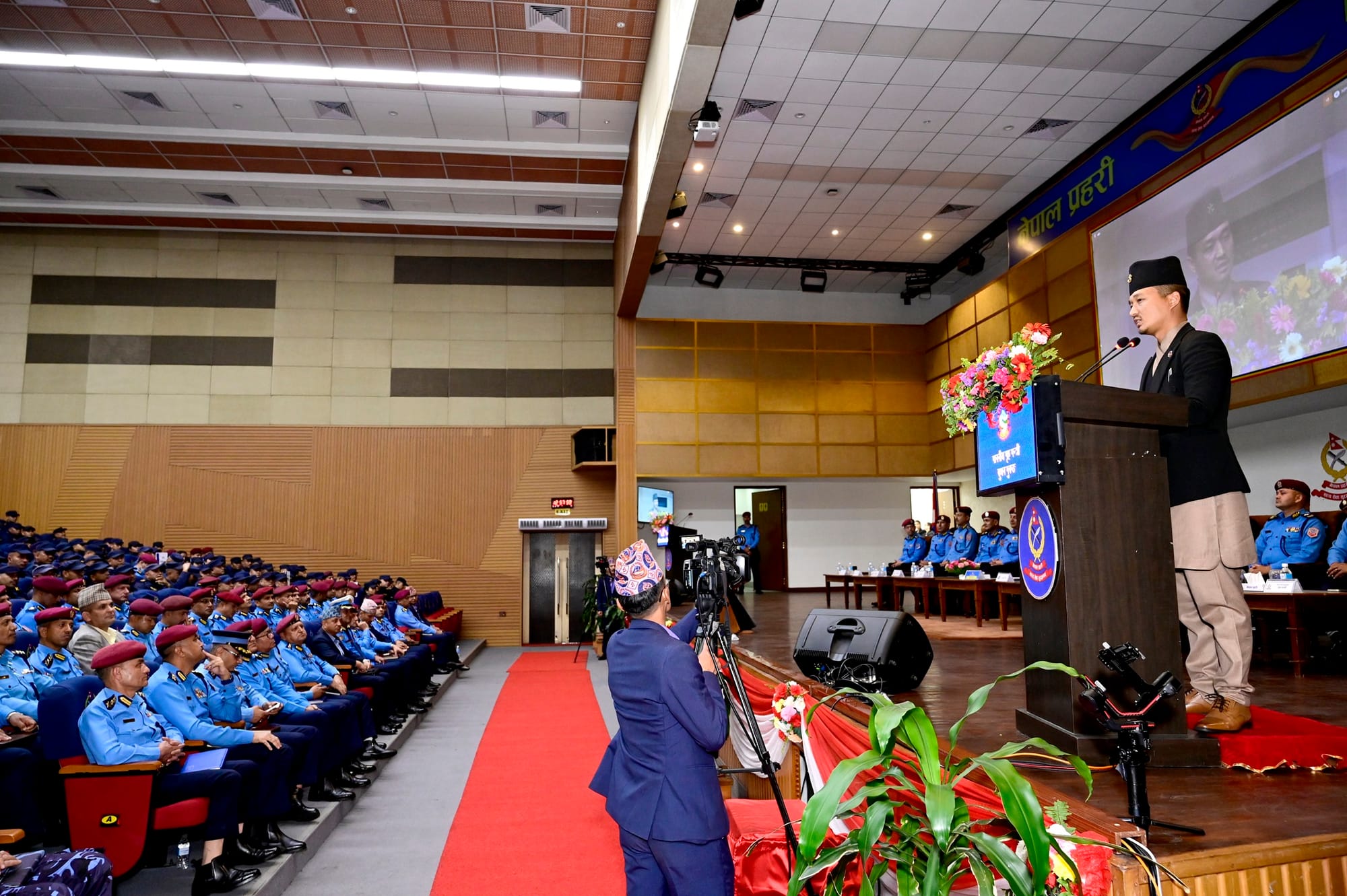
Following the inspection, he addressed police officers and personnel both in person and virtually. He acknowledged that despite limited resources, Nepal Police has been effectively fulfilling its responsibilities and encouraged them to continue performing their duties with confidence. He emphasized that there would be no interference from any level while carrying out their responsibilities.
The Home Minister highlighted the need to change society’s perception of the police and stressed the importance of reducing the gap between citizens and law enforcement. He urged police personnel to provide excellent service through polite communication and professional behavior while addressing citizens’ concerns. He also emphasized maximizing the use of available resources for public service and strengthening community relations.
He further noted that Nepal Police must remain at the forefront of disaster management and assured that efforts would be made to equip the force with better resources and timely training. He stated that career development of police personnel would be based on performance and scientific systems, and reaffirmed the government’s commitment to strengthening the organization with modern technology and adequate resources.
Speaking at the program, Home Secretary Rajkumar Shrestha commended Nepal Police for successfully conducting the parliamentary elections in a peaceful and historic manner despite various challenges. He stated that the professionalism displayed during the elections demonstrated the capability of Nepal Police to perform effectively in any situation. He also urged police personnel to adopt innovative approaches and deliver quick and efficient services with high morale.
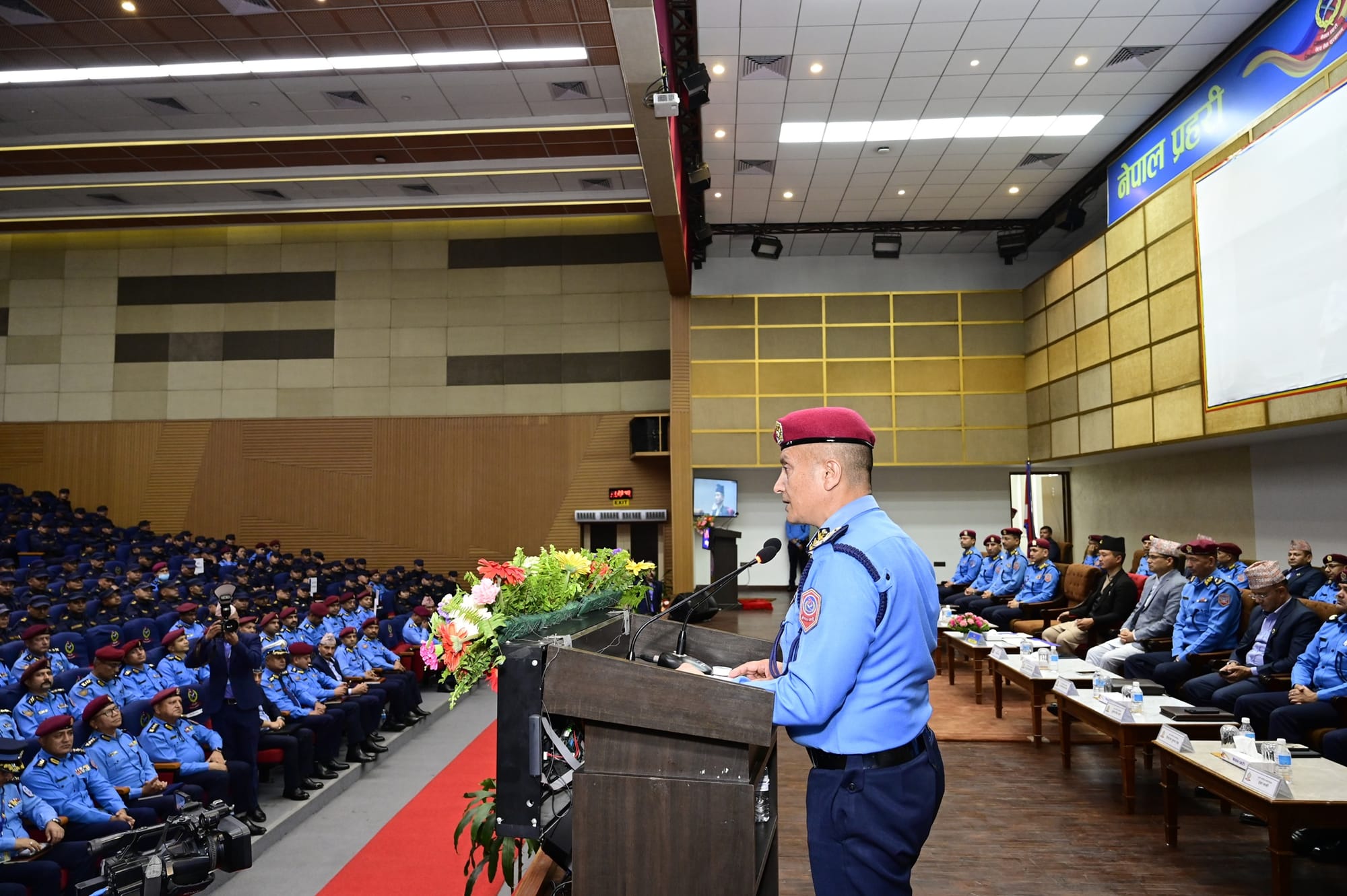
In his vote of thanks, Inspector General Dan Bahadur Karki stated that Nepal Police has been carrying out its duties with integrity, adhering to constitutional provisions, legal frameworks, and national and international human rights standards. He emphasized that the effectiveness of the state is reflected through the competence of the police and noted that the Home Minister’s timely and professional directives have boosted morale and motivation across the organization.
IGP Karki further stated that Nepal Police remains committed to enforcing laws, protecting citizens’ lives and property, and ensuring constitutional rights, rule of law, and public security. He added that the organization is continuously working to make police services more modern, people-centric, technology-friendly, accountable, inclusive, and reliable. He also expressed confidence that continued guidance from the Home Minister would support the modernization and development of Nepal Police.
During the inspection, Deputy Inspector General Rajendra Prasad Bhatt presented an institutional overview of Nepal Police, covering organizational structure, development history, manpower, unit distribution, infrastructure, current status, temporary posts, proposed expansions, crime investigation data and analysis, police operations, disaster and traffic management, international coordination, Interpol activities, foreign assistance, key achievements of the current fiscal year, challenges, and future plans.
The program was attended by senior police officials, representatives from the Ministry of Home Affairs, and police personnel. Additionally, there was virtual participation from all seven provincial police offices, regional units, training centers, highway security and traffic management offices, district police offices, and other subordinate units across the country.